
Outdoor plant
Arjuna
Terminalia arjuna
Also known as Arjun Tree, Arjuna Myrobalan
How to grow arjuna, Terminalia arjuna, the large Indian riverside tree with smooth pale flaking bark, and why it needs a warm, frost-free climate.
At a glance
- Difficulty
- Moderate
- Water
- While young and in dry spells; established trees are hardy
- Light
- Full sun
- Temperature
- Tropical and frost-tender; keep above about 5 deg C
- Hardiness
- USDA 10-12, RHS H2, hardy to 5 C
- Type
- Large evergreen or semi-evergreen tree
- Height
- Up to 25 m
- Native to
- South Asia
A large tropical tree of Indian riverbanks, with no frost tolerance, so it grows outdoors only in warm, frost-free climates. It is used to seasonal monsoon rains and dry spells and to soils that flood for part of the year, so it copes with wet feet better than most trees and with drought once established. In a cool climate it is only a large glasshouse subject, if that.
Hardiness zones describe winter cold alone. Summer heat, humidity, rainfall and the length of the growing season decide as much, so treat the range as the outer limit rather than as a recommendation.
Not known to be toxic
Arjuna is grown as a shade and ornamental tree, and its bark is used in Ayurvedic medicine, chiefly as a heart tonic. It is not listed as a poisonous tree, and the bark is prepared and taken deliberately as a remedy, which is a matter for a qualified practitioner. There is no toxic risk in growing the tree or sitting in its shade, and this guide covers growing it instead of using the bark.
Sources: RHS potentially harmful garden plants, North Carolina Extension plant toxicity database
About
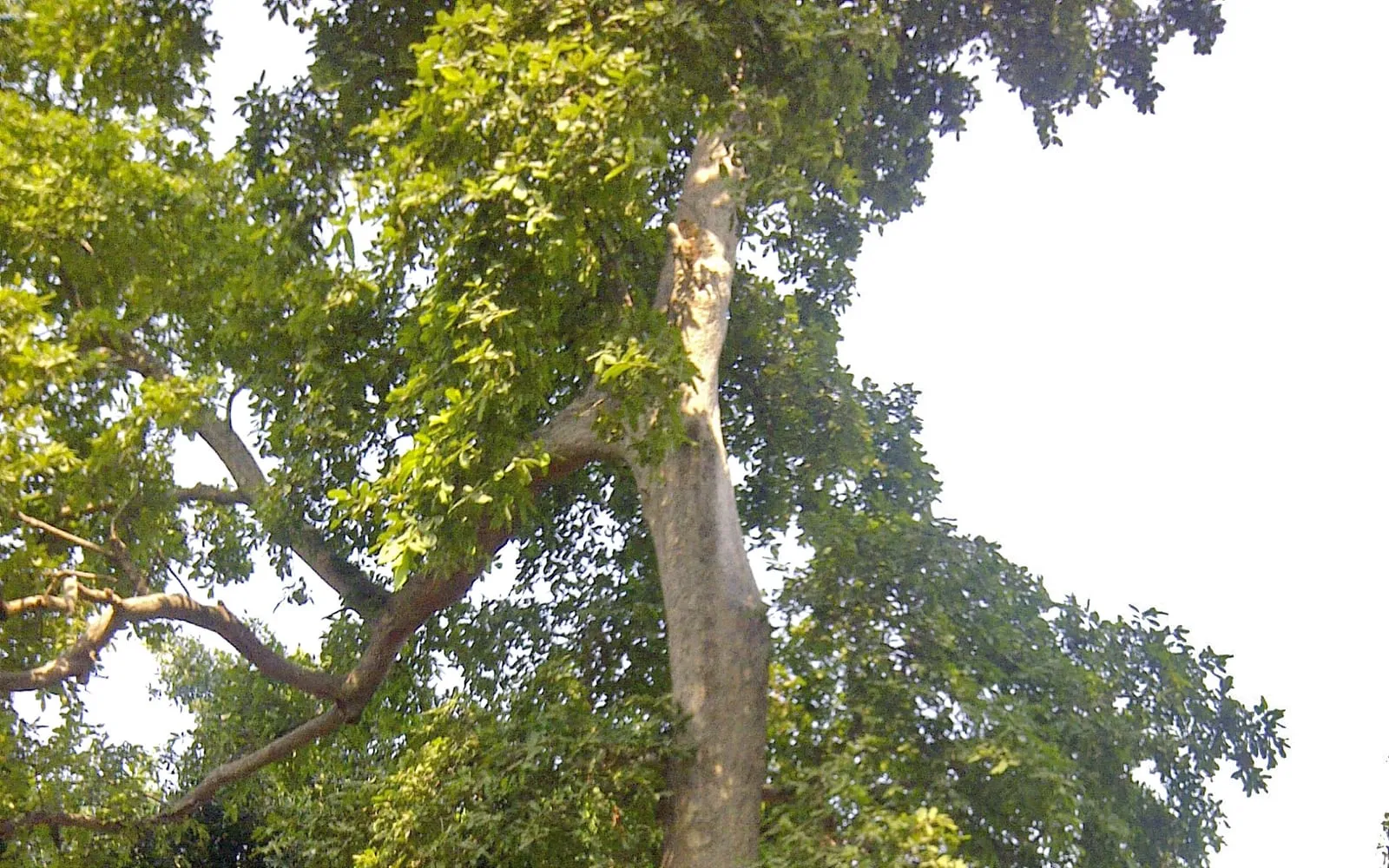
Arjuna is a large Indian tree of riverbanks and watercourses, grown across the warm parts of South Asia as a shade tree, an avenue tree and a source of medicinal bark. It makes a broad, spreading crown on a stout, often buttressed trunk, and its smooth, pale grey-pink bark, which flakes away in large pieces, is its most recognisable feature.
It naturally grows beside water. In the wild it lines rivers and streams and tolerates ground that floods for part of the year, so it copes with wet soil better than most large trees while also standing the dry season once established.
Its bark has a long place in Ayurvedic medicine, chiefly as a heart tonic, which is much of why the tree is known and planted. For a grower in a warm climate it is a fast-growing large shade tree, and this guide covers growing it rather than any medicinal use of the bark.
Appearance and character
The bark is the tree’s most distinctive feature, smooth and pale grey to pinkish, peeling away in large flakes to leave a clean, mottled trunk. It is one of the easiest ways to identify the tree.
The trunk is stout and often buttressed at the base, supporting a broad, spreading crown that casts heavy shade, which is part of why the tree is valued along roads and in parks.
Leaves are oblong and leathery, dull green above and paler beneath, held in near- opposite pairs, and the tree is evergreen or briefly semi-deciduous depending on the climate.
Flowers are small, cream to pale yellow, borne in spikes in the warm season, more noticeable for their scent than their show.
Fruit is a hard, woody, fibrous structure with several stiff wings or ridges, which help it float and disperse along rivers.
Where it is from
Terminalia arjuna grows across the Indian subcontinent and neighbouring South Asia, along rivers, streams and seasonally flooded ground, in a warm, monsoon climate. It grows beside watercourses in hot country.
Those conditions explain what it needs. It needs heat, sun and a deep, moist soil, tolerates seasonal flooding far better than most trees, and has no frost tolerance, so it belongs to warm, frost-free climates and is impractical outdoors anywhere cold.
How it grows
It grows fairly fast into a large tree in a warm climate, given sun and a deep, moist soil, developing its broad crown and buttressed trunk over the years. Along water it is vigorous and long-lived.
Plant it in full sun in deep, fertile, moisture-retentive soil, ideally where there is plenty of room for a large tree and access to water. Water young trees well to establish them, after which they are hardy in a suitable climate.
Give it space. This is a big tree, quite unsuited to a small garden, and it is best as a park, avenue or large-garden shade tree, or on the bank of a pond or watercourse where its tolerance of wet ground is an advantage.
In a cold climate it is only a glasshouse tree at best, and its eventual size makes even that a serious commitment, so it is best suited to warm regions.
Through the seasons
Spring brings new growth and, in warm areas, the spikes of small cream flowers as the warm season builds.
Summer, through the monsoon in its native range, is the main season of growth, when the tree makes the most of warmth and water.
Autumn is when the woody winged fruits develop and ripen, ready to fall and float away on the rivers.
Winter, in a frost-free climate, is a quieter period when the tree holds most of its leaves, and it must be protected from any cold where grown near its limit.
Care difficulty
Moderate, with size and climate the main considerations instead of any fussiness. Given warmth, sun and a deep, moist soil it grows readily and needs little, and it even tolerates wet ground. The constraints are that it will not take frost and that it becomes a very large tree, so it suits warm climates and large spaces instead of small or cold gardens.
Watering
Water young trees well and regularly through their early years to establish them, and in dry spells, since the tree favours moist ground and even tolerates seasonal flooding. Good soil moisture supports fast, healthy growth.
An established tree in a suitable climate copes with the dry season by drawing on deep roots, though it grows best with access to water as it would have beside a riverbank.
Warning signs, diseases and pests
Its eventual size is the issue. Planted in too small a space it outgrows its setting and casts heavy shade, so it needs room from the start.
Pests are few on an established tree in good conditions. Scale insects may appear on stressed or young trees and can be treated with horticultural oil if they build up.
The tree poses no toxic hazard to grow or sit beneath. Its bark is medicinal and a matter for a practitioner instead of a garden concern.
Growing environment
Full sun suits it, matching the open riverbanks it grows along. It needs strong light and does not thrive in shade.
The soil should be deep, fertile and moisture-retentive, and the tree tolerates ground that floods seasonally far better than most, so a moist or low-lying site suits it. It needs warmth above all.
Give it a large, open, warm, frost-free site with room for a big tree, such as a park, an avenue or a large garden, ideally near water. It is not a plant for a small or cold garden.
Feeding
Feed young trees a balanced fertiliser once or twice in the growing season to support strong establishment. Mature trees in good soil need little, and a moist, fertile site supplies most of what they need, so heavy feeding is unnecessary.
Troubleshooting
How big does it get? Very large, up to around twenty-five metres with a broad crown, so it is a tree for a park, avenue or large garden instead of a small plot. Plan for its size before planting.
Can I grow it where I am? Only in a warm, frost-free climate outdoors. It has no frost tolerance, so in a cold region it is at most a large glasshouse tree, which its size makes impractical for most people.
Will it cope with wet ground? Yes, unusually well. It grows along rivers and tolerates seasonal flooding better than most large trees, so a moist or low-lying site suits it, though it also stands the dry season once established.
Can I use the bark? The bark is used in Ayurvedic medicine as a heart tonic, but that is a matter for a qualified practitioner. The tree is grown for shade and ornament, and this guide does not cover using the bark.
Why does the bark peel off in flakes? That is natural and is one of the tree’s recognisable features. The smooth pale bark sheds in large flakes, leaving a clean, mottled trunk.