
Outdoor plant
Blood Trumpet Vine
Distictis buccinatoria
Also known as Mexican blood flower vine
How to grow blood trumpet vine outdoors. Its deep red trumpet flowers, clinging tendrils, and why it needs a warm, sheltered spot to thrive.
At a glance
- Difficulty
- Moderate
- Water
- Regular watering while establishing, drought-tolerant once mature
- Light
- Full sun
- Temperature
- Tolerates a brief light frost once well established
- Hardiness
- USDA 9-11, RHS H2, hardy to -1 C
- Type
- Evergreen woody climber
- Height
- 6-10 m
- Native to
- Mexico
Tender to real cold, tolerating a brief light frost once well established against a warm, sheltered wall, but damaged or killed by a harder freeze. It is grown outdoors year round only in a warm, near frost-free climate, and needs real summer heat to flower at its best even where winter cold is not a limiting factor.
Hardiness zones describe winter cold alone. Summer heat, humidity, rainfall and the length of the growing season decide as much, so treat the range as the outer limit rather than as a recommendation.
Not known to be toxic
Blood trumpet vine has no toxicity listing from the RHS or the ASPCA and is considered safe around pets and children. There is no documented history of poisoning associated with this species.
Source: RHS
About
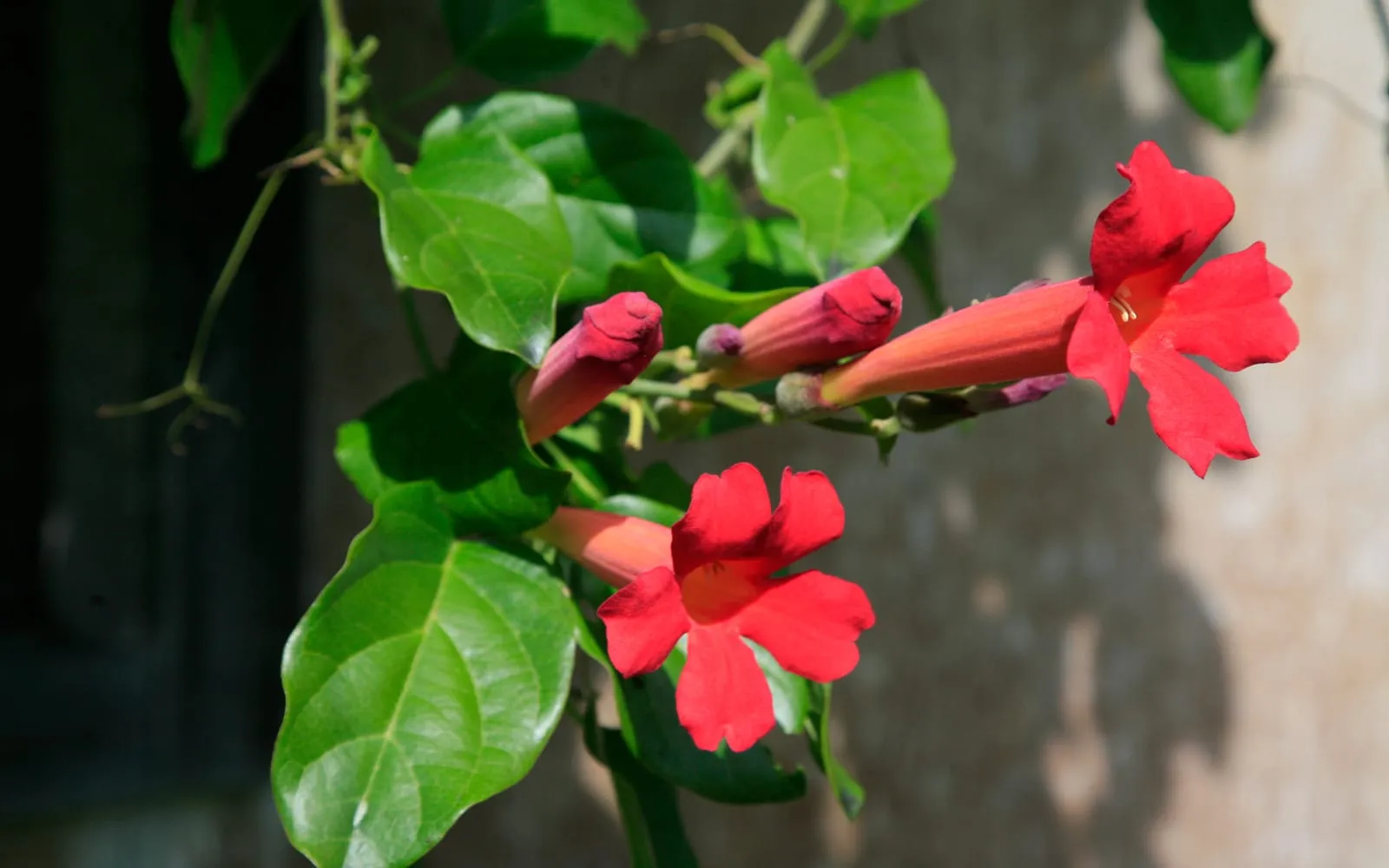
The blood trumpet vine is grown for its striking, large, trumpet-shaped flowers, opening a deep orange-red and ageing toward a darker maroon over the few days each bloom lasts, produced in profusion across a vigorous climbing framework given enough warmth and sun. It climbs by clinging tendrils rather than twining stems, letting it scale a wall, fence or pergola without needing to be tied in as frequently as a twining climber would.
Native to Mexico and grown widely across warm-climate gardens worldwide, it flowers for a long season in a reliably hot, sunny position and can become a substantial, semi-permanent feature covering a large structure within a few years in a climate that suits it.
Appearance and character
Glossy, dark green leaves, arranged in pairs with a branched tendril between them, clothe vigorous woody stems that climb by clinging to any suitable rough surface or support. Large, trumpet-shaped flowers, typically 10 cm or more in length, open a vivid orange-red and gradually deepen toward maroon-purple as they age, often giving a single flowering plant several distinct shades of red at once across flowers of different ages.
A well-established plant in a warm climate flowers over an extended season, often from spring well into autumn, providing a long run of colour rather than a single concentrated flush the way some other flowering climbers do.
Where it is from
Warm, sunny scrub and forest margins in Mexico, in a climate with real summer heat and generally good drainage, though tolerant of a range of specific conditions within that broader warm-climate profile.
That warm origin explains both the plant’s love of strong sun and heat in cultivation and its limited cold tolerance, which restricts reliable outdoor, year-round growth to reliably mild climates, with anything colder needing significant shelter or container cultivation instead.
How it grows
A vigorous, woody climber that extends via branched tendrils, gripping onto any suitable rough surface, trellis or wire support as it grows, without needing the regular tying-in a twining climber requires. Growth is fast given warmth and sun, and an established plant can cover a substantial area of wall or fence within a handful of strong growing seasons.
Because it climbs by clinging tendrils rather than twining or producing adhesive aerial roots, it needs a support with something for those tendrils to grip, such as wires, trellis or a rough wall surface, rather than a smooth, unsuitable surface it cannot attach to.
Through the seasons
Spring growth resumes as temperatures rise, with new tendrils extending to grip onto available support.
Summer is the main flowering season, with a long succession of large red-orange trumpet flowers given sufficient warmth and sun. Water and feed regularly through this period.
Autumn flowering often continues into early autumn in a warm climate, tapering as temperatures drop.
Winter established plants tolerate a brief light frost against a sheltered wall; protect young or newly planted specimens more carefully in any climate where frost occurs.
Care difficulty
Moderate. The plant is not difficult to grow given a warm, sunny position and suitable support, but achieving strong flowering depends on real summer heat, which limits how well it performs in a consistently cool or short summer climate.
Watering
Regular watering supports strong establishment in the first year or two. Once its root system is developed, this species tolerates reasonable drought, though a deep watering during any extended dry spell in summer supports better flowering than leaving it to fend for itself entirely.
Warning signs, diseases and pests
Aphids commonly colonise soft new growth and flower buds, and are dislodged easily with a jet of water. Scale insects can appear on the woody stems and respond to a horticultural oil treatment for heavier infestations, and spider mites occasionally appear in hot, dry conditions, particularly on a plant grown against a warm, sheltered wall with limited air movement.
Little or no flowering despite vigorous growth usually reflects insufficient summer heat rather than any pest or disease, and is the most common disappointment reported with this species outside a reliably warm climate.
Growing environment
Full sun and real summer heat both matter for strong flowering; a south- or west-facing wall in a temperate climate provides the warmest, most sheltered position available and often makes the difference between a plant that flowers well and one that grows leaves only. Humus-rich, free-draining soil suits it well, and a support offering something for its tendrils to grip is essential.
Feeding
A balanced liquid feed, applied monthly through spring and summer, supports strong growth and flowering. Reduce or stop feeding through autumn and winter as growth slows.
Troubleshooting
The plant grows vigorously but produces few or no flowers. Almost always insufficient summer heat. A warm, sheltered, south-facing position gives the best chance of strong flowering in a marginal climate.
The vine is not attaching well to its intended support. Check that the support offers something for the clinging tendrils to grip, such as wires, trellis or a rough surface, since a smooth wall or fence gives the tendrils nothing to hold onto.
An established plant was damaged by an unexpected frost. Cut away clearly dead growth once the risk of further cold has passed; plants established against a warm, sheltered wall often recover and resprout from surviving lower stems.
Growth has become dense and congested against its support. Thin out crowded or crossing stems after the main flowering period to improve air circulation and reduce the risk of pest problems building up in the densest parts of the plant.
You are choosing a wall or fence to grow this species against. A south- or west-facing surface holds and reflects heat back onto the plant, often making the difference between reliable flowering and foliage alone in a climate on the cooler edge of what this species tolerates, so pick the warmest available aspect in the garden and avoid a spot shaded for a large part of the day.