
Outdoor plant
Sensitive Fern
Onoclea sensibilis
Also known as Bead fern, Meadow fern
How to grow sensitive fern, Onoclea sensibilis. Hardy wetland spread, the frost-sensitive fronds it is named for, and its odd bead-like winter fertile fronds.
At a glance
- Difficulty
- Easy
- Water
- Keep the soil constantly moist to wet, never allowing it to dry
- Light
- Partial shade to full sun, given constantly damp soil
- Temperature
- Fully hardy. The sterile fronds collapse at the first light frost
- Hardiness
- USDA 4-9, RHS H7, hardy to -30 C
- Type
- Hardy deciduous perennial fern, spreading by rhizome into broad colonies
- Height
- 30-60 cm
- Native to
- Eastern North America and eastern Asia
Hardy well into continental winters that reach minus 30 deg C, and the cold is never what limits this fern outdoors. Steady moisture is the real requirement, and the plant spreads fastest and looks best on wet ground such as a pond margin, ditch bank or low spot that floods after rain.
Hardiness zones describe winter cold alone. Summer heat, humidity, rainfall and the length of the growing season decide as much, so treat the range as the outer limit rather than as a recommendation.
Toxic to horses if eaten
- Do not eat
- The whole plant, including dried material baled into hay
- Harm from
- Eating it
- Affects
- Horses
Sensitive fern has been documented poisoning and killing horses that ate it baled into hay, through the same mechanism as bracken and horsetail. The plant contains thiaminase, an enzyme that destroys thiamine, vitamin B1, and a horse eating enough of it over time develops a severe deficiency causing difficulty eating, incoordination, collapse and sometimes death. Poisoning is uncommon in practice, since a horse needs to eat a large quantity over an extended period and usually avoids the plant where better forage is available, but hay containing sensitive fern removes that choice. Never cut hay from ground where it grows in quantity, and never feed suspect hay to horses. Cooking destroys the thiaminase, so the risk is specific to dried or fresh plant material being eaten rather than to skin contact. The RHS does not list it among harmful garden plants for people, and it is not recorded as a hazard to cats or dogs, whose diets rarely include hay.
Sources: Government of Canada, Canadian Poisonous Plants Information System, RHS potentially harmful garden plants
About
The common name describes an old observation rather than anything fragile about the plant. Where most hardy ferns brown slowly over several autumn weeks, the sterile fronds of this species blacken and collapse within a day or two of the first light frost, as if the cold had switched them off. Early botanists called that sensitivity, and the name stuck even though the rhizome underneath shrugs the same frost off completely.
A second, stranger habit sets it apart from almost every other fern in cultivation. Alongside the broad green sterile fronds, the plant sends up a separate crop of narrow, stiff, dark fertile fronds covered in small round beads. Those fertile fronds do not die back with the first frost. They stand through the entire winter, releasing their spores the following spring rather than the same season they were produced, so a single planted clump can look, at different times of year, like two unrelated plants sharing one patch of ground.
It spreads readily on wet ground, tolerates far more sun than most ferns and needs almost nothing once it has settled in.
Appearance and character
A deciduous fern with two distinct kinds of frond arising from the same spreading rhizome, an arrangement uncommon among ferns generally.
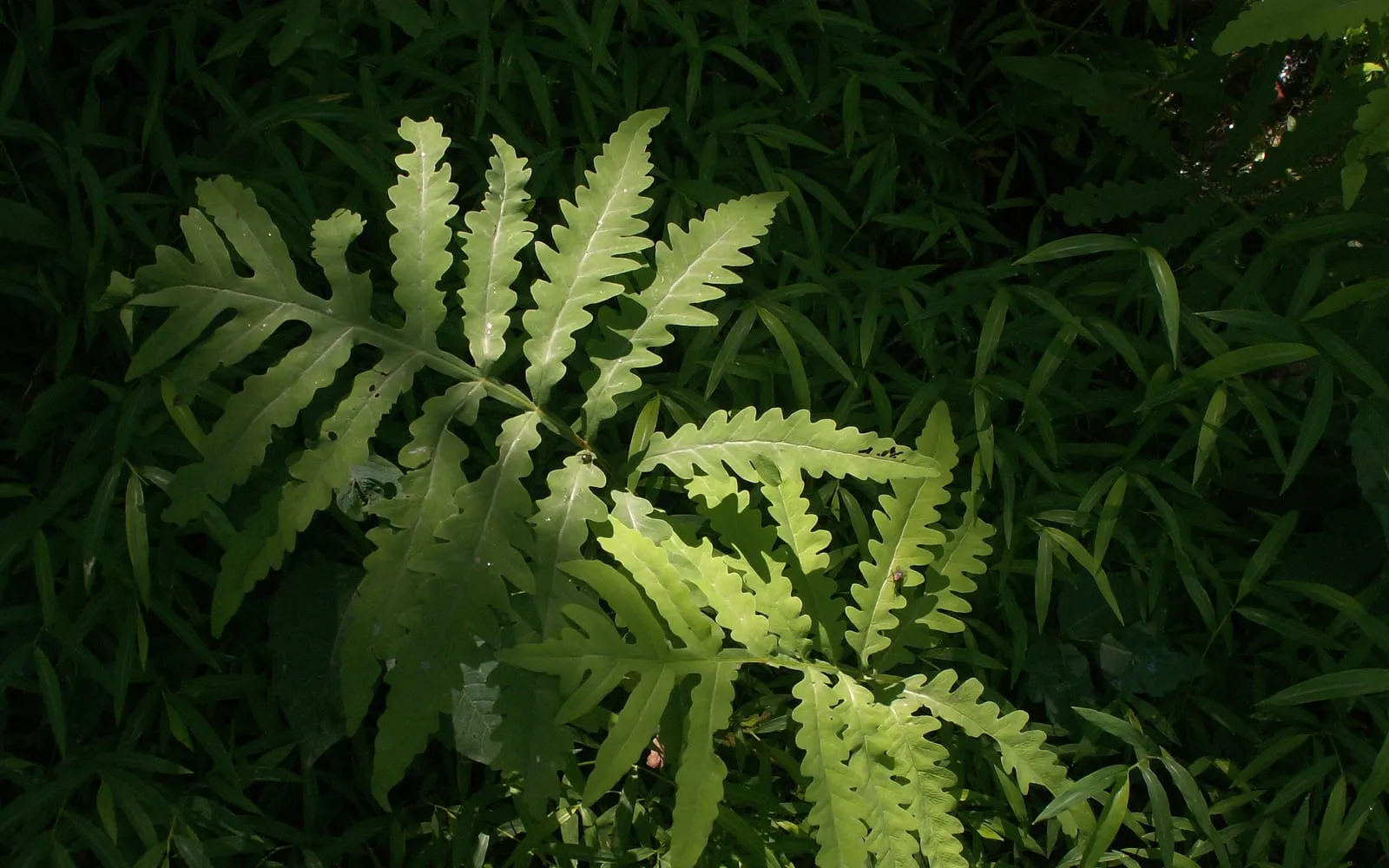
Sterile fronds are broad, deeply lobed, coarse-textured and pale to mid green, reaching 30 to 60 cm and forming the visible bulk of the plant from spring to the first frost.
Fertile fronds are shorter, narrower, stiff and dark brown, with rounded bead-like clusters of sporangia lining each side of the stalk. They emerge later in the season, mature over autumn and persist upright through winter, looking more like a dried floral stem than a fern frond.
Spores are held inside those beads and are not released until the following spring, when the beads split open in damp conditions.
The rhizome creeps steadily through moist soil, and a single plant forms a broad patch within a few years wherever conditions suit it.
Where it is from
Eastern North America and, separately, eastern Asia, an unusual split distribution for a single fern species across two continents divided by an ocean.
Across both regions it grows in wet meadows, marsh edges, ditches, swamp margins and the damp ground beside streams and ponds, generally in open to lightly shaded positions rather than deep woodland.
Its preference for open, wet, sunny ground makes it more sun-tolerant than most ferns sold as shade plants. Where the soil stays consistently wet, it copes with considerably more direct light than a typical woodland fern would.
It has been used for centuries in traditional practice across parts of its Asian range and remains a common wetland plant in both continents, neither rare nor especially fussy about where it grows as long as the ground stays damp.
How it grows
Choose damp to wet ground in partial shade or full sun. A pond margin, stream bank, low spot that collects rainwater, or an ordinary border kept consistently watered all work.
Plant into soil improved with organic matter if it drains too freely, since this is a wetland species with no drought tolerance to speak of.
Expect steady spread. The rhizome travels outward each year and the clump widens noticeably within two or three seasons in the right conditions, so plant it where that spread is welcome or where a barrier can contain it.
Divide congested patches in spring, lifting a rooted section of rhizome and replanting it into equally moist ground elsewhere.
Leave the fertile fronds standing through winter rather than cutting them back. They add genuine winter interest and complete their reproductive cycle by releasing spores the following spring.
Cut the collapsed sterile fronds away once they have blackened after the first frost, purely for tidiness, since they contribute nothing further once down.
Through the seasons
Spring brings fresh sterile fronds up through the remains of last year’s fertile fronds, and the old fertile fronds finally release their overwintered spores.
Summer is steady, undemanding growth as long as the ground stays wet, tolerating far more sun through this period than most ferns would.
Autumn brings the sudden change the plant is named for. A light frost turns the sterile fronds black and collapses them within a day or two, while a fresh crop of stiff fertile fronds is maturing at the same time.
Winter the fertile fronds stand alone, dark and bead-covered, adding structure to an otherwise bare wet border until spring finally releases their spores.
Care difficulty
Easy, and the only real requirement is wet ground, which either exists on a site already or has to be created.
Given consistently damp soil, the plant spreads, flowers with fronds rather than blooms in its own way, and needs no staking, no spraying and almost no attention through the growing season.
The rapid post-frost collapse alarms some gardeners the first year they see it, since nothing else in a border dies back that fast or that completely. It is entirely normal for this species and does no harm to the rhizome below ground.
Its enthusiasm for spreading is the other point to plan around, since a happy plant expands faster than most border neighbours can keep pace with.
Watering
Keep the soil constantly moist to wet through the growing season. This is a marsh and wet meadow plant, and standing water for short periods after rain does it no harm at all.
A naturally boggy spot or pond margin needs little supplemental watering beyond normal rainfall in most climates.
Drier borders need regular, generous watering, and this species tolerates overwatering far better than it tolerates a dry spell.
A container planting works if the pot stands in a saucer of water or the compost is checked daily, since drying out shows up quickly as wilted, collapsing sterile fronds even well before frost.
Warning signs, diseases and pests
Sudden blackening and collapse of the sterile fronds with the first cold snap of autumn is the plant’s normal response to frost, not disease, and needs no action beyond an eventual tidy-up.
Wilting or browning of the sterile fronds during the growing season, well before any frost, means the soil has dried out. Water heavily and consider whether the planting spot is wet enough for this species long term.
Chewed or ragged holes in soft young fronds in spring point to slugs and snails. Clearing nearby hiding places and checking after dark controls most damage.
Unwanted spread into neighbouring beds is the plant’s ordinary vigour on suitable ground rather than a pest problem. Dig out unwanted rhizome sections in spring or install a barrier.
The species carries no significant disease in cultivation, and its toxicity concern applies only to horses fed dried or fresh material in quantity, not to garden care.
Growing environment
Partial shade to full sun, with full sun tolerated well provided the soil never dries out.
Wet to consistently moist soil is the one fixed requirement. Boggy ground, pond edges and low-lying spots that collect water after rain all suit it.
Fully hardy against cold, with the sterile fronds collapsing at the first light frost regardless of how mild the winter otherwise is.
It combines well with other wetland and bog garden plants such as ligularia, rodgersia and Japanese primulas, all sharing the same appetite for constantly wet ground.
Avoid planting it where livestock, particularly horses, might later graze cut hay from the same ground, given the documented risk of thiaminase poisoning from dried material.
Feeding
A single spring application of balanced slow-release fertiliser suits plants on ordinary soil, though wetland ground is often fertile enough on its own.
A yearly mulch of compost helps retain moisture as much as it feeds the plant, and moisture matters more to this species than nutrition does.
Avoid heavy feeding on naturally rich wet ground, where excess nutrients accelerate the spread that is already vigorous.
No feeding is needed once the fronds have collapsed for winter.
Troubleshooting
Why did all the green fronds suddenly turn black? The first frost of autumn causes this sudden blackening, which gives the plant its name. It does no harm to the rhizome, which is dormant underground by then in any case.
What are the strange brown stalks that lasted all winter? The fertile fronds. They mature in autumn, stand through winter and release their spores the following spring, unlike the broad green sterile fronds that die back each year.
The plant is spreading into other parts of the border. Normal vigour on wet ground. Dig out unwanted rhizome sections in spring, or fit a physical barrier if the spread needs containing.
Is it safe to grow near horses? Not where the hay from that ground might be fed to them. The plant contains thiaminase, which causes a serious vitamin B1 deficiency in horses that eat enough dried material. It is not recorded as a hazard to people, cats or dogs.
The fronds are wilting in summer, well before any frost. The soil has dried out. This is a wetland plant with no drought tolerance, so water heavily and reconsider whether the spot stays wet enough.
Does it need shade like other ferns? No. It tolerates considerably more sun than most ferns, provided the soil stays reliably wet through the season.
How do I make more plants? Divide the spreading rhizome in spring, lifting a rooted section and replanting it into equally damp ground elsewhere.