
Outdoor plant
Sea Thrift
Armeria maritima
Also known as Thrift, Sea pink, Common thrift
How to grow sea thrift, Armeria maritima. Why it shrugs off salt spray and coastal wet that would kill most alpines, its clean shear-off deadheading, and the heavy clay that harms it.
At a glance
- Difficulty
- Easy
- Water
- Occasional watering while establishing; drought-tolerant once mature
- Light
- Full sun
- Temperature
- Cool to warm temperate; tolerates coastal exposure and salt-laden wind
- Hardiness
- USDA 4-8, RHS H6, hardy to -20 C
- Type
- Hardy evergreen perennial
- Height
- 15-25 cm in flower
- Native to
- Europe, North America
The zone number describes winter cold accurately but nothing about the two conditions that decide whether this plant thrives: exposure to salt-laden coastal wind, which it tolerates better than almost anything else grown in a rockery, and soil fertility, where the opposite is true and rich, heavily improved ground causes more losses than any winter this species is rated for.
Hardiness zones describe winter cold alone. Summer heat, humidity, rainfall and the length of the growing season decide as much, so treat the range as the outer limit rather than as a recommendation.
Not known to be toxic
Sea thrift carries no toxicity listing from the RHS or the ASPCA and has no recorded history of causing harm if eaten or handled. A separate concern applies where the species is grown in soil contaminated with heavy metals such as copper: the plant is unusually good at absorbing and concentrating those metals from the ground it grows in, a trait studied because of its use on old mine spoil, and foliage grown on such sites should not be treated as safe to eat even though the plant itself is not toxic.
About
Sea thrift forms neat, grass-like tufts of narrow evergreen leaves topped through late spring and summer by round, pompom-like flower heads in shades of pink, held on bare, wiry stems well above the foliage. Where most alpine and rockery plants that appear on this site share a single defining vulnerability, winter wet rotting the crown, sea thrift is one of the exceptions: its native habitat is salt marsh and coastal cliff, drenched in spray and regularly flooded by tides, and it copes with wet, salty conditions that would finish off almost any other plant in this collection within a season.
Its actual weakness runs almost the opposite direction. Rich, heavy garden soil, the kind that would be an improvement for most border perennials, kills sea thrift. The plant is built for lean, mineral, well-drained ground and rots at the crown when grown in fertile clay that stays consistently wet rather than alternately soaked and drained the way a tidal shoreline is.
Appearance and character
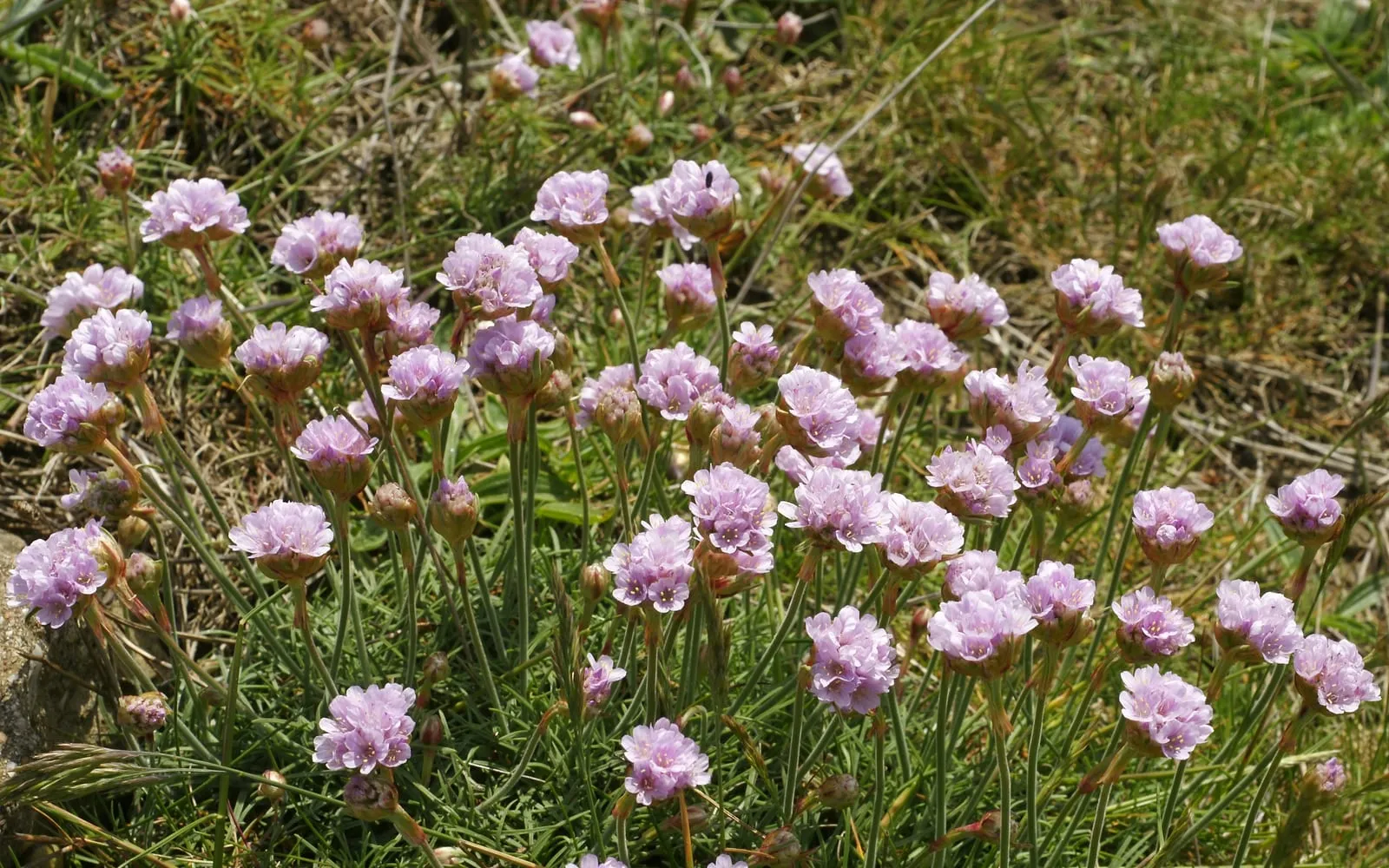
Narrow, dark green, almost grass-like leaves grow in a dense tuft from a woody base, giving the plant a neat, hummocky shape even without flowers. In late spring, bare flower stems rise 15 to 25 cm above the foliage, each topped with a single tight, spherical cluster of small pink flowers that resembles a clover head or a pompom, giving the plant its old country name of ladies’ cushion in some regions.
Because the flower stems carry no leaves along their length, only the round flower head at the very top, deadheading with a pair of shears is unusually clean for a rockery plant: a single pass at the base of the flower stalks removes every spent head in one motion without touching the foliage tuft below, which stays untouched and continues growing. Few plants in this size range allow for such a fast, tidy deadhead.
Where it is from
Armeria maritima grows wild along coastlines across Europe and North America, rooted directly into salt marsh turf, cliff-top grassland and the thin, gritty soil of dune systems, where it is regularly exposed to salt spray, strong onshore wind and periodic flooding by seawater. That coastal origin is unusual among rockery alpines, most of which come from inland mountain scree. It gives sea thrift an exceptional tolerance of salt and wet exposure, matched by an equally strong dislike of the rich, mineral-heavy soil found further inland.
The species has also been studied and used for reclaiming ground contaminated by old metal mining, since certain populations have evolved a genuine tolerance for soil laced with copper and other heavy metals that would poison most other plants. That tolerance is a specific adaptation to metal-contaminated ground rather than a general resistance to poor soil, and it is one of the more unusual facts about a plant otherwise best known for edging seaside paths.
How it grows
Sea thrift builds a dense, fibrous root system anchored into a woody crown, from which the grass-like leaves emerge in a tight rosette-like tuft. Growth is slow and controlled compared with spreading rockery plants like aubrieta or wall bellflower; sea thrift forms a discrete clump rather than a running mat, expanding gradually in diameter rather than colonising nearby ground.
Where the plant fails, it is usually the crown that fails first, turning soft and rotten at the base while the outer leaves are still green, and the trigger is almost always heavy, waterlogged soil that holds moisture around the crown for extended periods rather than the alternating wet-and-drained cycle of a tidal shoreline. A single wet autumn on free-draining sandy soil rarely causes this; the same rainfall on unimproved clay often does.
Through the seasons
Spring brings the emergence of flower stems from the evergreen tuft, with the main flush of round pink flower heads typically opening from late spring into early summer depending on climate. This is a good season for planting new sea thrift, giving it time to establish before the following winter.
Summer is when flowering continues, often for eight weeks or more if spent heads are sheared off regularly to encourage further buds. The clean, leafless flower stems make this deadheading fast, and plants kept deadheaded through summer produce noticeably more flowers than those left to set seed.
Autumn is a suitable time to divide overcrowded clumps, lifting the tuft and separating it into smaller pieces with their own roots, each of which re-establishes readily in free-draining soil.
Winter is handled easily by established plants, tolerant of hard frost to around minus 20 deg C and of the salt-laden gales that would damage most other evergreen foliage. The main winter risk, as in other seasons, is standing water around the crown on heavy soil rather than cold itself.
Care difficulty
Sea thrift is one of the easiest plants in this collection for a coastal or exposed garden, tolerating conditions, salt spray, strong wind and periodic waterlogging by seawater, that would be fatal to most rockery plants outright. The one condition it does not tolerate well is the rich, heavy inland garden soil that many gardeners assume is an improvement over anything.
A gardener moving sea thrift from a coastal setting to an inland bed should treat its soil requirements as closer to a true scree alpine’s than to an ordinary border perennial’s, despite the plant’s obvious toughness in other respects.
Watering
Established sea thrift needs very little supplemental watering in most climates, drawing on natural rainfall even through dry summer spells thanks to its deep, fibrous root system. New plantings benefit from regular watering for the first season while roots establish, but should not be kept constantly moist even at that stage.
The greater risk with this species is almost always too much water sitting around the crown on poorly-drained soil rather than too little reaching the roots, which is the reverse of the usual watering advice for a rockery plant and worth remembering specifically because of it.
Warning signs, diseases and pests
Rust, appearing as small orange-brown pustules on the underside of leaves, occasionally affects sea thrift, particularly in humid conditions with poor air circulation between clumps. Removing and disposing of affected foliage and improving spacing usually controls it without further intervention.
Aphids sometimes cluster on developing flower stems in spring, rarely causing lasting damage to an otherwise healthy plant. Root and crown rot is the more serious concern, following waterlogged soil rather than any pest or fungal pathogen specific to the species, and it is prevented through soil choice rather than treated after the fact.
Growing environment
Full sun and an open, exposed position suit sea thrift well, and it is one of the few plants on this site that performs better with more wind exposure rather than less, given its coastal origin. It is a reliable choice for gardens directly exposed to salt-laden onshore wind where many other flowering plants fail outright.
Soil should be lean, sandy or gritty and free-draining rather than the rich, moisture-retentive ground suited to most garden perennials. Where a garden’s native soil is heavy clay, raising the planting position in a mound or a rockery bed and amending generously with coarse grit gives sea thrift the drainage it needs.
Feeding
Sea thrift needs no supplemental feeding in almost any garden setting, and applying fertiliser, particularly a nitrogen-rich one intended for lush foliage growth, tends to produce soft, rot-prone tissue that performs worse than an unfed plant on lean soil. This is consistent with its coastal dune and salt marsh origin, where the surrounding soil is naturally low in available nutrients.
If a plant looks undersized on very poor, sandy soil, a single light spring feed is unlikely to cause harm, but it is rarely necessary and should not be treated as routine maintenance the way it would be for a hungrier border perennial.
Troubleshooting
The crown has turned soft and brown while the outer leaves are still green. This is crown rot following waterlogged soil, almost always on heavier ground than the plant is suited to. Lift and check the root system; if a healthy portion remains, replant it into sharply-draining soil raised above the surrounding ground level.
Flowering has become sparse on an older clump. Established clumps naturally decline in flower production as the woody centre ages and becomes crowded. Divide the clump in autumn or spring, discarding the oldest, least vigorous sections and replanting healthy outer pieces with fresh root growth.
Small orange pustules have appeared on the underside of the leaves. This is rust, favoured by humid, still air between crowded plants. Remove affected foliage, thin nearby planting to improve airflow, and avoid overhead watering in the evening when leaves stay damp overnight.
The plant looks lush and leafy but produces few flowers. This usually points to soil that is richer than the species needs, often following feeding or planting in an improved border bed rather than lean, gritty ground. Stop feeding and, if practical, move the plant to poorer soil the following season.
A clump planted inland is struggling despite thriving examples seen on the coast. Coastal sea thrift benefits from constant salt-laden wind and sharply-draining sandy soil that an inland garden rarely replicates. Raise the planting position and add coarse grit generously to the soil to approximate the drainage the plant expects.
Leaves have yellowed and the clump looks generally unwell without any visible pest damage. Waterlogging is the most likely cause where pests and disease can be ruled out. Check that the planting site drains freely after rain and improve it before assuming a nutrient or pest problem.
Seed heads have formed and the plant has stopped producing new flowers. Sea thrift redirects energy into seed production once heads are left unsheared, reducing further flowering. Cut the bare flower stems off at the base as soon as they fade to encourage a longer, more productive flowering period.