
Houseplant
Rose Pogonia
Pogonia ophioglossoides
Also known as Pogonia ophioglossoides
How to grow Pogonia ophioglossoides, the rose pogonia, a small North American bog orchid with a single pink flower and a bearded, fringed lip.
At a glance
- Difficulty
- Difficult
- Water
- Permanently wet, never allowed to dry
- Light
- Full sun
- Temperature
- Fully hardy; needs a cold winter dormancy
- Humidity
- High
- Hardiness
- USDA 3-8, RHS H7, hardy to -35 C
- Type
- Perennial
- Height
- 10-30 cm
- Native to
- eastern North America
A bog orchid from eastern North America, from Newfoundland to the Gulf coast, that dies back each winter and needs a freezing, wet dormancy. It needs permanently wet, acid, nutrient-poor ground and its soil fungus, and cannot be kept in a dry or frost-free room.
Hardiness zones describe winter cold alone. Summer heat, humidity, rainfall and the length of the growing season decide as much, so treat the range as the outer limit rather than as a recommendation.
Not known to be toxic
Pogonia ophioglossoides, the rose pogonia, is not recorded among the seriously toxic plants, and related plants in its group are not listed as toxic by the ASPCA or the RHS. A pet or child that chewed a leaf would be unlikely to come to serious harm beyond a possible mild stomach upset.
Sources: ASPCA toxic and non-toxic plants, RHS potentially harmful garden plants
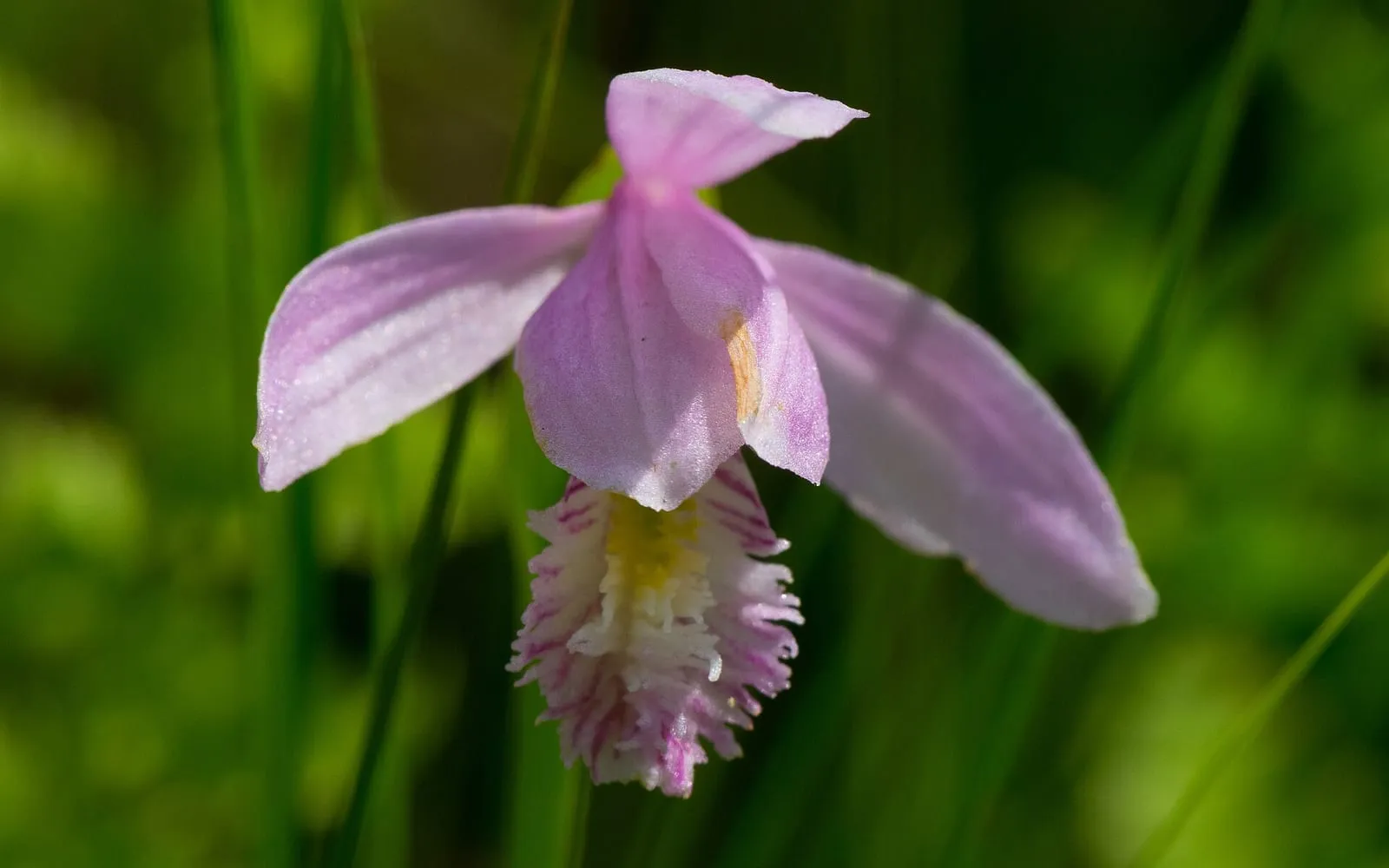
A single pink flower with a beard
Pogonia ophioglossoides is a small, delicate orchid of North American bogs, usually carrying just one soft pink flower at the top of a slim stem. The flower’s lip is fringed and bearded with a mass of fleshy yellow to pink bristles, and the genus name Pogonia, from the Greek for beard, refers to that feature. The species epithet ophioglossoides means adder’s-tongue-like, after the shape of its single leaf. An old country name, snake-mouth, refers to the way the fringed, open flower seems to gape.
Field marks
The plant is slight, usually knee-high at most, with a single elliptical leaf clasping the stem about halfway up and often a small leaf-like bract near the flower. The solitary bloom, occasionally paired, is pale rose-pink, sometimes nearly white, with three spreading upper segments and a lower lip that is fringed at the edge and crested down the centre with yellowish bristly hairs. The flowers give a sweet fragrance likened to raspberries. That single nodding pink flower with its whiskered lip, rising from wet sphagnum, is hard to confuse with anything else in its habitat.
Where it grows
Rose pogonia is a plant of open, sunny, permanently wet and acidic ground, growing in sphagnum bogs, wet meadows, fens, boggy pond margins, seepage slopes and damp acid grassland. It needs a high water table, full sun and the low-nutrient, peaty soils of bog and fen, and it will not persist on dry or fertile ground. Its range spans eastern North America from Newfoundland and the Great Lakes south along the coastal plain, and it also occurs in scattered pockets further south, always tied to the specialised wetlands it favours.
Pollination and spread
Bumblebees and other bees are drawn to the pink, fragrant, bearded flower, which offers little or no true nectar. The flower still attracts visits, partly by appearing to offer a reward. A bee pushing against the crested lip picks up the pollen masses and carries them to another plant. Bumblebees are the chief pollinators, and because plants in a colony open their flowers in succession over several weeks, a patch stays in bloom far longer than any single flower lasts. Beyond seed, rose pogonia spreads efficiently by slender underground runners, sending up new plants a short distance from the parent, so that a colony can form a loose patch of single flowers across open bog.
Not a plant to lift
Rose pogonia cannot be dug up and grown by ordinary means. Its seeds are dust-like and without food reserves, germinating only where a suitable soil fungus infects them and feeds the seedling underground before it leafs. A plant removed from a bog loses that fungus and the constant acidity and wetness it requires, and it dies. It is difficult even for skilled bog-garden growers to establish, and disturbing a wet colony damages the fragile sphagnum surface, so wild plants should be left in place.
Conservation
Rose pogonia declines wherever bogs and fens are drained, filled, mined for peat, polluted with nutrient run-off or shaded by encroaching scrub, and it is listed as rare or of concern in several states and provinces at the edges of its range. Its wetlands are among the most threatened habitats, and populations recover slowly once lost. Collecting from the wild is discouraged everywhere, and all orchids fall under CITES trade controls. The species needs bogs and fens kept wet, sunny, acidic and free of nutrient enrichment.
Snake-mouth and adder’s-tongue
The rose pogonia has several vivid country names. Snake-mouth refers to the way the fringed, bearded lip gapes open below the arching upper segments, like a small pink jaw. The Latin epithet ophioglossoides, meaning adder’s-tongue-like, refers to the shape of its single leaf, which recalls the fern of that name. The genus name Pogonia, from the Greek for beard, points to the tuft of bristly yellow hairs on the lip. Together the names point to the two things a walker notices first: the whiskered, open lip and the lone leaf partway up the stem.
Colonies from runners
Although each stem usually carries just one flower, rose pogonia rarely grows singly, because it spreads underground by slender running roots that send up new plants a short distance from the parent. Over the years this turns a single seedling into a loose colony of scattered pink flowers across a patch of open sphagnum. That vegetative spread matters, because seed set can be uncertain in the cool, wet, insect-poor conditions of a bog, and the runners let the plant persist and spread even in seasons when few capsules ripen.
Life in the acid bog
Rose pogonia is a true bog specialist, growing in the wet, sunlit, nutrient-poor conditions of sphagnum bogs, fens and boggy pond margins, where the ground is permanently soaked and strongly acidic. Its roots sit in living moss and peat, and it depends on the delicate surface of the bog staying intact and undisturbed. That habitat is among the most fragile and most threatened. Drainage, peat cutting, nutrient run-off from surrounding land or trampling can damage it, and rose pogonia disappears quickly once the water regime or acidity of its bog is altered.
Where a bog is protected and its water kept clean and acidic, a rose pogonia colony can persist for many years. Its single pink flowers return each summer from the network of runners in the moss beneath.
Questions readers ask
Why is the lip so hairy? The fringe and the crest of bristles guide and attract visiting bees to the flower.
Does it have a scent? Yes, a sweet fragrance often compared to raspberries.
How does it spread if it sets little seed? It sends out underground runners that produce new plants nearby, forming loose colonies.
Can I grow it in a bog garden? Only with great difficulty from responsibly raised stock; a wild plant will not survive being moved.
When does it flower? In early to mid summer, roughly June and July depending on latitude.
Rose Pogonia problem guides
Not sure what is wrong? See the common houseplant pests guide.