
Outdoor plant
Rock Jasmine
Androsace sarmentosa
Also known as Silky rock jasmine, Androsace
How to grow rock jasmine, Androsace sarmentosa. Why its silvery, hair-covered rosettes rot from water trapped in the leaf surface rather than the soil, watering from below, and its extreme Himalayan origin.
At a glance
- Difficulty
- Moderate
- Water
- Regular watering through the growing season, applied to the soil rather than over the foliage
- Light
- Full sun to light shade; benefits from shade during the hottest part of the day
- Temperature
- Cool temperate; dislikes hot, humid summers
- Humidity
- Prefers dry air around the foliage; humid, still conditions encourage rot in the leaf hairs
- Hardiness
- USDA 3-8, RHS H5, hardy to -15 C
- Type
- Hardy evergreen perennial
- Height
- 5-8 cm
- Native to
- Asia
The zone number reflects real cold tolerance built for growing at extreme elevation, but it says nothing about humid summer heat, which is the plant's actual limiting factor in many gardens at low altitude. A rock jasmine that easily survives a cold, dry winter in the mountains can decline within one hot, humid summer at sea level, well inside its rated zone.
Hardiness zones describe winter cold alone. Summer heat, humidity, rainfall and the length of the growing season decide as much, so treat the range as the outer limit rather than as a recommendation.
Not known to be toxic
Rock jasmine carries no toxicity listing from the RHS or the ASPCA. It has a long history of use in traditional Tibetan medicine, where the whole plant is used, which points to a documented history of contact and ingestion in traditional practice without recorded harm, though this is not the same as a formal modern toxicological assessment.
About
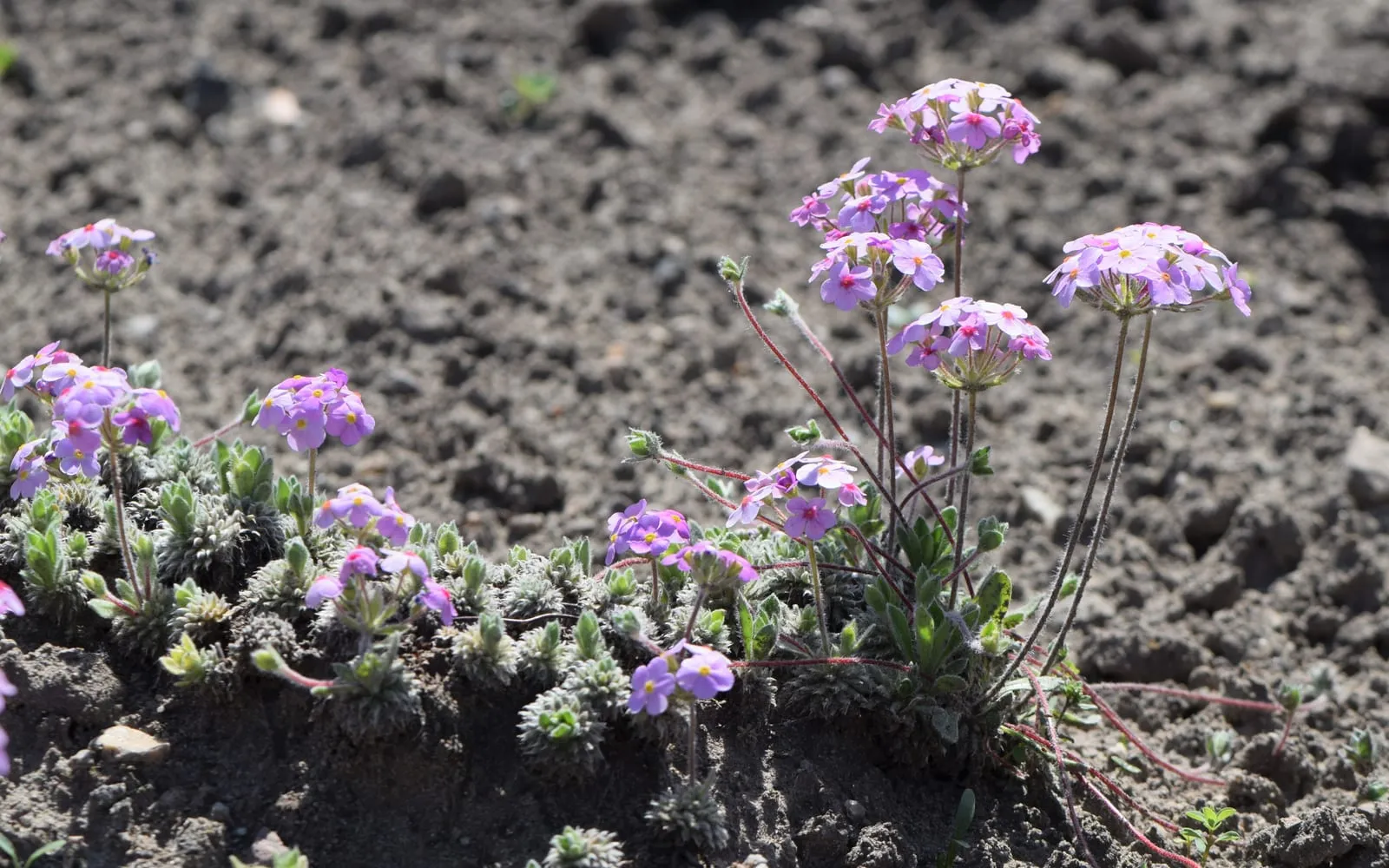
Rock jasmine forms a tight, spreading cushion of small rosettes, each one covered in fine silvery hairs that give the whole plant a soft, silky sheen, topped in late spring by clusters of small, five-petalled pink or white flowers held just above the foliage on short stems. The common name refers to the shape and fragrance of the individual flowers rather than to any relationship with true jasmine, and the plant belongs to the primrose family rather than to the jasmine family.
Its most distinctive vulnerability, and the reason it is rated moderate rather than easy in this collection, is water sitting directly in the dense hairs covering each rosette rather than wet soil around the roots. Those hairs, an adaptation that reflects intense high-altitude sunlight and slows moisture loss on its native mountain slopes, trap water against the leaf surface when rain or overhead watering wets the plant, and that trapped moisture is what triggers rot far more often than a soggy root zone does. It is the same mechanism that makes hairy-leaved houseplants like African violet vulnerable to water splashed on their foliage, playing out on a hardy alpine instead.
Appearance and character
Small rosettes of narrow, silver-haired leaves grow in tight clusters connected by very short runners, building a dense, silvery-green cushion rarely more than 5 to 8 cm tall but often considerably wider as the plant spreads. The overall texture is soft and felted to the touch, quite different from the smooth or waxy foliage of most other plants in this collection.
In late spring, short flower stems emerge from among the rosettes, each carrying a small cluster of flowers similar in shape to a primrose, in shades from white through soft pink. The display is delicate rather than dramatic compared with the dense flower sheets produced by aubrieta or basket-of-gold, and the plant’s main appeal through the rest of the year is its neat, silvery cushion texture rather than a long flowering season.
Where it is from
Androsace sarmentosa is native to the Himalayan region, found growing on rocky slopes and in open woodland at elevations between roughly 2,700 and 4,000 metres, an environment defined by intense ultraviolet light, sharp temperature swings between day and night, strong wind and generally dry air punctuated by brief, heavy precipitation events rather than steady rainfall. The dense covering of fine hairs on the leaves is a direct adaptation to that environment, reflecting excess sunlight and reducing water loss through the leaf surface in thin, dry mountain air.
That adaptation becomes a liability at low altitude in a humid climate, where rainfall and dew sit in the hair covering for far longer than the brief mountain storms the plant evolved to shed quickly in dry air and strong wind. The cushion growth habit itself, tight and low to minimise wind exposure, is the same survival strategy shared by mossy saxifrage and most other true alpines, but the hairy leaf surface is a second, more specific adaptation layered on top of it that most other plants in this collection do not share.
How it grows
Rock jasmine spreads by short, thread-like runners called stolons that root at intervals, producing new rosettes a short distance from the parent plant and gradually building a continuous cushion rather than a single crown. This differs from lewisia’s single self-contained rosette and gives rock jasmine more resilience against losing the entire plant to one localised problem, since a cushion made of many small connected rosettes can lose sections while the rest continues growing.
Growth is most active in spring and early summer, slowing considerably once temperatures rise, and the plant tolerates a cold, dry winter with far more ease than a warm, humid summer. Fungal disease taking hold in the leaf hairs after a period of damp, still weather is the most common route to losing a section of the cushion, spreading locally from the point of infection rather than collapsing the whole plant at once the way crown rot does in lewisia.
Through the seasons
Spring brings the main flush of small pink or white flowers, usually in April and May, and it is the best season to plant new rock jasmine, giving it time to establish before summer heat arrives.
Summer is the plant’s most vulnerable period, particularly in a humid climate. Watering should go to the soil at the base of the plant rather than over the cushion, and where possible some afternoon shade helps protect the foliage from the combination of heat and humidity that most reliably triggers rot in the leaf hairs.
Autumn is a suitable time to remove any dead or rotted sections of the cushion, cutting back to healthy growth, and to check that drainage around the base of the plant is still working well before winter rain arrives.
Winter is handled with relative ease by an established plant down to around minus 15 deg C, reflecting its extreme high-altitude native habitat, provided the crown and cushion are not sitting in standing water. A cold, dry winter causes far less damage than a mild, wet one.
Care difficulty
Rock jasmine is rated moderate because its main vulnerability, rot triggered by water sitting in the hairy leaf surface, is less intuitive than the soil drainage most rockery plants are judged on. A gardener can provide excellent soil drainage and still lose sections of the cushion by watering overhead in humid weather, which is why propagation guidance for this species specifically recommends watering from below.
Growers in hot, humid summer climates often find rock jasmine harder to keep long-term than a cooler-summer alpine environment would suggest from the hardiness zone alone, and treating summer humidity as a distinct risk factor from winter cold is the single most useful adjustment to make.
Watering
Water at the base of the plant or the surrounding soil, never directly over the cushion, since water landing on the hairy rosettes is slow to evaporate and encourages exactly the rot the plant is prone to. Regular watering through spring and early summer supports active growth, tapering off as temperatures rise and humidity becomes the greater risk.
Where rock jasmine is grown in a container, watering from a saucer underneath so the plant draws water up through the soil, rather than watering from a can held above the foliage, avoids wetting the rosettes entirely and is worth the extra care it takes.
Warning signs, diseases and pests
Grey mould, a fungal disease favoured by damp, still air, is the most distinctive problem for rock jasmine, taking hold in the hairy leaf surface after a period of overhead wetting or humid, poorly ventilated conditions and spreading as a fuzzy grey growth across affected rosettes. Removing infected sections promptly and improving air movement around the plant limits its spread.
Vine weevil grubs occasionally attack the roots below ground, and slugs graze on the softer new growth, particularly in damp conditions. Root rot follows waterlogged soil in the same way it affects most other alpines in this collection, distinct from but sometimes occurring alongside the leaf-surface rot the hairy foliage is specifically prone to.
Growing environment
Full sun suits rock jasmine in cooler climates, but some shade during the hottest part of the day is beneficial where summers are hot or humid, reducing the stress that makes the plant more vulnerable to rot. Good air movement around the planting matters more for this species than for most others in this collection, since still, humid air sitting against the hairy foliage is the main trigger for disease.
Soil should be a gritty, sharply-draining scree or crevice mix, slightly alkaline, matching the mineral, rocky slopes of its native Himalayan habitat. A vertical crevice or the gap between two rocks, similar to the planting position recommended for lewisia, both improves drainage and reduces the chance of water pooling against the base of the cushion.
Feeding
Rock jasmine needs no routine feeding and performs best on lean, mineral soil that mirrors its native high-altitude habitat. Rich feeding produces soft, lush growth that is both more attractive to pests and more vulnerable to the fungal rot the species already has to contend with in the leaf hairs.
If growth looks weak on very poor soil, a single very dilute feed in spring is unlikely to cause harm, but it is not something most established plants need.
Troubleshooting
A fuzzy grey growth has appeared across part of the cushion. This is grey mould, favoured by damp, still air sitting against the hairy leaf surface. Remove affected rosettes promptly, improve air circulation, and switch to watering at the base rather than overhead if that has been the habit.
Sections of the cushion have turned brown and mushy after a humid spell. This is rot triggered by moisture trapped in the leaf hairs rather than by waterlogged soil. Cut back to healthy growth, improve airflow around the plant, and consider providing afternoon shade if the position is fully exposed to sun.
The plant thrived through a cold winter but declined over the following summer. This is a common pattern for rock jasmine outside its native climate, since cold, dry winters suit it far better than hot, humid summers. Providing shade during the hottest hours and improving air movement around the planting both help.
New rosettes produced by runners have failed to establish. This usually points to the runners drying out before rooting properly, or to overwatering from above rotting the young growth before it can root. Keep the soil around new rosettes lightly moist without wetting the foliage directly.
Flowering has been sparse or absent this spring. Insufficient direct light, a stressful previous summer, or overcrowding within the cushion are the most common causes. Thinning an overcrowded cushion and ensuring several hours of direct sun usually improves flowering the following year.
Vine weevil notches have appeared on the leaf edges. Adult weevils feed at night and are cosmetic on their own, but their grubs feeding on the roots below ground can seriously weaken the plant. Check the surrounding soil for grubs and treat with a biological nematode drench in late summer if found.
The whole cushion has collapsed after a period of heavy summer rain. This combines both of the plant’s vulnerabilities, wet soil around the roots and moisture trapped in the leaf hairs, and by the time collapse is visible the plant is usually not recoverable. Replant in a more sharply-draining position, ideally a vertical crevice, and consider a rain-shedding top-dressing of coarse grit around the base.