
Houseplant
Red Beard Orchid
Calochilus paludosus
Also known as Calochilus paludosus
How to grow Calochilus paludosus, the red beard orchid, a swamp-loving Australian beard orchid with a reddish hairy lip.
At a glance
- Difficulty
- Difficult
- Water
- Very moist in the cool growing season; dry through summer dormancy
- Light
- Bright, open light
- Temperature
- Cool, damp growing season; dry, warm summer dormancy
- Humidity
- High in growth
- Hardiness
- USDA 8-10, RHS H3, hardy to -5 C
- Type
- Perennial
- Height
- 20-50 cm
- Native to
- Australia and New Zealand
A tuberous terrestrial orchid from eastern Australia, Tasmania and New Zealand that grows through a cool, wet winter and spring and dies back to its tuber for a dry summer. It takes light frost while in growth, and it depends on a soil fungus that pot culture cannot supply.
Hardiness zones describe winter cold alone. Summer heat, humidity, rainfall and the length of the growing season decide as much, so treat the range as the outer limit rather than as a recommendation.
Not known to be toxic
Calochilus paludosus, the red beard orchid, is not recorded among the seriously toxic plants, and related plants in its group are not listed as toxic by the ASPCA or the RHS. A pet or child that chewed a leaf would be unlikely to come to serious harm beyond a possible mild stomach upset.
Sources: ASPCA toxic and non-toxic plants, RHS potentially harmful garden plants
About
Calochilus paludosus is the swamp-loving member of the Australian beard orchids, its species name meaning of the marshes and pointing to the damp ground it favours. Found across parts of Australia and in New Zealand, it carries the genus signature of a hairy lip, here tinged reddish, which earns it the name red beard orchid. It is a slender tuberous terrestrial that grows in wet heath, boggy flats and damp sandy places during the cooler seasons and rests below ground through summer. As with all beard orchids, it depends closely on soil fungi and an unusual pollination strategy, which puts it beyond ordinary cultivation, so this page concentrates on telling it apart and on the wetland habitat that shapes its needs.
Appearance and character
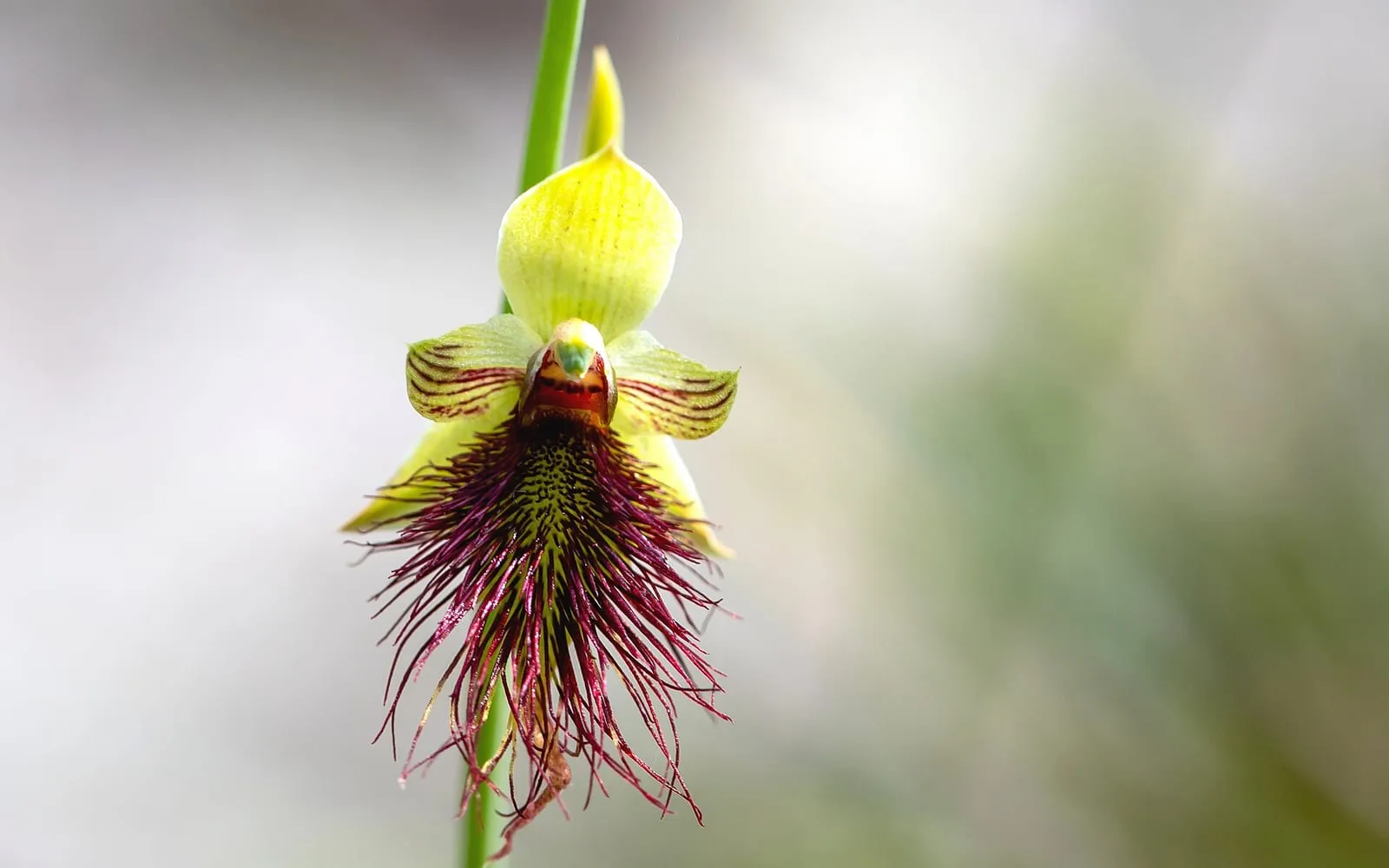
This is a slighter plant than its woodland cousins, with a single narrow grooved leaf and a wiry stem bearing a few flowers. The lip is bearded with reddish to red-brown hairs, generally somewhat less dense than in the showier species, and the greenish sepals and petals behind it are often streaked with red. Its lighter build and reddish beard, combined with its preference for wet ground, help distinguish it in the field. The solitary erect leaf appears with the growing season and is gone by summer, and the whole plant can be hard to spot among the sedges and low shrubs of the marshy places it inhabits.
Where it is from
The species is native to Australia and New Zealand, growing in swampy heath, seasonally waterlogged flats and damp sandy ground instead of on the drier slopes some of its relatives prefer. Its climate provides cool wet winters and warmer drier summers, and the orchid grows while the ground is moist and rests when it dries. Its wetland setting means the roots experience abundant moisture during growth, yet the plant still relies on the particular soil fungi that make germination and survival possible, a dependence that runs through the whole genus.
How it grows
Each year the plant regrows from an underground tuber, producing its leaf and flower stem through the damp cool season, renewing the tuber, then dying back for summer. Its flowers imitate a female wasp, and males that attempt to mate may transfer pollen, though Calochilus paludosus most often pollinates itself when no wasp visits. The dust-fine seed germinates only where the correct fungus is present in the soil, so wild colonies increase slowly and deliberate propagation is exceedingly difficult without symbiotic techniques. Its marshy habitat adds a further complication for anyone tempted to move it, since its root environment is hard to reproduce artificially.
Through the seasons
Autumn breaks dormancy as rain returns and the ground wets up, and the single leaf emerges from the tuber.
Winter into spring is the growing season in the damp cool marsh, when the leaf feeds the tuber and the flower stem forms.
Spring brings the reddish bearded flowers, opening to attract their wasp pollinators.
Summer dries the habitat and triggers dormancy; the leaf withers and the tuber rests underground until the wet returns.
Care difficulty
Among a genus already regarded as near-impossible, the wetland requirements of this species make it harder still. It needs its fungal partner, a cool damp growing season and a distinct dry rest, and its liking for boggy ground is difficult to satisfy without the water going stagnant in a pot. The best recommendation is to enjoy and photograph it in its marsh and leave it undisturbed, since wild plants rarely survive removal and populations are easily damaged. The notes below outline its needs for the record instead of as a workable method.
Watering
If a plant is maintained at all, watering must be abundant during growth yet carefully aerated. Through the cool wet season the medium is kept very moist to reflect the marsh, using clean low-mineral water and an open mix that stays oxygenated instead of souring, and watering is withdrawn as the leaf ages so the tuber can rest dry through summer. The balance between the moisture the plant needs and the stagnation it cannot tolerate is a large part of why it defeats cultivation.
Warning signs, diseases and pests
A tuber that rots or fails to reappear usually reflects stagnant wet during growth, watering through the summer rest, disturbance, or the loss of its fungal partner, and once decline sets in there is often no remedy. In artificial conditions aphids may attack the soft flower stem, and fungus gnats signal a medium kept sour and airless. Because so much depends on hidden soil biology and on getting the wet-but-aerated balance right, defences are limited to clean, cool, correctly timed and well-oxygenated conditions.
Growing environment
In the wild it occupies open, sunny to lightly shaded wetland with acidic sandy or peaty soil that is waterlogged in winter and dry in summer and carries the right fungi. Any cultivation attempt requires bright cool conditions, a medium that holds moisture yet stays aerated, and ideally soil or inoculum bearing its mycorrhiza. Warm stagnant water is fatal. Reproducing a seasonally flooded, fungus-rich marsh in a pot is difficult, so the species is best left as a wild subject.
Feeding
Feeding matters little. The plant draws much of its nutrition through its fungal associate from poor, acidic wetland soils, so any feeding under cover should be minimal and very dilute to avoid harming the roots and the fungal relationship. During the summer dormancy no feed is given, since the resting tuber takes nothing from the medium.
Troubleshooting
Why does it grow in wet ground? Its name means of the marshes, and it naturally occupies swampy heath and waterlogged flats, growing while the ground is wet in the cool season.
Can I cultivate it at home? Very unlikely. It depends on specific soil fungi, and its boggy habitat is hard to reproduce, so it is best left in the wild.
What is the beard for? The reddish hairs help the flower mimic a female wasp, luring males that move pollen while attempting to mate.
Is a summer-empty pot a failure? If the tuber survives, dormancy is normal, though these orchids seldom persist once disturbed.
Is it toxic to pets? No serious toxicity is recorded for the genus, but keep pets from chewing it.
Red Beard Orchid problem guides
Not sure what is wrong? See the common houseplant pests guide.