
Outdoor plant
Ragwort
Jacobaea vulgaris
Also known as Common ragwort, Stinking Willie, Benweed
How to identify common ragwort, Jacobaea vulgaris. The law that applies to it, why it kills horses through cumulative liver damage, safe removal and why dried ragwort in hay is worse than the living plant.
At a glance
- Difficulty
- Easy
- Water
- Not applicable, since this is a plant to control rather than grow
- Light
- Full sun
- Temperature
- Fully hardy, to about -30 deg C
- Hardiness
- USDA 3-9, RHS H7, hardy to -30 C
- Type
- Biennial or short-lived perennial, dying after it flowers
- Height
- 30-120 cm in flower
- Native to
- Europe and western Asia, and native throughout Britain
- Best month
- July in the Northern Hemisphere, January in the Southern Hemisphere
Nothing about the weather limits it, and the duty attached to it changes at a border. Britain lists common ragwort as an injurious weed under the Weeds Act 1959, which allows enforcement where it threatens grazing or forage land but does not make having it illegal. Oregon, Washington, California, Idaho and Montana require control outright, and Oregon cut its infestation by more than ninety per cent with the cinnabar moth and the ragwort flea beetle, which is one of the most successful biological control programmes on record. It is a declared weed across Australia and New Zealand.
Hardiness zones describe winter cold alone. Summer heat, humidity, rainfall and the length of the growing season decide as much, so treat the range as the outer limit rather than as a recommendation.
Every month named in this guide is for the temperate Northern Hemisphere. If you garden in the Southern Hemisphere, shift each one by six months, so July becomes January. Closer to the equator the wet and dry seasons matter more than the calendar, and the shift stops being a useful guide.
Poisonous if eaten
- Do not eat
- Every part, and the alkaloids survive drying and wilting
- Harm from
- Eating it and handling it
- Affects
- People, horses, cats and dogs
Ragwort contains pyrrolizidine alkaloids, which the liver converts into compounds that destroy liver cells. The damage is cumulative and irreversible, so an animal can eat small amounts over months or years with no visible signs and then present with sudden, advanced and untreatable liver failure. Horses are the animals most affected in Britain, followed by cattle. Signs appear late and include weight loss, jaundice, photosensitisation of unpigmented skin, aimless walking, head pressing and apparent blindness. By the time these show, the prognosis is poor and there is no specific treatment. Living ragwort is bitter and grazing animals avoid it where there is other forage. The critical danger is dried or wilted ragwort in hay, haylage or silage, where it loses the bitterness but keeps the alkaloids and is eaten readily. Cut ragwort left lying in a field is the classic cause of poisoning. For people, the risk is much lower and not zero, since the alkaloids can be absorbed through skin, so wear gloves when handling it. It is not a plant to make herbal preparations from. Dogs and cats are rarely affected because they do not eat it.
Sources: RHS potentially harmful garden plants, ASPCA toxic and non-toxic plants
About
Ragwort is a native British wildflower, an important nectar plant, and the reason a good many horses die every year. All three are true and the plant sits awkwardly because of it.
It is one of very few plants anywhere named in legislation, and what the law asks of you depends on the country. Britain lists common ragwort as an injurious weed under the Weeds Act 1959, and the Ragwort Control Act 2003 provides for a code of practice on preventing its spread. Neither makes the plant illegal to have, and what they establish is a duty to act where it threatens grazing land or land used to produce forage. Oregon, Washington, California, Idaho and Montana require control outright, and it is a declared weed across Australia and New Zealand.
The poisoning mechanism is what makes this plant unusual. Damage to the liver is cumulative and permanent, so there is no safe dose over a lifetime and no warning until the animal is already beyond help.
Its ecological value is real. Ragwort supports a large number of invertebrate species, and the cinnabar moth caterpillar, banded orange and black, depends on it almost entirely. Removing every plant from every acre is neither required nor desirable.
Appearance and character
A biennial or short-lived perennial. In its first year it makes a flat rosette of deeply cut dark green leaves. In its second it throws up a tough branched flowering stem 30 to 120 cm tall.
Leaves are deeply and irregularly lobed, with a ragged appearance that gives the plant its name, dark green above and often slightly downy beneath. The end lobe is blunt.
Stems are tough, ridged, often flushed purple-red at the base, and hard to snap.
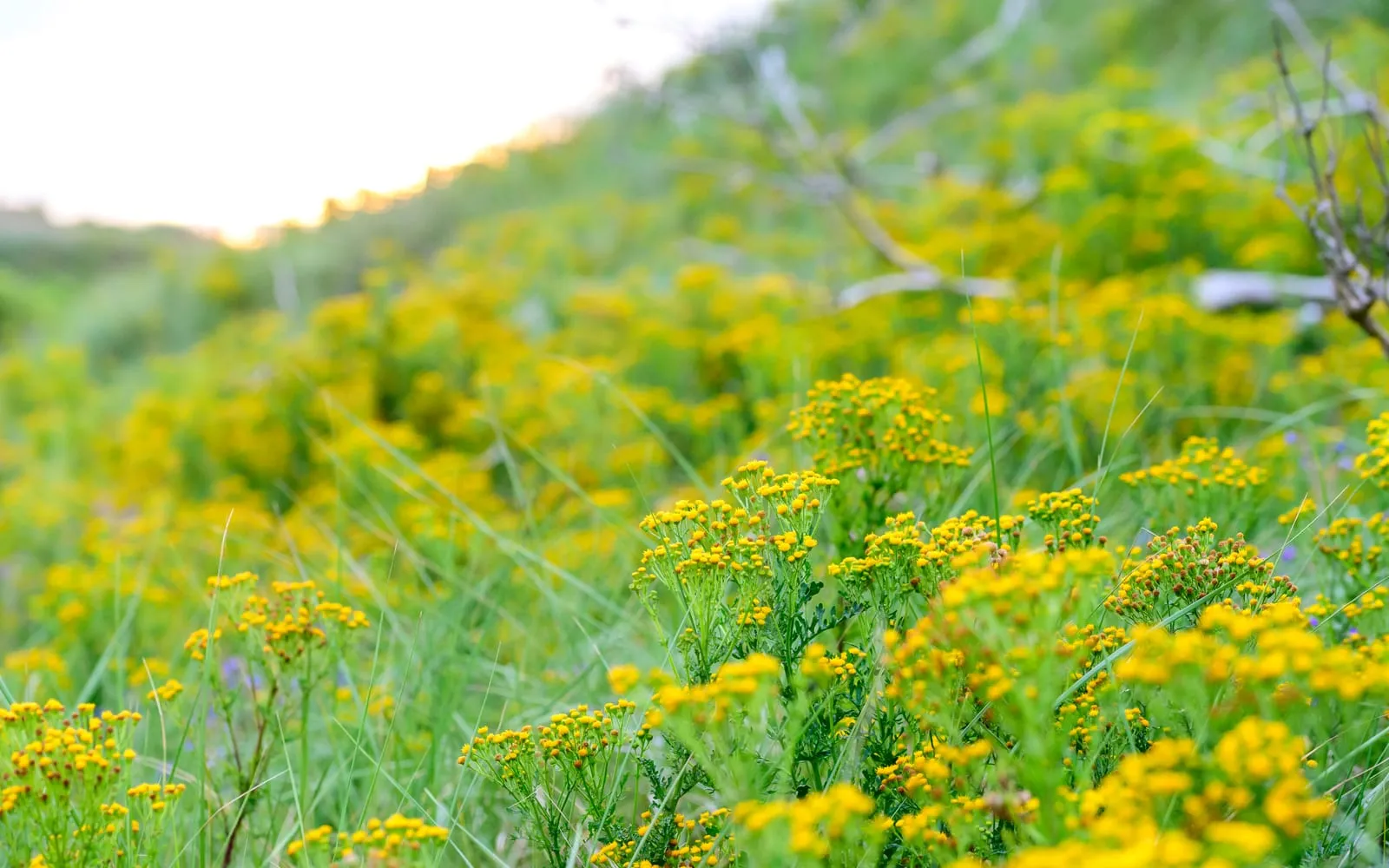
Flowers open from June to November, peaking in July and August, in dense flat-topped clusters of bright yellow daisy flowers. Each flower head is 15 to 25 mm across with about thirteen ray florets around a darker yellow centre.
The smell when crushed is unpleasant and slightly acrid, which is the origin of Stinking Willie.
Seeds are small with a parachute of white hairs, and a single plant can produce tens of thousands, carried on the wind.
The cinnabar caterpillars are often the easiest way to spot it in July. Nothing else in a British field carries fat black and orange banded caterpillars in numbers.
Where it is from
Europe and western Asia, and native throughout Britain and Ireland.
It grows on rough grassland, roadside verges, waste ground, railway land, sand dunes and, most significantly, on overgrazed and poached pasture.
Bare ground is what it needs to germinate. A dense, well-managed, unpoached sward resists it, and the appearance of ragwort in a paddock is usually a sign that the grazing has been too hard or the ground is compacted.
That relationship matters because it points at the real long-term control. Improving the sward does more than pulling plants.
Britain has several other ragworts and related species, including marsh ragwort, hoary ragwort and Oxford ragwort, plus the rare and protected fen ragwort. The Weeds Act applies to common ragwort.
How it grows
Everything here is about control rather than cultivation.
Ragwort germinates in autumn and spring on bare or disturbed ground, overwinters as a rosette, and flowers in its second or subsequent year before dying.
Pull whole plants where numbers are small. Do it when the ground is wet so the root comes with it, wear gloves and cover your arms, and use a ragfork rather than bare hands for a large job.
Get the root out. The commonest mistake is snapping the stem off at ground level, which prompts the plant to regrow as a short-lived perennial with several crowns instead of one.
Never cut ragwort and leave it. Cutting removes the bitterness that keeps animals off it while leaving the toxin intact, and cut wilted ragwort lying in a field is the single most reliable way to poison a horse.
Remove every scrap of pulled material from the field immediately. Bag it, and dispose of it by controlled burning where local rules permit, or through the council green waste route. Do not compost it and do not leave it in a heap that stock can reach.
Time removal before the seed sets, which means acting in June and July rather than in September.
Restore the sward afterwards. Reseeding bare patches, reducing stocking density and relieving compaction do more over five years than pulling does.
Through the seasons
Winter shows the flat rosettes clearly against short grass, and this is a good time to identify and dig them.
Spring brings rapid rosette growth and the beginning of stem extension in May.
Summer is flowering, from June through August, and the window in which removal must happen to prevent seeding. Cinnabar caterpillars appear in July.
Autumn disperses seed on the wind and the plants die. New rosettes germinate on any bare ground.
Care difficulty
Identification is easy. Control is a long job rather than a hard one.
The difficulty is persistence. Seed is wind-borne and travels, the seed bank in soil is long-lived, and a cleared paddock next to an untreated verge will be recolonised.
The other difficulty is judgement. Ragwort on a roadside verge or a nature reserve is supporting a great deal of wildlife and is doing no harm. Ragwort in a horse paddock or a hay meadow is a serious problem. The legal duty follows the risk rather than the plant, and blanket eradication is not what the code of practice asks for.
Watering
Not applicable.
Ragwort indicates bare, compacted or overgrazed soil. Dense competitive grass cover is what keeps it out.
Warning signs, diseases and pests
The warning signs are in the animals rather than the plant.
In horses, liver failure from ragwort shows as weight loss despite eating, jaundice seen in the gums and the whites of the eyes, sunburn-like damage on white-skinned areas, depression, aimless circling, head pressing against walls and apparent blindness. These are late signs. Call a vet at once, and mention ragwort exposure, including any hay of uncertain origin.
There is no antidote. Treatment is supportive, and by the time signs appear a large proportion of the liver has already been destroyed.
In cattle the picture is similar and often follows contaminated silage.
For people, wear gloves. The alkaloids can be absorbed through skin, and prolonged bare-handed pulling is a real if minor exposure. Wash hands and forearms afterwards.
The plant itself is attacked by cinnabar moth caterpillars, which can strip a stand completely. That is biological control doing its job and is not a problem to solve.
Growing environment
Full sun on almost any soil, and it favours light, sandy or disturbed ground.
Check for it in horse paddocks, hay meadows, the edges of arable fields, roadside verges bordering grazing land, and anywhere ground has been poached or bare.
Where a garden adjoins grazing land, keeping ragwort off the boundary is a neighbourly matter as well as a legal one.
Leave it where it is doing no harm. On a road verge well away from grazing, on a nature reserve or on a brownfield site, it is a valuable nectar and larval plant and there is no duty to remove it.
The plants to protect while you work are its relatives. Confirm you have common ragwort before clearing a site with conservation interest.
Feeding
Not applicable, and the reverse point matters. Bare soil is what ragwort needs, so anything that maintains a thick unbroken sward suppresses it.
Appropriate stocking rates, rotational grazing, relieving compaction and overseeding bare patches are the durable controls.
Troubleshooting
Is it illegal to have ragwort on my land? In Britain, no. Common ragwort is an injurious weed under the Weeds Act 1959, which allows enforcement where it threatens agricultural land, and the Ragwort Control Act 2003 provides for a code of practice. The duty is to prevent its spread where it puts grazing or forage land at risk, rather than to eradicate it everywhere. Several American states and Australian and New Zealand jurisdictions require control outright, so check the listing where you are.
Can I just cut it down? No. Cutting removes the bitter taste that stops animals eating it and leaves the toxin intact, so cut wilted ragwort is more dangerous than the standing plant. Pull it with the root and remove every piece from the field.
My horse’s hay might have ragwort in it. Stop feeding it and speak to your vet. Dried ragwort in hay is the commonest route to poisoning because the bitterness is gone and horses eat it willingly.
What are the signs of poisoning? Weight loss, jaundice, sunburn on white skin, depression, head pressing and apparent blindness. They appear late, so call a vet immediately rather than waiting.
It grew back with several stems after I pulled it. The root was left behind. Ragwort responds to damage by becoming a multi-crowned perennial. Dig the root out.
Should I remove the cinnabar caterpillars? No. They are the plant’s main natural control and they are a declining species. Where you must clear ragwort, doing it before the caterpillars appear or moving them to plants you are leaving is kinder.
Do I need to clear it from my whole garden? Only where it threatens grazing or forage land. Away from that, it is a native wildflower supporting a lot of insects.
Can I compost it? No. Bag it and dispose of it through the council green waste route, or burn it where local rules allow. Never leave a heap where stock can reach.