
Outdoor plant
Peruvian Apple Cactus
Cereus repandus
Also known as Hedge cactus
How to grow Peruvian apple cactus outdoors. Its fast upright columns, edible fruit, and why it copes with more cold than most tall cacti.
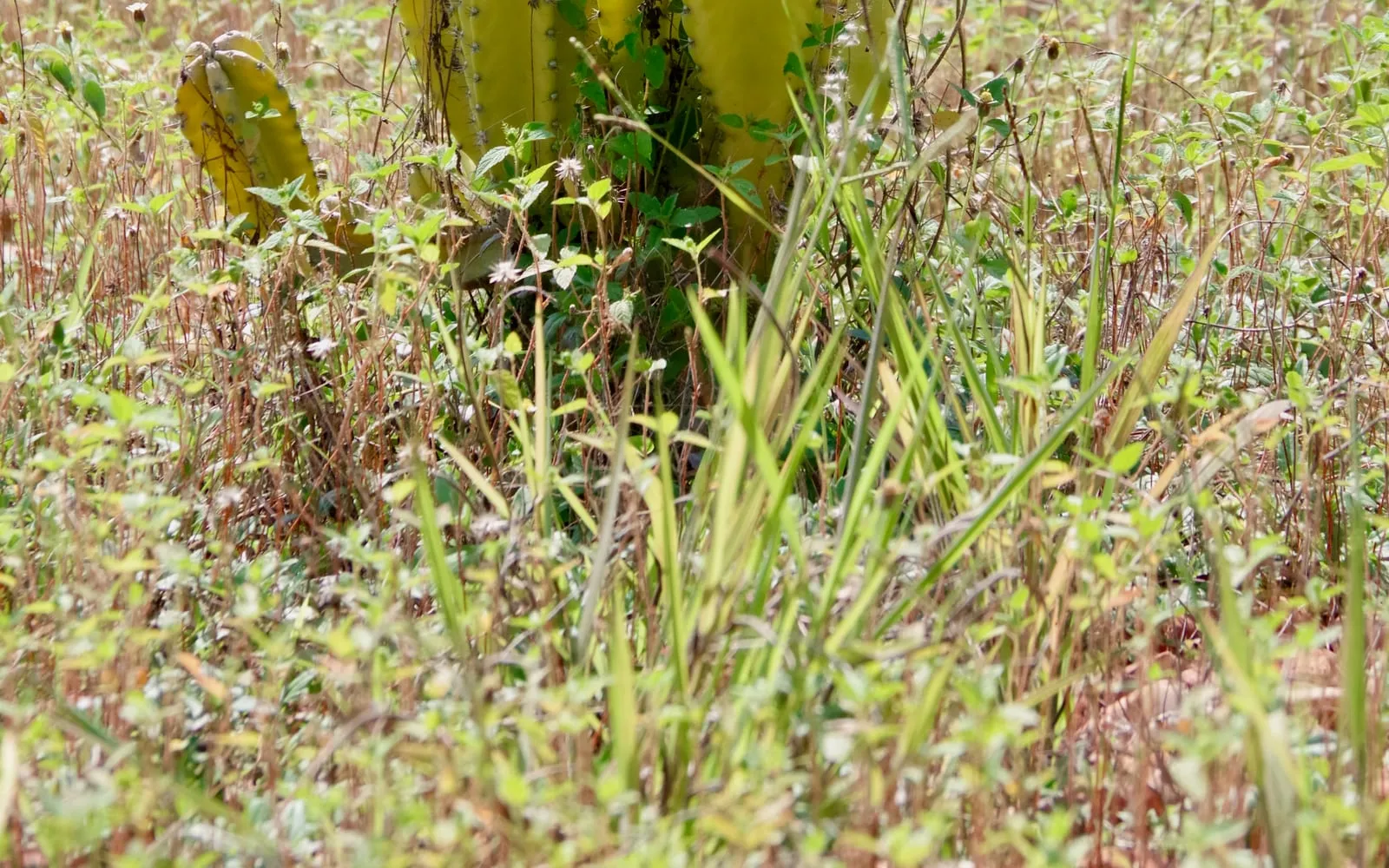
At a glance
- Difficulty
- Easy
- Water
- Regular watering in summer, minimal in winter
- Light
- Full sun
- Temperature
- Tolerates a brief light frost once established
- Hardiness
- USDA 9-11, RHS H3, hardy to -3 C
- Type
- Evergreen perennial cactus
- Height
- 3-10 m outdoors, much less potted
- Native to
- South America
More cold-tolerant than many tall columnar cacti, surviving a brief light frost once mature and established in dry, free-draining soil. It grows fastest with a long, hot summer, and while it survives outside the tropics in a suitably mild climate, prolonged hard frost will kill even an established specimen.
Hardiness zones describe winter cold alone. Summer heat, humidity, rainfall and the length of the growing season decide as much, so treat the range as the outer limit rather than as a recommendation.
Not known to be toxic
- Safe to eat
- The ripe fruit, sweet and similar in texture to dragon fruit, eaten fresh across much of its cultivated range
Peruvian apple cactus has no toxicity listing from the RHS or the ASPCA, and its fruit is a real, widely eaten food, sold in some markets across South America and increasingly grown by fruit enthusiasts elsewhere. The main hazard is mechanical: clusters of sharp spines along each rib can cause painful puncture wounds, and care is worthwhile when harvesting fruit or handling cuttings.
Source: RHS
About
The Peruvian apple cactus is a fast-growing, tall, branching columnar cactus grown both as a striking architectural feature and, increasingly, as a fruit crop, since its sweet, juicy fruit, similar in appearance and texture to the more widely known dragon fruit, ripens reliably given enough summer heat. Its common name hedge cactus reflects a traditional use in parts of South America, where rows of the spiny columns were planted as a living, stock-proof barrier.
It is one of the faster-growing tall cacti available to gardeners, capable of noticeable height gain within a single strong growing season, and mature plants branch freely from the base or partway up an older stem, eventually forming a substantial, multi-stemmed clump.
Appearance and character
Tall, ribbed, blue-green to grey-green columns, typically with five to eight pronounced ribs, carry clusters of sharp spines along each rib at regular intervals, becoming increasingly woody and grey-brown toward the base as a stem ages. Branching occurs readily from the base or from wounds and older growth, giving a mature specimen a candelabra-like form.
Large, white, night-opening flowers appear on mature stems in summer, each lasting only a single night, followed by round to oval fruit that ripen to yellow or red depending on the variety, with sweet, white to pink flesh dotted with small black seeds, closely resembling dragon fruit in both appearance and taste.
Where it is from
Dry scrub and rocky ground across a broad stretch of South America, including parts of Venezuela, Colombia, Brazil and the Caribbean coast, in a climate with hot, dry conditions for much of the year.
That broad native range across somewhat varied conditions is part of why this species tolerates a wider range of garden situations than some more narrowly adapted cacti, coping reasonably well with both arid gardens and slightly more humid subtropical ones, provided drainage is always sharp.
How it grows
An evergreen cactus growing from the tip of each stem, branching readily from the base or from older growth to build an increasingly substantial, multi-stemmed clump over time. Growth is fast by cactus standards, particularly in full sun with a long, hot growing season, and a young plant can reach a significant height within a handful of years given good conditions.
Flowering and fruiting generally begin once a stem has reached a reasonable size and age, and a mature, well-established plant can produce a worthwhile crop of fruit each summer in a suitably warm climate.
Through the seasons
Spring growth resumes as temperatures rise.
Summer is the main growing and flowering season, with night-opening white flowers appearing on mature stems, followed by developing fruit. Water occasionally during hot, dry spells and feed once or twice through this period.
Autumn fruit ripens on mature specimens, and growth slows as temperatures drop.
Winter established plants tolerate a brief light frost provided the soil stays dry; withhold watering almost entirely through this period.
Care difficulty
Easy in a suitable warm climate. This species grows quickly with minimal routine care once established, and its main demand is space, since a mature clump becomes both tall and wide over time.
Watering
Water occasionally but thoroughly during hot, dry summer weather, allowing the soil to dry out completely between waterings. Withhold water almost entirely through winter, since cold, wet soil poses a far greater risk to this species than cold air alone.
Warning signs, diseases and pests
Mealybug and scale insects occasionally colonise the ribs or the grooves between them, and respond to careful manual removal or a horticultural oil treatment for heavier infestations. Root rot from overwatering or poor drainage is the most serious threat this species typically faces, showing as a soft, discoloured base and, in advanced cases, a stem that becomes unstable.
Pale or yellowish patches on a stem, particularly one recently moved into stronger light, usually indicate sun scorch from a sudden change in light levels rather than disease, and acclimatising a plant gradually to stronger sun avoids this.
Growing environment
Full sun is essential for strong, compact growth and good fruiting; in shade the stems etiolate and flowering and fruiting both suffer. Sharply free-draining, gritty soil is equally important, and this species performs poorly in heavy or waterlogged ground regardless of how much sun it receives.
Feeding
A low-nitrogen cactus fertiliser, applied once or twice through the growing season, supports steady growth and good fruiting. Avoid heavy or frequent feeding, which can produce soft growth more prone to sun scorch and pest problems.
Troubleshooting
The base of a stem is soft and discoloured. Suspect root rot from overwatering or poor drainage. Improve drainage significantly, reduce watering, and remove any clearly rotten tissue if the plant can be saved.
Pale or scorched patches have appeared on the stem. Usually sun scorch from a sudden move into stronger light. Provide temporary shade and acclimatise the plant more gradually in future.
Flowers appear but fruit fails to develop. This can reflect insufficient pollination, since the night-opening flowers depend on nocturnal pollinators; hand-pollinating between flowers on different stems, using a small brush, can improve fruit set where pollinators are scarce.
A stem has grown tall and top-heavy. Fast growth can outpace a stem’s structural strength in some conditions. Stake a leaning stem if needed, and consider that firmer, less frequent watering often produces sturdier growth than a generous, constant watering regime.
You want to grow a hedge or screen from this species. Space young plants for their eventual width as well as their height. A mature clump branches out far beyond a single young stem, and individual plants need several years to grow together into a continuous, stock-proof barrier.
Fruit has cracked open before you had a chance to harvest it. This can happen when heavy rain follows a dry spell, swelling the fruit faster than its skin can stretch. Harvesting slightly earlier, as soon as the fruit has coloured fully, avoids losing a crop this way in an unpredictable climate.