
Outdoor plant
Perennial Candytuft
Iberis sempervirens
Also known as Evergreen candytuft, Edging candytuft
How to grow perennial candytuft, Iberis sempervirens. Why its evergreen sheet of leaves hides a woody subshrub underneath, the light annual trim it needs instead of a hard renovation cut, and its Mediterranean roots.
At a glance
- Difficulty
- Easy
- Water
- Regular watering while establishing; drought-tolerant once mature
- Light
- Full sun
- Temperature
- Cool to warm temperate
- Hardiness
- USDA 4-8, RHS H5, hardy to -15 C
- Type
- Hardy evergreen subshrub
- Height
- 20-30 cm
- Native to
- Europe
Hardy through most temperate winters without protection, and the zone number describes that reliably. What it leaves out is the plant's woody structure underneath the evergreen leaves, which means it does not respond to hard renovation pruning into old stems the way a herbaceous rockery perennial does, regardless of how mild or cold the winter that preceded the cut.
Hardiness zones describe winter cold alone. Summer heat, humidity, rainfall and the length of the growing season decide as much, so treat the range as the outer limit rather than as a recommendation.
Not known to be toxic
Perennial candytuft carries no toxicity listing from the RHS or the ASPCA. Like other members of the cabbage family it has no documented history of causing digestive upset or skin irritation and is commonly planted in beds accessible to pets and children.
About
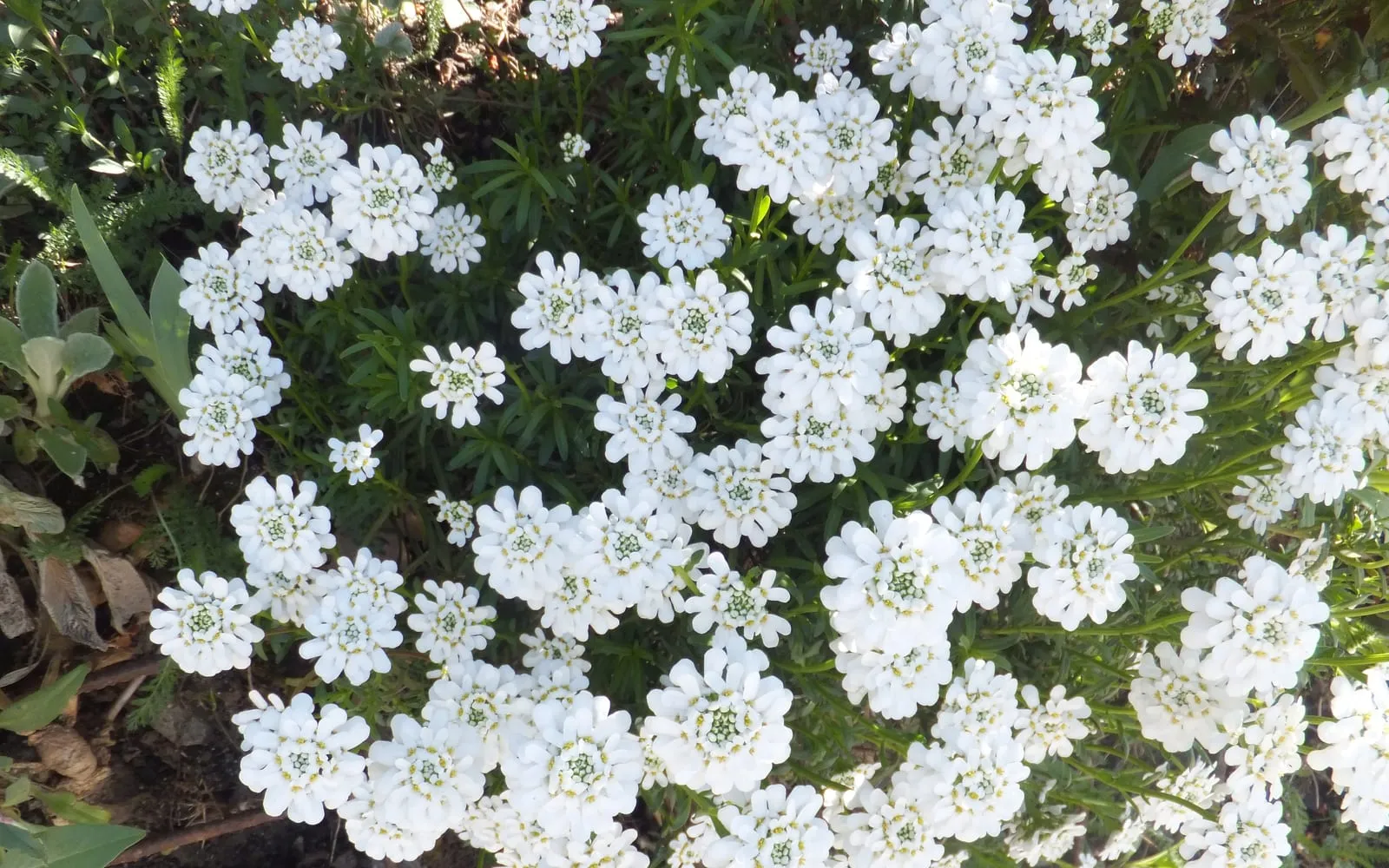
Perennial candytuft is a low, spreading evergreen grown for two things: a dense sheet of narrow, dark green leaves that holds its colour through winter when much of a rockery has died back, and a brief but intense covering of small white flowers in dense, flattened clusters through mid to late spring. It is one of the more permanent- looking plants in this collection, staying visibly structured in January in a way that most flowering rockery perennials do not.
That permanent appearance is slightly misleading about what is happening underneath the leaves. Unlike aubrieta, which is herbaceous and regrows readily even from a hard cut into old growth, candytuft is a subshrub, meaning its stems build real woody tissue over time in the way a small shrub’s would. Cutting hard back into that old wood, the kind of renovation pruning that rescues an overgrown aubrieta, often fails to resprout on candytuft and can kill the cut sections outright. That is the main difference between two plants that otherwise look and behave very similarly in a rockery.
Appearance and character
Narrow, glossy, dark green leaves grow densely along low, spreading stems, evergreen and dense enough to form a solid mounding mat 20 to 30 cm tall. The foliage alone gives useful year-round structure to a rockery planting, holding its shape and colour through winter better than most flowering perennials in this collection manage.
In mid to late spring, the whole mat is covered in tight, flattened clusters of small, four-petalled white flowers, opening in such density that individual leaves are barely visible beneath the bloom for two to three weeks. The effect is similar to a light dusting of snow settled across the mat, which is likely the origin of the plant’s common name, a reference to the sugared confectionery of the same name rather than to any culinary use of the plant itself.
Where it is from
Iberis sempervirens is native to rocky, mountainous ground across southern Europe, from Spain through the Balkans and into parts of Turkey, typically found on limestone slopes, cliffs and stony banks in full exposure to Mediterranean sun. That native range, dry and intensely sunny with alkaline, rocky soil, explains both the plant’s strong drought tolerance once established and its preference for lime-rich or neutral soil over strongly acidic ground.
The woody structure that develops with age, unusual among the low, spreading plants in this collection, most of which are herbaceous perennials, reflects a Mediterranean shrubland origin shared with plants like lavender and rosemary rather than the alpine scree or coastal habitats that shape many of its rockery companions. That family resemblance in woodiness is worth remembering when pruning, since the same caution about cutting into old wood that applies to lavender applies here too.
How it grows
New growth extends outward from an increasingly woody base, with each season’s stems building on the structure of the previous year’s rather than dying back to ground level. Over several years this produces a low, dense, semi-shrubby mound rather than a true mat that spreads by rooting stems, and the oldest wood at the centre of the plant becomes progressively less able to produce fresh new shoots.
Left entirely unpruned, candytuft gradually opens up at the centre in a pattern that looks superficially similar to the bare-centre problem seen in aubrieta, but the underlying mechanism and the fix are different. Because the woody stems do not reliably resprout from old growth, prevention through a light annual trim matters more here than rescue through a hard cut later, since by the time the centre has gone bare, cutting into that old wood is unlikely to bring it back.
Through the seasons
Spring is the flowering season, with the dense white flower display usually running through April and May. As soon as flowering finishes, trim the whole plant lightly, cutting back into this year’s soft growth rather than into old wood, which tidies the shape and encourages branching without risking the dieback that a harder cut into older stems can cause.
Summer brings steady foliage growth following the post-flowering trim, and the plant needs little attention beyond occasional watering in extended dry spells, since it tolerates heat and drought well once established.
Autumn is a reasonable time to plant new candytuft, giving it a full season to root before winter, though spring planting is equally suitable for this species.
Winter is handled without difficulty by an established plant down to around minus 15 deg C, and the evergreen foliage holds its colour and shape through the coldest months better than most other plants in this collection, providing useful winter structure in a rockery.
Care difficulty
Perennial candytuft is easy to grow well but easy to mismanage over the long term if pruned like a herbaceous rockery perennial rather than like the woody subshrub it is. A light trim immediately after flowering, every single year without exception, is the one habit that keeps the plant dense and long-lived, since it prevents the woody legginess problem from ever developing in the first place rather than trying to reverse it later.
Gardeners who skip several years of trimming and then attempt one hard renovation cut to fix an overgrown, gappy plant are often disappointed, since the response candytuft gives to a hard cut into old wood is markedly less reliable than the response aubrieta or basket-of-gold give to the same treatment.
Watering
Water regularly while new plants establish their root systems, then reduce to occasional deep watering during extended dry spells once established, since candytuft’s Mediterranean origin gives it strong natural drought tolerance. It performs poorly in soil that stays consistently wet, particularly in winter, when waterlogged ground around the woody base is more likely to cause dieback than the cold itself.
Warning signs, diseases and pests
Downy mildew occasionally affects candytuft in cool, damp spring conditions with poor air circulation, showing as a greyish coating on the leaf undersides. Clubroot, a soil-borne disease affecting members of the cabbage family, can occasionally affect candytuft in contaminated soil, causing swollen, distorted roots and stunted growth, though it is a less common problem for this ornamental species than for edible brassicas.
Aphids sometimes cluster on the soft growth produced after the post-flowering trim, and flea beetles occasionally shot-hole the leaves during warm, dry spells, both generally cosmetic on an established plant.
Growing environment
Full sun is essential for dense flowering and for the tight, compact habit candytuft is grown for; in shade it grows sparser and leggier, stretching toward the available light in a way that compounds the plant’s own tendency toward legginess with age. A south-facing rockery slope or wall base suits it well.
Soil should be free-draining and tolerates poor, stony or chalky ground readily, reflecting its limestone native habitat. Rich, moisture-retentive soil tends to produce soft, less compact growth that is more vulnerable to winter dieback around the woody base.
Feeding
Perennial candytuft needs little to no supplemental feeding, and rich soil or heavy fertiliser produces soft, sappy growth that is both less floriferous and more vulnerable to fungal disease and winter dieback than growth produced on lean soil. This follows the same pattern seen across most of the Mediterranean and mountain natives in this collection, where poor soil produces the tightest, healthiest plants.
A single light feed in early spring is reasonable on poor soil, but most established plantings need nothing at all.
Troubleshooting
The centre of an older plant has gone bare and woody, and a hard cut back into that wood has not resprouted. This is the expected result of candytuft’s woody structure, which does not reshoot reliably from old growth the way a herbaceous perennial does. Prevention through annual light trimming is more effective than rescue at this stage; replacing the plant is often more reliable than trying to renovate it.
Flowering was sparse this spring. Insufficient light, a missed post-flowering trim the previous year, or an ageing, increasingly woody plant nearing the point where flowering naturally declines are the usual causes. A light annual trim and full sun both help maintain flowering over the plant’s lifespan.
A greyish coating has appeared on the underside of the leaves. This is downy mildew, more likely in cool, damp, crowded spring conditions. Improve air circulation by thinning nearby planting and avoid overhead watering in the evening.
Roots have appeared swollen and distorted, with stunted overall growth. This suggests clubroot, a soil-borne disease affecting the cabbage family. There is no cure once established; remove and dispose of the affected plant rather than composting it, and avoid replanting another brassica-family plant in the same spot for several years.
Small round holes have appeared across the leaves during warm, dry weather. This is flea beetle damage, generally cosmetic on an established plant and rarely serious enough to need treatment. Keeping the plant well watered during dry spells reduces beetle activity.
The plant has become sprawling and gappy after several years without any pruning. This is the predictable result of skipping the annual light trim. Begin trimming lightly every year immediately after flowering from now on, cutting only into the current season’s soft growth, and accept that a badly overgrown plant may need replacing rather than renovating.
New plants have failed to establish well despite good drainage. Check that the soil is not too acidic, since candytuft strongly prefers neutral to alkaline conditions and performs poorly on very acid soil even where drainage itself is adequate.