
Outdoor plant
Oshima Sedge
Carex oshimensis
Also known as Evergold sedge
How to grow Oshima sedge in a pot or border. Its bright gold-striped foliage, coastal origin, and why it tolerates more sun than most variegated sedges.
At a glance
- Difficulty
- Difficult
- Water
- Regular watering; avoid both drought and waterlogging
- Light
- Partial shade to morning sun
- Hardiness
- USDA 6-9, RHS H5, hardy to -15 C
- Type
- Hardy evergreen perennial sedge
- Height
- 20-35 cm
- Native to
- Japan
Hardy through most temperate winters, though slightly less cold-tolerant and more particular about drainage than some other evergreen Carex species. It comes from coastal and low-elevation Japanese woodland rather than a colder inland habitat, and a wet, poorly drained winter is a bigger risk to this species than the cold itself.
Hardiness zones describe winter cold alone. Summer heat, humidity, rainfall and the length of the growing season decide as much, so treat the range as the outer limit rather than as a recommendation.
Not known to be toxic
Oshima sedge has no toxicity listing from the RHS or the ASPCA and is considered safe around pets and children. It has no documented history of poisoning.
Source: RHS
About
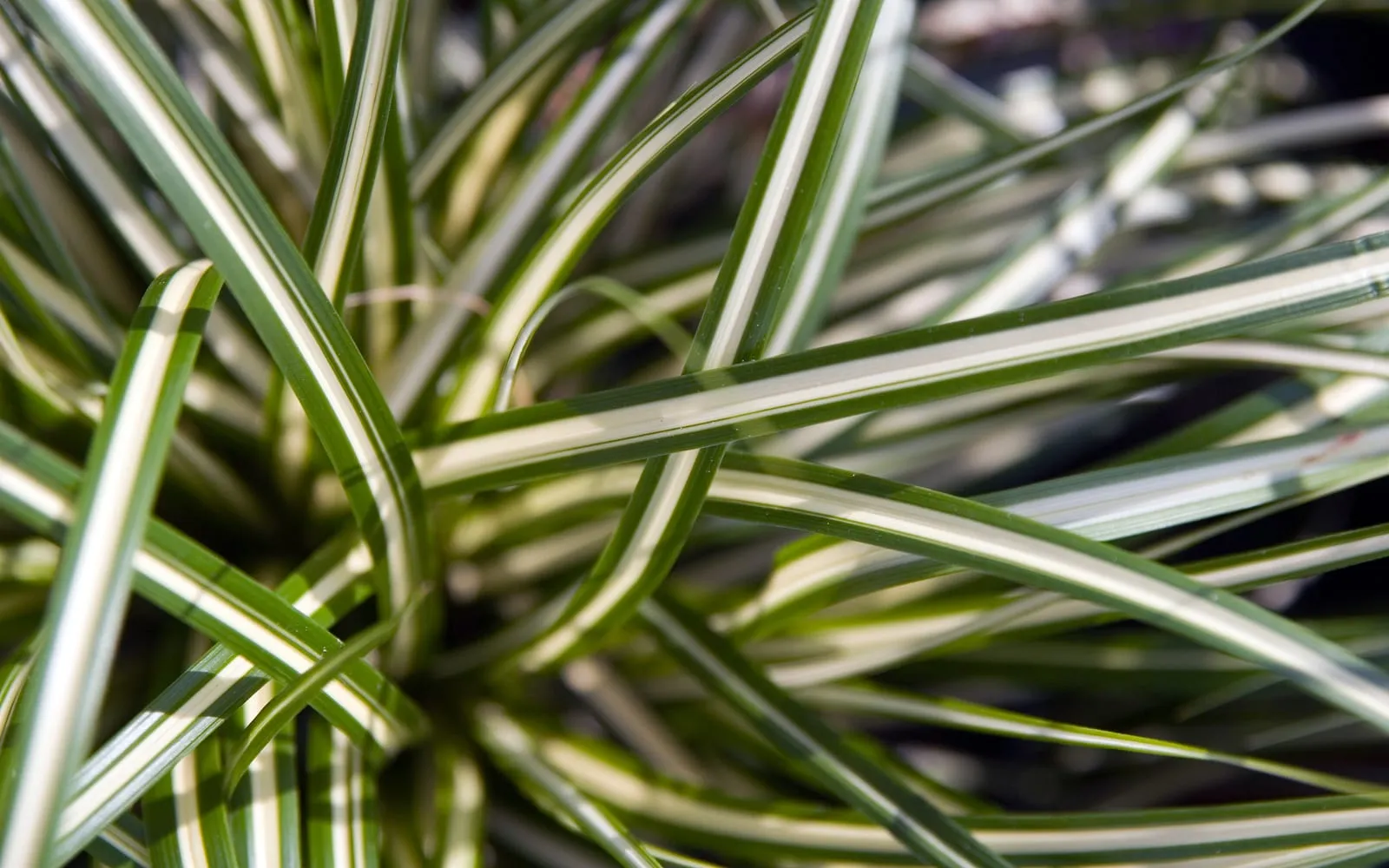
Oshima sedge is best known through its popular golden-variegated form, often sold under the name Evergold, whose leaves carry a broad, bright cream-gold central stripe edged in green, a striking combination that brightens a container or border edge year round. It tolerates rather more sun than many other variegated evergreen sedges, a trait traced to its native coastal and lowland woodland habitat, which receives more direct light than the deeper forest shade some related species come from.
Its compact, tidy, arching habit and reliable colour have made it one of the most widely sold small evergreen sedges for pots, edging and mixed container plantings, valued for providing structure and colour through every season rather than only during a single flowering period.
Appearance and character
Narrow, gracefully arching leaves form a dense, rounded tuft, evergreen year round, with the widely grown gold-variegated forms holding a broad central band of cream to gold running the length of each leaf, bordered by a narrower green margin. The overall effect is bright and warm-toned even in winter, standing out clearly against darker evergreen planting nearby.
Flower spikes are small and inconspicuous, as with most ornamental sedges, and the plant’s appeal rests entirely on its foliage colour and neat, arching form rather than on any floral display.
Where it is from
Coastal cliffs and low-elevation woodland in Japan, in a somewhat brighter, more open habitat than the deep forest shade favoured by some related sedges, though still generally sheltered rather than fully exposed.
That relatively bright, coastal origin explains why this species and its variegated forms tolerate more direct sun than many other evergreen Carex without the leaf scorch or colour loss a deeper-shade species would show under the same conditions, while still preferring some shelter from the most intense midday sun.
How it grows
A hardy evergreen perennial that expands its tuft gradually over successive seasons, remaining a well-behaved, non-invasive clump-forming plant suited equally to open ground or a container. Growth is steady given the right balance of moisture and drainage, slowing noticeably if either condition is significantly wrong.
This species is somewhat more particular about drainage than some other commonly grown Carex, and a planting in heavy, poorly drained soil is much more likely to struggle or decline than the same plant in free-draining, humus-rich ground, even where moisture levels are otherwise similar.
Through the seasons
Spring fresh growth emerges among the retained evergreen foliage, refreshing the clump’s colour.
Summer growth continues steadily given adequate moisture without waterlogging.
Autumn growth slows gradually as temperatures drop, with the evergreen foliage largely unchanged.
Winter the coloured foliage persists through the colder months, providing reliable structure, though the crown is more vulnerable to prolonged wet, cold soil than to cold air alone.
Care difficulty
Difficult relative to some other evergreen sedges, mainly because it needs a more careful balance between reliable moisture and sharp drainage than a more forgiving species like Japanese sedge. Getting that balance wrong in either direction, too dry or too waterlogged, shows clearly in reduced vigour and colour.
Watering
Regular watering supports the best colour and growth, but drainage matters just as much as moisture for this species; waterlogged winter soil poses a greater risk than a short dry spell in summer. A free- draining planting position, or a container with generous drainage, suits it much better than heavy, slow-draining ground.
Warning signs, diseases and pests
Slugs and snails occasionally graze soft new growth, though established foliage is generally left alone. Root rot from waterlogged, poorly drained soil is the more serious risk for this species, showing as a weakened, discoloured clump that fails to respond to increased watering, since the underlying problem is excess rather than insufficient moisture.
Faded or reverted, less colourful foliage on a variegated specimen can indicate either too much shade, which weakens the contrast between the gold and green portions of the leaf, or, less often, a genetic reversion where a shoot reverts to plain green; a reverted shoot is best removed at the base to stop it outcompeting the variegated growth around it.
Growing environment
Partial shade to gentle morning sun suits it best; this species tolerates more light than many other evergreen sedges but still benefits from shelter during the most intense part of a hot summer day. Humus-rich soil that nonetheless drains freely gives the best results, and a raised bed or well-amended container is often a more reliable choice than open, heavy garden soil.
Feeding
A balanced granular feed applied once in spring supports steady growth and good foliage colour, particularly for a container-grown specimen, whose limited soil volume holds fewer nutrient reserves than an open border planting.
Troubleshooting
The clump looks weak and discoloured despite regular watering. Check drainage first, since this species is much more sensitive to waterlogged soil than to drought. Improve drainage or move a struggling plant to a raised bed or well-drained container.
Variegation has faded or a shoot has reverted to plain green. Check light levels, since too much shade can weaken colour contrast, and remove any solid green reverted shoots at the base promptly, since they tend to grow more vigorously than the variegated growth and can gradually take over the clump if left.
New growth has been grazed or notched. Check for slugs and snails on soft spring growth, and protect vulnerable new foliage if damage is significant.
A container-grown plant is struggling more than one in open ground. Check that the container has adequate drainage holes and has not been allowed to sit in a saucer of standing water, since containers are more prone to waterlogging than open soil during heavy rain.
You are choosing compost for a new container planting. A loam-based compost with extra grit worked through drains more reliably than a peat-based multipurpose mix on its own, which is worth the small extra effort given how much this particular species depends on getting drainage right from the outset.