
Outdoor plant
Korean Fir
Abies koreana
Also known as Korean fir
How to grow Korean fir, Abies koreana. Why its purple-blue cones form on trees barely a metre tall, its dislike of heat and humidity, and choosing a dwarf cultivar for a small garden.
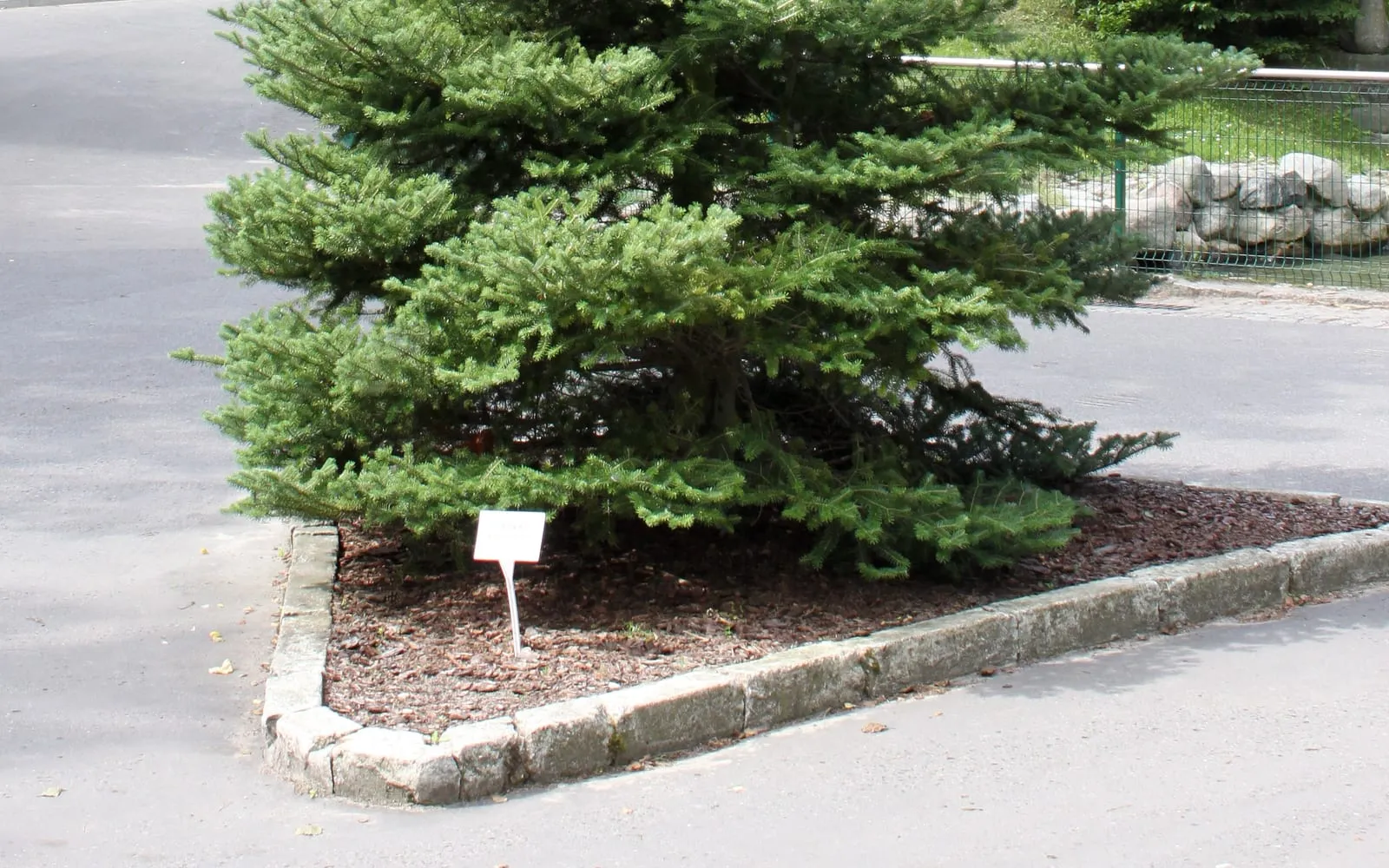
At a glance
- Difficulty
- Moderate
- Water
- Regular watering while establishing; consistent moisture afterwards, never allowed to dry out fully
- Light
- Full sun to light shade, with some afternoon shade welcome in hot climates
- Temperature
- Cool temperate; struggles above 30 deg C combined with humidity
- Humidity
- Prefers moderate to high humidity with good air movement
- Hardiness
- USDA 5-7, RHS H6-H7, hardy to -25 C
- Type
- Hardy evergreen conifer
- Height
- 10-18 m in the wild over many decades. Garden cultivars, which are most of what is sold, are usually far smaller and slower still, from dwarf mounds under 1 m to slow columns of 4-8 m at 20-30 years
- Native to
- South Korea, endemic to high-elevation mountains including Jeju Island and the Jiri and Deogyu ranges
The zone range describes winter cold tolerance, which this species has in abundance, and says nothing about the heat, humidity and drought that limit where it thrives. A Korean fir planted in a hot, humid summer climate or in compacted clay commonly declines within a decade even where winters are mild enough on paper, while the same tree in a cool, moist mountain or maritime climate can live for a century or more.
Hardiness zones describe winter cold alone. Summer heat, humidity, rainfall and the length of the growing season decide as much, so treat the range as the outer limit rather than as a recommendation.
Harmful if eaten
- Do not eat
- Needles and resinous sap
- Harm from
- Eating it and handling it
- Affects
- People, cats and dogs
Fir needles are not a recognised systemic poison, and Abies is one of the species commonly sold as a live Christmas tree on the strength of that. The resin and volatile oils in the needles and sap can still irritate the mouth and gut if chewed in quantity, causing drooling and mild vomiting in a cat or dog, and the sharp needle tips are a mechanical hazard to a curious pet independent of any chemistry. Sap on skin occasionally causes contact irritation in people with sensitive skin. None of this amounts to a poisoning risk worth alarm, and the caution is the same as for any conifer brought indoors as a potted Christmas tree: keep the water reservoir covered, since preservatives added to cut tree water are a separate and more serious hazard than the tree itself.
Sources: RHS potentially harmful garden plants, ASPCA toxic and non-toxic plants
About
Korean fir carries cones before almost any other conifer bothers to, and it carries them upright, in shades of violet-blue and deep purple that look more like a decoration than a seed structure. Trees barely a metre tall in a garden centre pot routinely cone, which is unusual among firs and is most of the reason the species left its native mountains for gardens worldwide.
It is also, increasingly, a live Christmas tree. Compact growth, dense needle cover and a manageable root ball make it one of the more popular potted alternatives to a cut tree, provided the buyer understands it needs to go back outside within a couple of weeks and cannot live indoors year-round.
Appearance and character
Needles are short, glossy dark green above and marked with two bright white bands of stomata beneath, densely packed and often twisted at the base so the white undersides show even from above. This is the detail behind cultivar names like ‘Silberlocke’, bred to curl the needles further and expose more of the silver.
The habit is neatly conical while young, broadening and flattening at the crown with age in the way most firs do. Bark on young wood is smooth and grey, developing shallow fissures on old trunks, though few cultivated specimens live long enough to show it.
The cones are the plant’s signature. They stand upright on the branch rather than hanging, four to seven centimetres long, cylindrical, and coloured a deep violet-blue to purple-black when young before ripening to brown. Unlike most fir species, which take twenty or more years before their first cone, Korean fir cones reliably on trees a few years old and under a metre tall, which makes a young potted plant especially attractive at a garden centre.
Where it is from
Abies koreana is endemic to South Korea, found on a handful of high mountains including Halla-san on Jeju Island and ranges further north such as Jiri-san and Deogyu-san, typically between 1,000 and 1,900 m elevation. At that altitude the growing season is short, summers are cool and wet with monsoon rainfall, and winters are cold with reliable snow cover protecting the roots.
That narrow native range is now a conservation concern. Warming temperatures on Jeju’s volcanic slopes have already reduced the wild population, and the species is assessed as endangered in its native habitat even as it thrives in gardens on the other side of the world.
Its mountain origin explains almost everything about how the species behaves away from Korea. It wants cool air, reliable moisture, acidic soil and good drainage all at once, a combination that is easy to provide on a Scottish hillside or in the Pacific Northwest and considerably harder in a hot, humid, low-lying garden.
How it grows
Plant in spring or autumn into soil that has been improved with organic matter, on a site with reliable moisture but sharp drainage; waterlogging around the roots is one of the fastest ways to lose a young tree. Acidic to neutral soil suits it better than chalk, though it is more tolerant of a slightly alkaline pH than many true acid-lovers.
Choose the cultivar carefully rather than assuming any Korean fir will do. The straight species grows into a tree of real size over decades. Most retail stock is a named dwarf or slow-growing form, bred specifically to stay small, and reading the label matters more here than for almost any other conifer in this group, because the difference between a cultivar that tops out at a metre and the wild species behind it is enormous.
Little pruning is needed or wanted. A leading shoot left alone keeps the naturally conical shape, and cutting into old wood is usually followed by poor regrowth, since firs do not resprout from bare branches the way yew or box does.
Mulch every spring to keep the root zone cool and moist through summer, which matters more for this species than for most conifers tolerant of a wider range of conditions.
Through the seasons
Spring brings a flush of soft new needles in a lighter green than the mature foliage, and on cone-bearing trees the new cones appear upright along the upper branches, green-blue at first.
Summer is the season that tests a Korean fir most. Heat above roughly 30 deg C combined with humidity or drought stresses the tree visibly, browning needle tips and slowing growth, so consistent watering through summer matters more here than for almost any conifer in this list.
Autumn is the best planting window in a moist, cool-summer climate, giving roots time to establish before winter without the stress of summer heat. The cones, by now deep purple-blue, are at their most striking before they ripen brown and begin to break apart on the tree, which is how fir cones normally shed seed.
Winter cold is rarely a problem for an established tree; this is a fully hardy mountain species built for snow cover and hard frost. Wet, poorly drained soil in winter is a far greater risk than cold air.
Care difficulty
Moderate, and the difficulty is entirely about site rather than routine attention. A Korean fir needs very little once it has the right conditions: acidic to neutral, well-drained, consistently moist soil and a climate with cool summers or reliable rainfall. Get that wrong, particularly on heavy clay or in a hot, dry, exposed spot, and even an established tree declines steadily rather than merely growing slowly.
Choosing the right cultivar for the space available removes most of the long-term difficulty, since a true dwarf form asks nothing of a garden that a mid-sized shrub would not.
Watering
Water regularly through the first two summers while the root system establishes, aiming for consistently moist soil rather than either drought or standing water. A weekly deep soak in dry weather is more useful than several light sprinklings, since it encourages roots to grow down rather than staying near the surface.
Established trees still want more consistent moisture than most garden conifers, particularly through a hot summer, and a mulch renewed each spring does more to steady soil moisture than any amount of extra watering during a heatwave.
Avoid ground that sits wet after rain. The species’ mountain origin, on free-draining volcanic and rocky slopes with reliable rainfall rather than standing water, means it tolerates drought better than it tolerates waterlogging.
Warning signs, diseases and pests
Adelgids, small sap-sucking insects related to aphids, are the most persistent pest, appearing as white waxy fluff on the undersides of needles and along young shoots. They rarely kill an established tree but weaken and disfigure a young one over several seasons if left unchecked.
Root-rot follows waterlogged soil more often than any pathogen introduced from outside, and it is the most common reason a Korean fir dies within a few years of planting. Improve drainage before planting rather than trying to correct it afterwards.
Needle-cast diseases, various fungi that cause needles to yellow, brown and drop prematurely, are more common in humid climates with poor air movement around the crown, which is a further argument for siting the tree with space around it rather than crowded against a wall or hedge.
Spider mites build up in hot, dry summer weather, showing as fine speckling on the needles and, in a bad infestation, faint webbing. A forceful hose spray most weeks through a dry spell keeps populations down without chemicals.
Browning needle tips in mid to late summer, without any pest visible, is usually heat and humidity stress rather than disease, and it is the clearest sign that the tree has been planted somewhere warmer than it wants to be.
Growing environment
Full sun suits it in a cool climate; afternoon shade is worth providing where summers run hot, since the species did not evolve with lowland summer heat and shows it by scorching.
Moist, humus-rich, acidic to neutral soil with reliable drainage is the target, achieved on many sites only by digging in generous organic matter before planting and mulching every year afterwards.
Shelter from strong, drying wind protects the foliage, though the species tolerates the heavy snow loads of its native mountains without difficulty, which is more of a concern for a taller cultivar than for the compact dwarf forms most gardens hold.
Humidity and air movement both matter. A site with still, muggy air encourages the fungal problems above; one with reasonable air flow but shelter from the worst wind is the balance to aim for.
Feeding
An annual spring feed with a balanced, slow-release fertiliser formulated for conifers or acid-loving plants supports steady growth, particularly on soil that is naturally poor or sandy.
Established trees in good soil need little beyond an annual mulch, which feeds the soil more gradually and helps retain the moisture this species depends on.
Avoid heavy nitrogen feeding, which pushes soft, fast growth more prone to frost and pest damage than the naturally dense, slow habit of a healthy tree.
Troubleshooting
My young Korean fir already has cones. Is that normal? Yes, and it is one of the species’ most distinctive traits. Unlike most firs, which take decades to flower, Korean fir cones reliably on trees only a few years old and under a metre tall.
The needle tips are browning in summer. Heat and humidity stress is the most likely cause, especially on a tree in full sun through a hot spell with inconsistent watering. Provide afternoon shade and keep the soil evenly moist rather than letting it dry out between waterings.
Which cultivar should I choose for a small garden? Almost any named dwarf form, such as ‘Silberlocke’ or ‘Nisbet’s Nursery Weeper’, which are bred specifically to stay compact for decades. Avoid buying an unnamed seedling if space is limited, since the straight species grows into a real tree over time.
The tree is sitting in wet soil after rain. Improve drainage before replanting if possible, since waterlogging around the roots is the leading cause of decline and death in this species, well ahead of pests or cold.
White fluff is appearing on the shoots. This is almost always adelgids, sap-sucking insects related to aphids. They rarely kill an established tree; a strong hose spray or an insecticidal soap through the growing season keeps numbers down.
Can I grow it in a pot as a permanent Christmas tree? For a few years, yes, using a true dwarf cultivar, but it needs to live outdoors and only come inside for a week or two at most each winter. Indoor heat and dry air stress it quickly.
Why is my tree growing so slowly? Slow growth is normal for this species, particularly in the dwarf and semi-dwarf cultivars most gardens plant. A few centimetres a year is typical once established, which is part of why it suits a small garden in the first place.