
Outdoor plant
European Larch
Larix decidua
Also known as Common larch
How to grow European larch, Larix decidua. A conifer that sheds its needles every autumn, why that costs it nothing in a cold winter, and its need for full sun and space.
At a glance
- Difficulty
- Moderate
- Water
- Regular watering while establishing; moderate thereafter, avoiding both drought and waterlogging
- Light
- Full sun; does not tolerate shade, unlike most other conifers
- Temperature
- Very cold-hardy, adapted to continental mountain winters
- Hardiness
- USDA 3-6, RHS H7, hardy to -34 C
- Type
- Hardy deciduous conifer
- Height
- 30-45 m at maturity, among the tallest deciduous trees planted in temperate gardens and parkland. It has not been bred into dwarf forms for small gardens to the extent most other conifers in this list have, though a handful of slow-growing or weeping cultivars exist
- Native to
- Mountains of central Europe, principally the Alps and the Carpathians, with a separate native population in Poland
A continental species, needing a real winter with sustained cold to trigger its autumn needle drop and spring regrowth in the way it does in its native Alps. It tolerates hot summers less comfortably than many other conifers here, particularly where humidity is also high, and it performs poorly in a mild, damp, maritime winter that never gives it the sustained chill or dry cold air its mountain origin expects.
Hardiness zones describe winter cold alone. Summer heat, humidity, rainfall and the length of the growing season decide as much, so treat the range as the outer limit rather than as a recommendation.
Not known to be toxic
European larch carries no established toxicity to people or common pets. Neither the RHS nor the ASPCA lists the species among plants of concern, and larch-derived compounds, including arabinogalactan extracted from the wood and bark, are sold as a dietary supplement rather than flagged as a hazard. As with any woody plant, eating a large quantity of foliage or bark can cause mechanical stomach upset in a pet that overindulges, which is a general caution rather than a specific toxin, and it is worth contrasting this species with its relative yew, Taxus, a lethal conifer that this guide's larch is sometimes confused with by common name alone.
Sources: RHS potentially harmful garden plants, ASPCA toxic and non-toxic plants
About
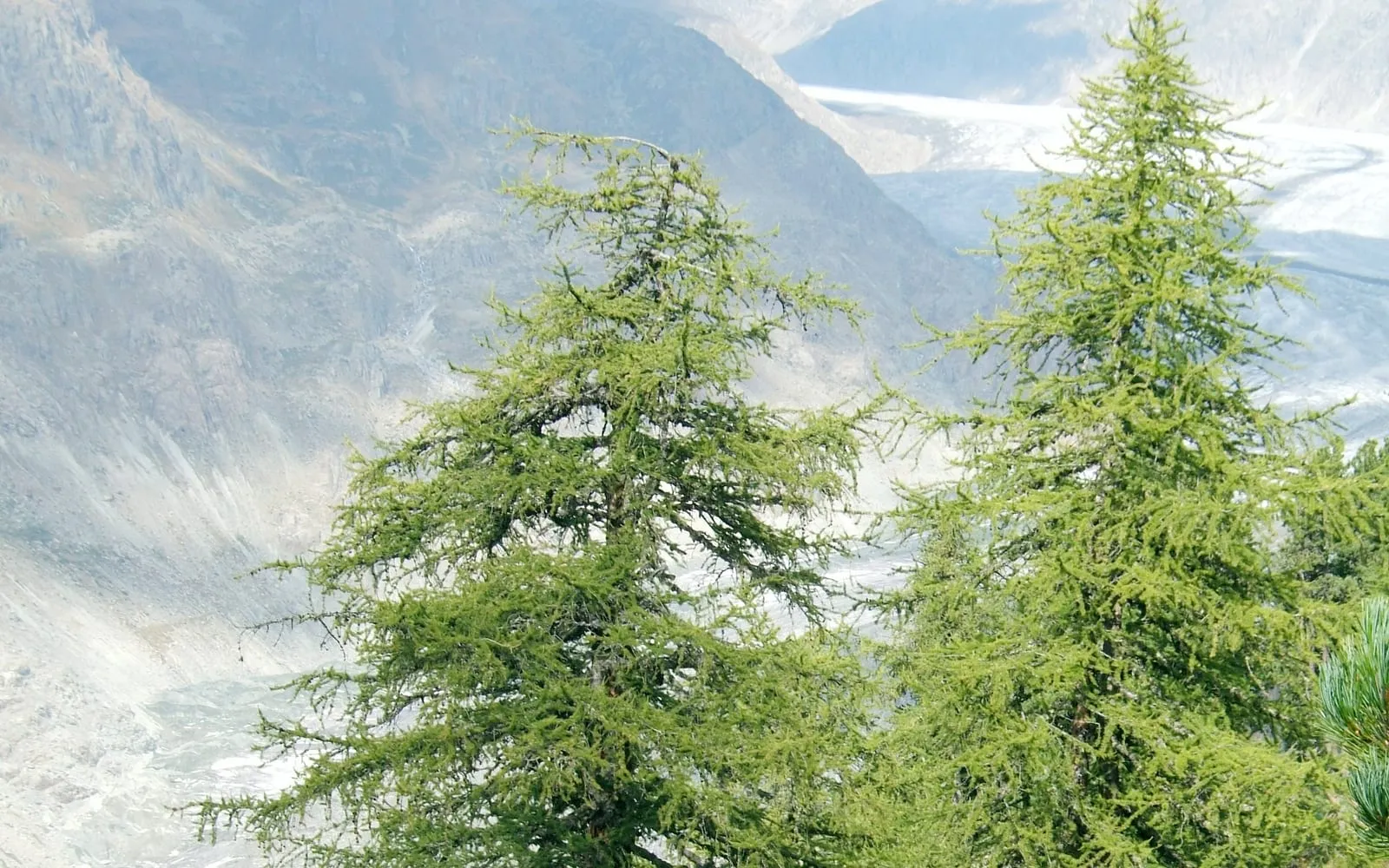
European larch is one of a small handful of conifers that drops its needles every autumn, behaving as a deciduous tree despite belonging to a group most gardeners think of as permanently evergreen. Soft blue-green needles turn a clear gold through October and fall completely, leaving a crown of bare, drooping branches through winter that looks, at a distance, more like an oak or an ash than a pine.
That habit costs the tree nothing in its native climate. Larches grow at the tree line in the Alps, higher than almost any other tree species manages, and shedding needles before winter reduces the surface area exposed to desiccating cold, dry mountain wind at an altitude where an evergreen conifer would struggle to hold enough moisture in its foliage to survive.
Appearance and character
Needles are soft, flattened and blue-green, borne singly on new shoots and in dense whorled clusters on older spur growth, a texture noticeably gentler to the touch than the sharp needles of a pine or spruce. New spring growth opens a bright, almost luminous green, before darkening slightly through summer and turning gold in autumn ahead of leaf fall.
The crown is narrowly conical with an open, airy structure rather than the dense cover typical of most conifers in this list, and side branches characteristically droop or arch downward, giving even a young tree a distinctive silhouette against winter sky once the needles have fallen.
Bark on young trees is smooth and grey-brown, becoming deeply fissured and scaly with age, thick enough on old trees to give some protection against fire and frost damage, a trait shared with several other conifers in this list adapted to harsh natural conditions.
Small, upright cones, two to four centimetres long, ripen from purplish-red or green to brown over their first year and often persist on the bare branches through winter after the needles have gone, one of the tree’s more recognisable winter features.
Where it is from
Larix decidua is native to the mountains of central Europe, principally the Alps, where it forms extensive forests at high elevation, often at the uppermost tree line above which no tree species survives, alongside a separate population in the Carpathian Mountains and a disjunct native stand in the lowlands of Poland.
Its altitude explains most of its cultivation requirements away from the mountains. Wild larch forest grows in full sun with cold, often dry winter air, deep but well-drained soil on mountain slopes, and short, intense growing seasons, conditions a garden at low elevation can only approximate rather than replicate exactly, which is part of why the species performs noticeably better in a cold, continental climate than in a mild, damp, maritime one.
The timber is dense, resinous and rot-resistant compared with most softwoods, long used across the Alps for roof shingles, chalet construction and, distinctively, for the wooden water pipes and troughs of some alpine villages, where its natural durability in wet conditions was valued long before modern preservatives existed.
How it grows
Plant a young tree in autumn or early spring into deep, moist, well-drained soil in full sun, choosing a site with room for its considerable eventual height, since this is one of the tallest species in this list and not one that has been extensively bred down into small garden forms.
Avoid shaded positions entirely. Unlike several other conifers here that tolerate at least some shade when young, larch needs full sun throughout its life and grows poorly, thin and drawn, if crowded or overshadowed by other trees.
Avoid shallow chalk and permanently waterlogged ground alike; the species wants depth to root into and reliable but not excessive moisture, closer to free-draining mountain soil than to heavy lowland clay.
Minimal pruning is needed on a well-sited tree beyond removing any damaged or crossing branches while young to establish a single leading shoot, since larch does not need the shaping many hedging conifers do and looks best allowed to develop its natural open form.
Through the seasons
Spring brings the tree’s most dramatic seasonal change, a flush of soft, bright green new needles opening from bare winter branches within a few weeks, one of the earliest conifers to show new growth each year.
Summer is steady growth in full sun, with needles darkening slightly from their spring brightness, and it is the season in which drought stress, where it occurs, first shows as premature yellowing rather than the crisp autumn gold of a healthy tree.
Autumn brings the tree’s defining display, needles turning a clear gold through October before falling completely over a few weeks, leaving bare branches and, often, persistent small brown cones through the winter ahead.
Winter shows the tree at its most distinctive among conifers, entirely bare of foliage and dormant, tolerating extreme cold without difficulty since this pattern evolved specifically for harsh mountain winters, though a mild, wet, maritime winter suits it noticeably less well than a properly cold, dry one.
Care difficulty
Moderate, and the challenge is mostly about site selection rather than ongoing care. A larch given full sun, deep soil and enough space to reach its considerable height needs little routine attention. Planted in shade, shallow soil or a mild, humid climate that never gives it a proper cold winter, it grows poorly and is more prone to canker, adelgid and the other fungal and pest problems. Its eventual size also makes it a poor choice for a small garden regardless of how well it is cared for.
Watering
Water new trees regularly through their first several growing seasons while the root system establishes into the soil depth this species needs.
Established trees tolerate moderate drought better than wet soil, and a site with reliable but not excessive moisture, closer to free-draining mountain slope than boggy lowland, suits it best.
Avoid permanently waterlogged ground, which the species’ mountain origin gives it little natural tolerance for, unlike the swamp-adapted conifers elsewhere in this list.
Warning signs, diseases and pests
Larch canker causes sunken, often bleeding lesions on the trunk and branches, capable of girdling and killing individual branches or, in a severe case, the whole tree; affected wood should be pruned out and destroyed promptly where practical.
Larch adelgid, a small sap-sucking insect related to aphids, produces white waxy tufts on the shoots and needles, weakening growth over successive seasons in a heavy, sustained infestation without usually being fatal on its own.
Needle-cast diseases cause premature yellowing and shedding of needles during the growing season, distinct from the tree’s normal autumn drop, and are more common in humid conditions or on a tree already stressed by an unsuitable site.
Phytophthora ramorum, the pathogen behind sudden oak death, has caused serious, large-scale damage to larch plantations in parts of the United Kingdom over the past two decades, to the point that felling of infected stands has been a statutory requirement in affected areas; a home gardener noticing sudden, widespread branch dieback on a mature larch should report it to the relevant plant health authority rather than treating it as routine canker.
Sawfly caterpillars can strip needles from a tree in a bad year, though a healthy, established tree usually recovers fully the following spring.
Growing environment
Full sun is essential; this is the one conifer in this list that needs it rather than merely preferring it, and a shaded larch grows thin, weak and disproportionately tall as it searches for light.
Deep, moist, well-drained soil suits it best, ideally with some depth for the root system to develop into, reflecting its mountain-forest origin rather than a shallow or heavy garden soil.
Space for its eventual height is essential and easy to underestimate when planting a small nursery tree; this species reaches a large size and is not suited to a boundary or a small plot the way most of the other conifers in this list can be.
A cold, dry winter climate suits it better than a mild, wet, maritime one, even though both fall within its stated hardiness range on paper.
Feeding
Young trees benefit from a balanced, slow-release fertiliser once in spring for their first few seasons while establishing.
Established trees on reasonable soil need little supplemental feeding, and excess nitrogen produces soft growth more susceptible to canker and adelgid.
A tree that looks consistently thin and pale despite adequate feeding is more likely sited in shade or shallow soil than short of nutrients, since site suitability affects this species more than feeding does.
Troubleshooting
My conifer has lost all its needles. Is it dead? Almost certainly not, if it is autumn or winter. European larch is one of the few conifers that sheds its needles every year as a deciduous tree, and new growth returns reliably each spring.
Why is my larch struggling in a mild, damp climate that should suit a hardy tree? This species is adapted to cold, dry, continental mountain winters rather than mild, wet, maritime ones, and it often performs poorly in the latter even where the stated hardiness zone technically covers it.
There are sunken, bleeding patches on the bark. This is likely larch canker, which can girdle and kill affected branches. Prune out and destroy infected wood promptly, and avoid pruning in wet weather, which spreads the fungal spores responsible.
A mature larch has died back suddenly and extensively. In parts of the UK in particular, this can indicate Phytophthora ramorum, a serious regulated forestry disease that has caused large-scale larch felling. Report sudden, widespread dieback on a mature tree to the relevant plant health authority rather than treating it as ordinary canker.
Is my larch getting too big for my garden? Likely, if it is the straight species. This is one of the tallest trees in this list, reaching thirty metres or more, and it has not been bred into the range of dwarf forms available for most other conifers here, so consider whether the site has room before planting one.
White fluffy tufts are appearing on the shoots. This is larch adelgid, a sap-sucking insect related to aphids. It weakens growth over time in a heavy, sustained infestation but is rarely fatal on an otherwise healthy tree.
My larch is growing thin and drawn rather than densely conical. Check whether it is getting full sun. Unlike many other conifers, larch does not tolerate shade at any life stage and grows weak and etiolated when crowded or overshadowed.