
Outdoor plant
Bismarck Palm
Bismarckia nobilis
Also known as Bismarck palm tree
How to grow Bismarck palm outdoors. Its huge silver-blue fronds, drought tolerance once mature, and why young plants need patience.
At a glance
- Difficulty
- Easy
- Water
- Regular watering while young, drought-tolerant once established
- Light
- Full sun
- Temperature
- Tolerates brief light frost once established
- Hardiness
- USDA 9-11, RHS H3, hardy to -4 C
- Type
- Evergreen perennial palm
- Height
- 12-25 m
- Native to
- Madagascar
A palm of open, seasonally dry grassland rather than rainforest, tolerating brief light frost once well established and real drought better than most large ornamental palms. It needs a long, reliably warm growing season to develop its full size and silvery colour, and struggles in a climate with a short or consistently cool summer even where winter cold is not severe.
Hardiness zones describe winter cold alone. Summer heat, humidity, rainfall and the length of the growing season decide as much, so treat the range as the outer limit rather than as a recommendation.
Not known to be toxic
Bismarck palm has no toxicity listing from the RHS or the ASPCA and is considered safe around pets and children. The stiff, sharply pointed frond segments and the toothed edges of the leaf stalks are a physical hazard during pruning or close contact, but no part of the plant is documented as toxic.
Source: RHS
About
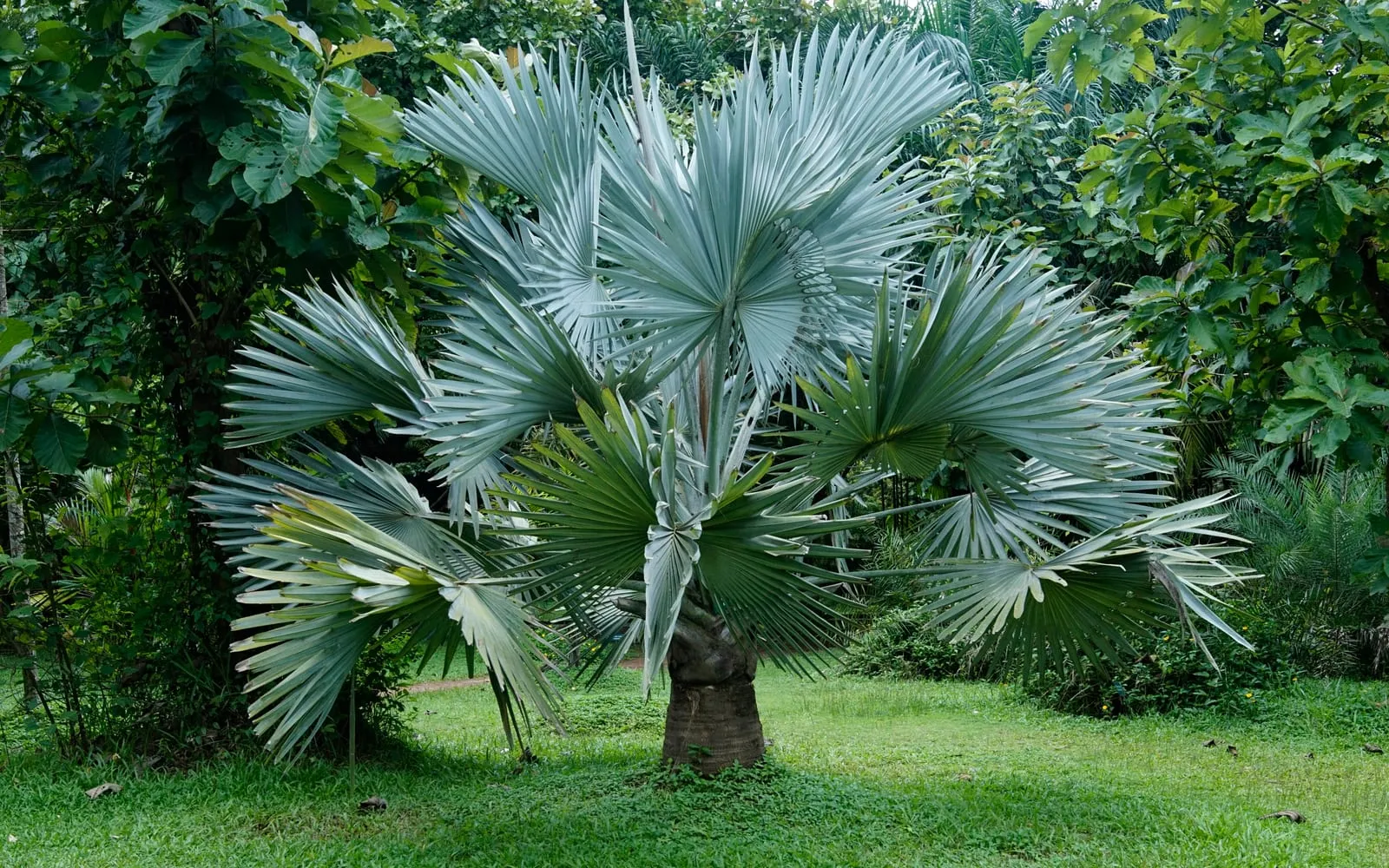
Bismarck palm is a very large silver-blue fan palm for warm, open gardens. Its stiff, fan-shaped fronds can reach 3 m across, and a mature specimen can dominate a garden view. It is planted as a specimen tree in parks and large gardens across the warmer parts of the world.
Named after the German statesman Otto von Bismarck, it was first introduced to cultivation outside its native Madagascar in the late nineteenth century and has since become one of the most recognisable large ornamental palms in tropical and subtropical landscaping.
Appearance and character
A single, thick, grey trunk, gradually tapering with height, supports an enormous, rounded crown of huge, rigid, fan-shaped fronds, each one deeply divided into numerous stiff segments radiating from a central point. Seedling and juvenile plants typically show a more intensely silvery-blue colour than mature specimens, though the degree of blue varies widely between individual plants and growing conditions, with some selections prized specifically for holding an especially strong colour.
Flower clusters emerge among the fronds on a mature specimen, followed by rounded brown fruit, though this species is grown overwhelmingly for its foliage and scale rather than for any floral display.
Where it is from
Open, seasonally dry grassland and savanna in western and central Madagascar, a habitat with a pronounced dry season quite different from the consistently wet rainforest many ornamental palms come from.
That savanna origin explains the plant’s considerable drought tolerance once established and its strong preference for full, unobstructed sun, conditions closely mirroring the open, exposed grassland it evolved in rather than the sheltered understorey many other palms favour.
How it grows
An evergreen palm growing from a single crown, spending its early years building a strong root system and a broadening base with comparatively modest visible growth before height gain accelerates in a well-sited, mature specimen. Full size and the plant’s characteristic silvery colour generally develop over a long period, often a decade or more, given a consistently warm, sunny growing season.
Because it has a single growing point, protect the crown from cold damage and mechanical injury. Damage there can affect the whole palm.
It grows from one stem with no suckers or offsets, so it can only be raised from seed rather than by division, and it resents having its roots disturbed. Plant a young specimen where it is to stay, since an established one transplants poorly at any size and often fails to re-establish after a move.
Through the seasons
Spring growth resumes as temperatures rise, with new fronds emerging from the crown.
Summer is the main growing season, with the strongest frond and, on a mature plant, trunk extension in reliable heat. Feed two to three times through this period.
Autumn growth slows as temperatures drop.
Winter established plants tolerate brief light frost; young plants benefit from protection during any cold snap in a marginal climate.
Care difficulty
Easy for an established plant in a suitably warm, sunny climate. It mainly needs space and patience rather than complicated care: it eventually becomes very large, and its full silvery crown develops over many years.
Watering
Regular watering supports strong establishment while young. Once established, this species tolerates real drought thanks to its adaptation to a seasonally dry savanna climate, and deep, infrequent watering suits it much better than frequent light watering.
Warning signs, diseases and pests
Scale insects occasionally colonise the fronds and respond to a horticultural oil treatment for significant infestations. Palm leaf skeletoniser caterpillars, present in some warmer growing regions, feed between the leaf veins, leaving a lacy, skeletonised pattern that is usually more cosmetic than seriously damaging on a large, mature specimen.
A crown that loses its silvery colour and turns a duller green is not necessarily a sign of trouble; colour intensity varies between individual plants and can also shift with growing conditions, including light levels and, in some cases, soil nutrition.
Slow growth in a young plant is normal for this species, which invests heavily in its root system and base before height gain becomes more noticeable, and is not usually a sign that anything is wrong.
Growing environment
Full, unobstructed sun is essential for strong growth and the best colour; in shade this species performs poorly and rarely develops its full characteristic form. Free-draining soil suits it well, and it tolerates poor, sandy ground reasonably well once established, reflecting its native open grassland habitat.
Feeding
A palm-specific fertiliser containing adequate magnesium and potassium, applied two to three times through the growing season, supports healthy, even-coloured fronds. Palms of this size can show visible deficiency symptoms on older fronds if underfed, making regular feeding worthwhile for a specimen expected to reach significant size.
Troubleshooting
Growth seems very slow in a young plant. This is normal for the species, which builds a strong base and root system before height gain accelerates. Consistent watering and feeding support this stage even though little change is visible above ground for some time.
The crown looks greener than expected rather than silvery-blue. Colour intensity varies naturally between individual plants and can shift with growing conditions. This is not usually a sign of a problem requiring correction.
Fronds show a lacy, skeletonised pattern of damage. Check for palm leaf skeletoniser caterpillars, more of a cosmetic issue than a serious threat on a large, established specimen.
A young plant was damaged in an unexpected cold snap. Remove clearly dead foliage once the risk of further cold has passed, and protect the crown during any subsequent cold weather while the plant recovers.
A specimen planted in part shade is not thriving. This species tolerates almost no shade well, and a spot that seemed sunny enough at planting time can become too shaded as nearby trees or buildings grow. Consider whether the site has changed since planting, and relocate a struggling young plant to fuller sun if that is practical.
You are choosing where to plant one relative to buildings or paths. Because a mature specimen eventually reaches a considerable width as well as height, with fronds up to 3 m across, allow generous clearance from paths, walls and other structures at planting time rather than only accounting for the crown’s current, much smaller size.