
Outdoor plant
Hemlock Water-Dropwort
Oenanthe crocata
Also known as Dead man's fingers, Five-fingered root, Water hemlock
How to identify hemlock water-dropwort, Oenanthe crocata. The most poisonous plant in Britain and Ireland, the parsnip-like root tubers, why dogs die of it after floods and how it differs from watercress and celery.
At a glance
- Difficulty
- Easy
- Water
- Not applicable, since this is a plant to avoid rather than grow
- Light
- Full sun to partial shade
- Temperature
- Fully hardy, and it comes into leaf very early
- Hardiness
- USDA 5-9, RHS H6, hardy to -20 C
- Type
- Perennial, regrowing each year from a cluster of root tubers
- Height
- 1-1.5 m in flower
- Native to
- Western Europe including Britain, in ditches, marshes and river margins
- Best month
- July in the Northern Hemisphere, January in the Southern Hemisphere
It wants wet ground and a mild oceanic climate, which confines it to western Europe and makes it commonest in Britain and Ireland, where it grows in ditches, on stream banks and in wet woodland. Winter floods wash the root tubers out onto banks where dogs and livestock find them, and that is when most poisonings happen. The roots look like parsnips and are the most poisonous part of one of the most poisonous plants in Europe.
Hardiness zones describe winter cold alone. Summer heat, humidity, rainfall and the length of the growing season decide as much, so treat the range as the outer limit rather than as a recommendation.
Every month named in this guide is for the temperate Northern Hemisphere. If you garden in the Southern Hemisphere, shift each one by six months, so July becomes January. Closer to the equator the wet and dry seasons matter more than the calendar, and the shift stops being a useful guide.
Poisonous if eaten
- Do not eat
- Every part, and the root tubers most of all
- Harm from
- Eating it and handling it
- Affects
- People, cats, dogs and horses
Hemlock water-dropwort is generally regarded as the most poisonous plant in Britain and Ireland, and among the most poisonous in Europe. It contains oenanthotoxin, a polyacetylene that blocks inhibitory neurotransmission in the brain, and the root tubers hold the highest concentration. Poisoning produces violent convulsions with very little warning, often within an hour, and death results from status epilepticus or from respiratory failure during seizures. A single root tuber can kill an adult, and deaths have followed people mistaking the roots for parsnip or the leaves for celery or parsley. The plant also poisons dogs, and the classic pattern is a dog chewing a root washed out of a bank after heavy rain or dredging, then fitting within the hour. Cattle and horses die after ditch clearance leaves cut roots lying in a field. The fatality rate in reported human cases is high relative to most plant poisonings. Treat any suspected ingestion as an immediate emergency, and say what has been eaten when you get help, because seizure control is time-critical. Sap on skin can irritate, and gloves and eye protection are essential for anyone clearing it. Never burn it and never leave cut roots where an animal can reach them.
Sources: RHS potentially harmful garden plants, ASPCA toxic and non-toxic plants
About
Hemlock water-dropwort kills more reliably than anything else growing wild in Britain and Ireland, and most people have never heard of it.
It grows in ditches, along stream banks, in marshy field corners and beside ponds, often in large stands. In the west and south-west it lines miles of watercourse.
Two things make it more dangerous than its reputation suggests. The roots look and smell like parsnip, sweet and faintly aromatic rather than repellent, and the leaves look like flat-leaved parsley or celery. The plant does not warn you off by taste.
The other is timing. Poisoning produces convulsions with very little in the way of early symptoms, so there is often no warning stage in which to seek help before things become serious.
This guide exists so that people walking dogs beside water, clearing ditches or foraging can recognise it. It is not a plant to grow.
Appearance and character
A stout perennial reaching 1 to 1.5 m, forming dense stands in wet ground.
The root is the most dangerous and most distinctive part. Instead of a single taproot, the plant carries a cluster of swollen, pale, finger-shaped or parsnip-shaped tubers, which is the origin of the name dead man’s fingers. Cut open, they are white and exude a yellowish juice that darkens on contact with air.
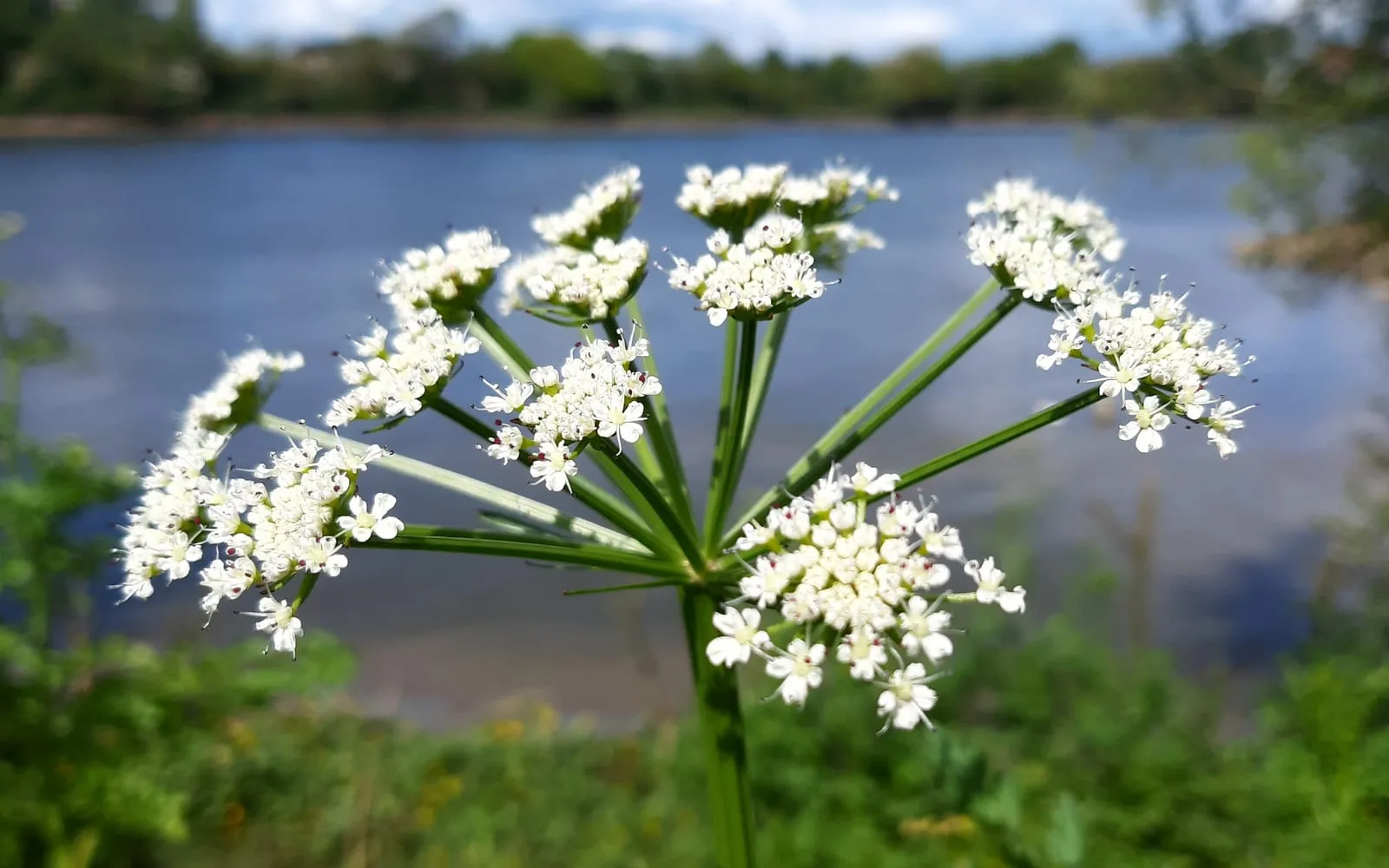
Stems are stout, hollow, deeply grooved and hairless, and often flushed purple towards the base.
Leaves are two or three times divided, with broad wedge-shaped toothed leaflets, looking very much like flat-leaved parsley or celery. Lower leaves can be quite large.
Flowers open from June to July in dense flat umbels of small white five-petalled florets, on stout rays.
The smell is faintly sweet and parsley-like rather than rank. This is important, because hemlock warns you with a mousy smell and this plant does not.
Where it is from
Western Europe, and native throughout Britain and Ireland, commonest in the west and south-west and along the coast.
Its habitat is wet ground. Ditches, streamsides, river margins, marshes, wet woodland, flooded field corners and the edges of ponds.
It thrives in the mild wet climate of Britain and Ireland, and it can dominate watercourses to the exclusion of almost everything else.
The tubers are the reason the plant matters after floods and dredging. High water and mechanical ditch clearance both wash or cut roots out and leave them lying on the bank, exposed and accessible, at exactly the moment a dog is running loose along a swollen stream.
How it grows
The reason to know this is to manage it safely rather than to cultivate it.
The plant regrows each spring from its tuber cluster and also spreads by seed carried in water, which is why a single upstream stand seeds a whole catchment.
It comes into leaf very early, often in February, and is conspicuously green when little else is.
Control is difficult and the safest approach in most gardens is exclusion rather than eradication. Fence livestock and dogs away from infested ditches.
If you do clear it, wear waterproof gloves, long sleeves and eye protection. Dig tubers out whole rather than chopping them, since cut root fragments are the most dangerous form.
Collect every fragment. The commonest cause of animal death is cut root left lying after ditch work.
Bag the material and dispose of it through the council green waste route or as directed by your local authority. Never compost it, never leave it in a field, and never burn it.
Check downstream after any clearance work, since fragments float.
Through the seasons
Winter shows early green leaves emerging from February, and this is when the plant is most conspicuous against bare ground.
Spring brings rapid growth to full height by May. Flood events at this time of year expose tubers on banks.
Summer is flowering, from June to July, with dense white umbels standing above the ditch.
Autumn sets seed which travels on water. Ditch clearance is commonly done now, which is the highest-risk moment for exposed roots.
Care difficulty
Recognition is straightforward once the root and the habitat are known.
The difficulty is that the plant occupies exactly the ground people walk dogs along, and the roots become available at exactly the times when dogs are most likely to find them.
Removal is hazardous and is a job for gloves, eye protection and care rather than a casual afternoon. On a large infestation, take advice from the Environment Agency or the local authority rather than tackling it alone.
The seed travels on water, so clearing your own stretch does not stop reinfestation from upstream.
Watering
Not applicable. The plant lives in water and wet ground by choice.
Its presence indicates permanently wet, usually fertile ground.
Where the aim is to reduce it, improving drainage on a wet field corner and establishing dense grass cover both help, though neither is quick.
Warning signs, diseases and pests
The warning signs are of poisoning.
In people, onset is often within an hour. Nausea and vomiting may come first, and in many cases the first clear sign is sudden violent convulsions, sometimes without much warning. Dilated pupils, sweating and cardiac disturbance follow. Death results from prolonged seizures or respiratory failure.
If anyone has eaten any part of this plant, treat it as a medical emergency and say what has been eaten. Do not wait for symptoms. Do not induce vomiting. Take a photograph or a bagged sample. Seizure control is time-critical and hospital treatment is effective when it is reached quickly.
In dogs, the classic history is a walk beside a swollen stream or a recently cleared ditch, followed within the hour by tremors, then seizures. Get to a vet immediately rather than waiting to see whether it passes. Tell the vet you suspect hemlock water-dropwort, since that changes the treatment.
In cattle and horses, deaths follow ditch clearance that leaves tubers in reach. Clear cut material from any field before returning stock to it.
Skin contact irritates, and sap in the eye needs irrigation and medical advice.
Growing environment
This plant is a feature of wet ground rather than something you site.
Look for it in ditches, along stream and river banks, in marshy ground, in wet woodland and around ponds, particularly in western and southern Britain.
Check any watercourse boundary on a property before letting dogs or livestock use it.
Be especially careful after heavy rain, flooding and mechanical ditch clearance, which are the three events that put root tubers within reach.
Where a garden backs onto a ditch, a stock fence or a dog-proof boundary is worth more than any amount of clearance.
Feeding
Not applicable, and the reverse point is the useful one. Nutrient-rich runoff into ditches from fertilised land favours vigorous stands of this plant, so buffer strips along watercourses reduce it over time.
Troubleshooting
How do I tell it from watercress? Watercress has simple rounded leaflets in pairs along a fleshy stem, grows low in flowing water and has small four-petalled white flowers. Water-dropwort is much taller, has parsley or celery-like divided leaves, flat umbels of five-petalled flowers and a cluster of parsnip-like root tubers. They grow together in the same ditches, which is the whole problem. Never pick wild watercress from ground where this plant grows.
How do I tell it from celery or parsley? By the root and the habitat. Wild celery and parsley do not have a cluster of finger-shaped tubers, and this plant grows in standing or flowing water. If in any doubt, do not eat it.
How do I tell it from hemlock? Hemlock has a purple-blotched smooth stem, lacy fern-like leaves and a mousy smell, and grows on drier ground. Water-dropwort has a grooved green stem, broader celery-like leaflets, a sweetish smell and lives in water. Both are lethal.
My dog has chewed a root by the stream. Go to a vet immediately and say you suspect hemlock water-dropwort. Do not wait to see if seizures start.
Someone has eaten it. Get medical help now, say what was eaten, and take the plant or a photograph. Do not induce vomiting.
Is it safe to clear it myself? For a small amount, with waterproof gloves, long sleeves and eye protection, digging tubers out whole and bagging every fragment. For a large infestation, take advice rather than tackling it alone.
Ditch clearance has left roots lying in the field. Collect and bag every piece before stock go back in. Cut roots lying in a field are the commonest cause of livestock deaths from this plant.
Can I burn it or compost it? No to both. Bag it and use the council green waste route or follow local authority guidance.