
Outdoor plant
Dyckia
Dyckia brevifolia
Also known as Sawblade Dyckia, Pineapple Dyckia
How to grow Dyckia brevifolia. A ground-rooted, spine-edged bromeliad for a rockery or gravel bed, grown like an agave rather than watered in a cup.
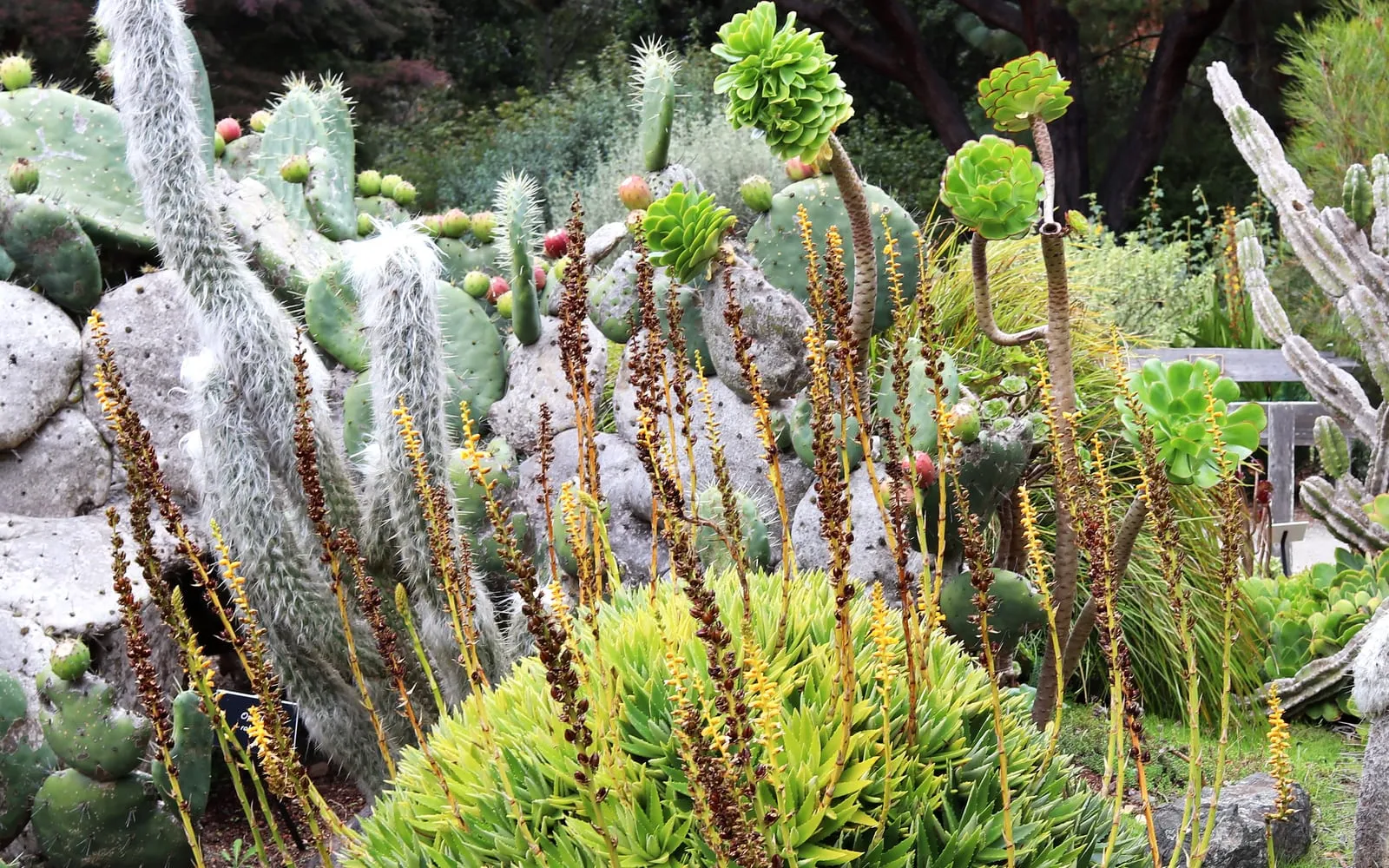
At a glance
- Difficulty
- Easy
- Water
- Water deeply, then let the soil dry out fully before watering again
- Light
- Full sun. Colour and spine development are both weaker in shade
- Temperature
- Tolerates heat well. Established plants shrug off short dips below freezing
- Humidity
- Low. This is a dry-climate plant and resents constant damp far more than dry air
- Hardiness
- USDA 8b-11, RHS H3, hardy to -6 C
- Type
- Slow-growing, clump-forming succulent perennial
- Height
- 15-30 cm tall, spreading 30-60 cm as a mature clump
- Native to
- Brazil, Santa Catarina, Rio Grande do Sul
Rocky riverbanks and outcrops in southern Brazil, with real winter cold but almost no waterlogging, since the plant grows wedged in stone where water cannot sit. The zone number covers temperature; it says nothing about drainage, and a Dyckia given the right zone but poor soil still rots over winter.
Hardiness zones describe winter cold alone. Summer heat, humidity, rainfall and the length of the growing season decide as much, so treat the range as the outer limit rather than as a recommendation.
Not known to be toxic
Non-toxic. Dyckia has no ASPCA entry of its own, and no genus-level toxicity has been documented for it, which sets it apart from the tank bromeliads on this site that carry specific ASPCA non-toxic listings. The RHS list of potentially harmful garden plants does not include it. The real hazard is entirely mechanical. Every leaf edge on a mature Dyckia carries hooked, backward-facing spines stiff enough to tear skin or a pet's coat, and a rosette planted at ground level in a border a dog runs through, or within reach of a toddler exploring a rockery, is a genuine risk of a cut rather than of poisoning. Site it away from paths and play areas, and handle a mature plant in thick gloves.
Sources: RHS potentially harmful garden plants, NC State Extension Gardener Plant Toolbox
About
Nine of the ten bromeliads in this collection are grown the way most people picture a bromeliad: a rosette that holds water in a central cup, watered by filling that cup rather than the soil. Dyckia brevifolia does neither. It is a terrestrial species with a genuine, functioning root system that draws up water from the ground, no cup to speak of, and a habit that has far more in common with an agave than with a Guzmania or a Tillandsia.
It grows as a tight, ground-hugging rosette of stiff, narrow, silvery-green leaves, every margin lined with small, hooked, sawblade-like teeth that give the plant its common name. Left undisturbed, a single rosette produces offsets steadily until it forms a dense, spreading clump studded with orange flower spikes in spring, and the whole thing tolerates drought, poor soil and a real winter with a resilience that would kill any of the soft-leaved tank bromeliads outright.
That combination, drought tolerance plus genuine cold hardiness, is what puts it in a garden rockery or gravel bed rather than on a windowsill, and why its care has almost nothing in common with the rest of this collection.
Appearance and character
A low, dense rosette 15 to 30 cm tall, made of narrow, rigid, channelled leaves 10 to 20 cm long, coloured a dull silvery-green that can flush bronze or copper in strong sun and cold.
Every leaf margin carries small, curved, backward-pointing spines spaced evenly along its length, sharp enough to catch on clothing or skin at the lightest brush. Where a Neoregelia’s teeth are soft enough to barely register and an Aechmea’s are a genuine hazard when handling the plant directly, a Dyckia’s spines are the more persistent danger of the two, since a mature clump low to the ground is easy to brush against by accident.
Unlike the epiphytic bromeliads in this collection, Dyckia has a real, substantial root system that anchors it firmly and draws up water and nutrients from the soil in the ordinary way most plants do, rather than relying on a leaf-based tank or absorbing trichomes for its main water supply.
The flower spike emerges from the side of a mature rosette rather than the centre, a wiry stem 30 to 60 cm tall carrying a string of small, bright orange, star-shaped flowers over several weeks in spring.
Offsets form readily around the base of an established rosette, and over several years a single plant spreads into a dense, thorny mound half a metre or more across, eventually crowding out most weeds in the space it occupies.
Unlike the tank bromeliads, which are strictly monocarpic and decline once their single rosette flowers, a Dyckia clump as a whole flowers year after year, since it is always made up of rosettes at different stages, some flowering while younger ones are still maturing.
Where it is from
Dyckia brevifolia is native to southern Brazil, recorded from the states of Santa Catarina and Rio Grande do Sul, where it grows wedged into cracks in rock outcrops and on stony riverbanks rather than in ordinary soil.
That rocky habitat is the reason drainage matters more to this species than almost anything else. Water moving over and around bare rock never sits still for long, and a Dyckia’s roots have evolved for exactly that rhythm: a thorough soaking followed by rapid drainage and a real dry spell before the next one.
The region also experiences a genuine winter, cooler and with occasional frost compared with the tropical rainforest most other bromeliads in cultivation come from, which is why this species tolerates cold far better than a Guzmania or an Aechmea, provided the soil around its roots drains freely rather than staying wet through a cold spell.
Full, unfiltered sun reaches it on an open rock face in a way it never would a rainforest epiphyte, and the plant’s tough, narrow, silvery leaves are shaped by that exposure, built to shed heat and reduce water loss rather than to catch dappled shade the way a Vriesea’s broad leaves do.
How it grows
Plant it in a gritty, fast-draining mix, either a proprietary cactus and succulent compost or ordinary garden soil dug through generously with coarse grit or sharp sand, since standing moisture around the roots is far more dangerous to this species than dry soil ever is.
Choose a full-sun position. Both the intensity of the plant’s colour and the density of its spine development are noticeably weaker in shade, and a shaded Dyckia tends to grow soft and elongated rather than tight and compact.
Water deeply but infrequently, soaking the whole root zone and then letting the soil dry out completely before watering again, mimicking the soak-and-drain rhythm of its native rocky habitat rather than the frequent light watering a houseplant might expect.
Grow it in a rockery, a gravel bed or a raised, well-drained border rather than in a low spot where water collects after rain, and add extra grit to the planting hole in heavier garden soil.
Leave clumps to spread undisturbed for several years, since the display improves as the mound grows larger and produces more flower spikes each spring, and division is only needed if the clump has outgrown its space or a piece is wanted for propagation.
Divide an established clump in spring by lifting a rooted offset with a sharp spade or knife, wearing thick gloves throughout, and replant it immediately into similarly gritty soil.
In a marginal climate, grow it in a container that can be moved under cover for winter, or mulch the base with grit rather than organic matter, which holds moisture against the crown in exactly the way this species dislikes.
Through the seasons
Spring is the main flowering period, when established rosettes send up their wiry orange spikes. Resume light feeding, and divide an overgrown clump once the display finishes if more space or extra plants are wanted.
Summer is the peak growing season and the time this species tolerates heat and drought most easily. Water deeply but infrequently, letting the soil dry out fully between soakings even in hot weather.
Autumn is a good time to plant new offsets or divisions outdoors, giving them a full season to establish roots before winter cold sets in. Reduce watering as growth slows.
Winter tests cold tolerance rather than watering technique. An established plant in freely draining soil takes a light frost without damage; the risk comes from wet soil sitting cold around the roots rather than from the cold itself, so reducing watering to almost nothing over winter matters more than any frost protection.
Care difficulty
Easy, provided it is given the drainage its native rocky habitat demands.
Nearly every failure with this species traces back to soil that holds too much moisture, whether from heavy garden soil, an overcast climate, or a well-meaning watering routine borrowed from a houseplant bromeliad. Given grit, sun and a genuine dry spell between waterings, it needs very little else.
Because it is grown in the ground rather than a pot with a cup to check, there is no daily or weekly ritual the way there is with a Guzmania or a Tillandsia. The main ongoing task is resisting the urge to water it as often as a typical garden plant.
The spines are the other practical consideration, less about the plant’s own care and more about where it goes in the garden, since a mature clump low to the ground is easy to brush against without meaning to.
Watering
Water deeply and thoroughly so the whole root zone is soaked, then let the soil dry out completely before watering again, which for an established plant in the ground can mean going weeks without any supplemental water during a normal summer.
Container-grown plants dry out faster than ones in the ground and need checking more often, though the same rule applies: a thorough soak followed by a real dry spell, never a routine of frequent light watering.
Reduce watering sharply over winter, since cold, wet soil around the roots is far more likely to kill this species than the cold itself.
There is no cup or tank to fill on a Dyckia. Watering the soil is the entire routine. That is the main care difference between this species and every other bromeliad in this collection.
Signs of overwatering are a soft, yellowing base and leaves that lose their rigidity. Signs of underwatering, which this species tolerates far longer than most garden plants, are leaves that thin slightly and lose some of their sheen, corrected easily with the next deep soak.
Warning signs, diseases and pests
A soft, yellowing or blackening base, especially after a wet spell, is rot from soil that has stayed too damp for too long. Improve drainage before replanting, adding more grit or raising the bed, since the plant itself is rarely at fault.
Pale, stretched, less spiny growth points to too little light. Move a container-grown plant into full sun, or note that a spot has become shadier than when the plant was first sited, perhaps by nearby growth.
Scale insects appear as small, flat, brownish bumps along the leaves, often tucked between the spines where they are hard to spot. Treat with horticultural oil, applying carefully with gloved hands.
Mealybugs cluster as small white tufts at the base of the leaves. A cotton bud dipped in isopropyl alcohol removes light infestations; a heavier one may need a systemic treatment on a valued specimen.
Frost damage after an unusually hard winter shows as blackened, mushy outer leaves while the centre of the rosette often survives. Remove the damaged leaves once the risk of further frost has passed and let the plant recover through spring.
A clump that has stopped flowering after several good years may need dividing, since an overcrowded mound puts more energy into maintaining itself than into producing new flower spikes.
Growing environment
Full sun. This is a plant that wants as much direct light as a garden can offer, and both its colour and its spine development suffer in shade.
Tolerates real heat without difficulty, and an established plant in free-draining soil shrugs off short dips well below freezing, a level of cold hardiness unusual among bromeliads.
Low humidity is not a problem, unlike almost every other species in this collection. This is a dry-climate plant that resents constant dampness around its roots far more than it minds dry air.
Gritty, sharply-draining soil is the one non-negotiable requirement, whether that comes from a proprietary succulent mix in a container or garden soil heavily amended with coarse grit.
A rockery, gravel bed or raised border suits it far better than a low, damp spot in an ordinary flower bed, where winter drainage cannot keep up with what the roots need.
Placement away from paths, play areas and anywhere pets regularly pass close by, given how persistently sharp the leaf margins are.
Feeding
Feed lightly, two or three times over the growing season at most, with a dilute balanced fertiliser or a cactus-formulated feed applied to the soil.
This is not a heavy feeder. Excess fertiliser tends to produce soft, elongated growth that is more prone to rot and less true to the tight, spiny form the species is grown for.
Skip feeding entirely over winter, when the plant is barely growing and any unused fertiliser sits in the soil.
An established clump growing in reasonable garden soil often needs no supplemental feeding at all, particularly once it is large enough to be drawing on a substantial root system of its own.
Never feed a plant that is showing signs of root rot. Fertiliser does nothing for a struggling root system and can make chemical stress on already damaged roots worse.
Troubleshooting
Do I need to keep a cup of water filled like other bromeliads? No. Dyckia is a ground-rooted species with no functional tank, and watering the soil deeply and then letting it dry out is the entire routine.
Can I grow it as a houseplant like the others in this collection? It can be grown in a container indoors in very bright light, but it is naturally a full-sun, outdoor rockery plant, and it rarely performs as well on an average windowsill as the tropical tank bromeliads do.
The base has gone soft and yellow. That is rot from soil that has stayed wet for too long. Improve drainage before replanting, and cut back watering frequency considerably.
How cold can it really take? An established plant in free-draining soil tolerates short dips well below freezing without lasting damage, though prolonged, hard freezes or waterlogged winter soil will still kill it.
My clump has stopped flowering. An overcrowded mound often puts its energy into maintaining itself rather than flowering. Divide it in spring, replanting sections into fresh, gritty soil.
Is it safe to plant near a path? Handle placement carefully. The leaf margins carry stiff, hooked spines along their whole length, sharp enough to tear skin or snag clothing on light contact, and a spot away from regular foot traffic is worth choosing deliberately.
Why does my plant look pale and less spiny than pictures I’ve seen? Too little light is the most likely cause. Move a container-grown plant into full sun, since both colour and spine development depend directly on how much direct light the plant receives.