
Outdoor plant
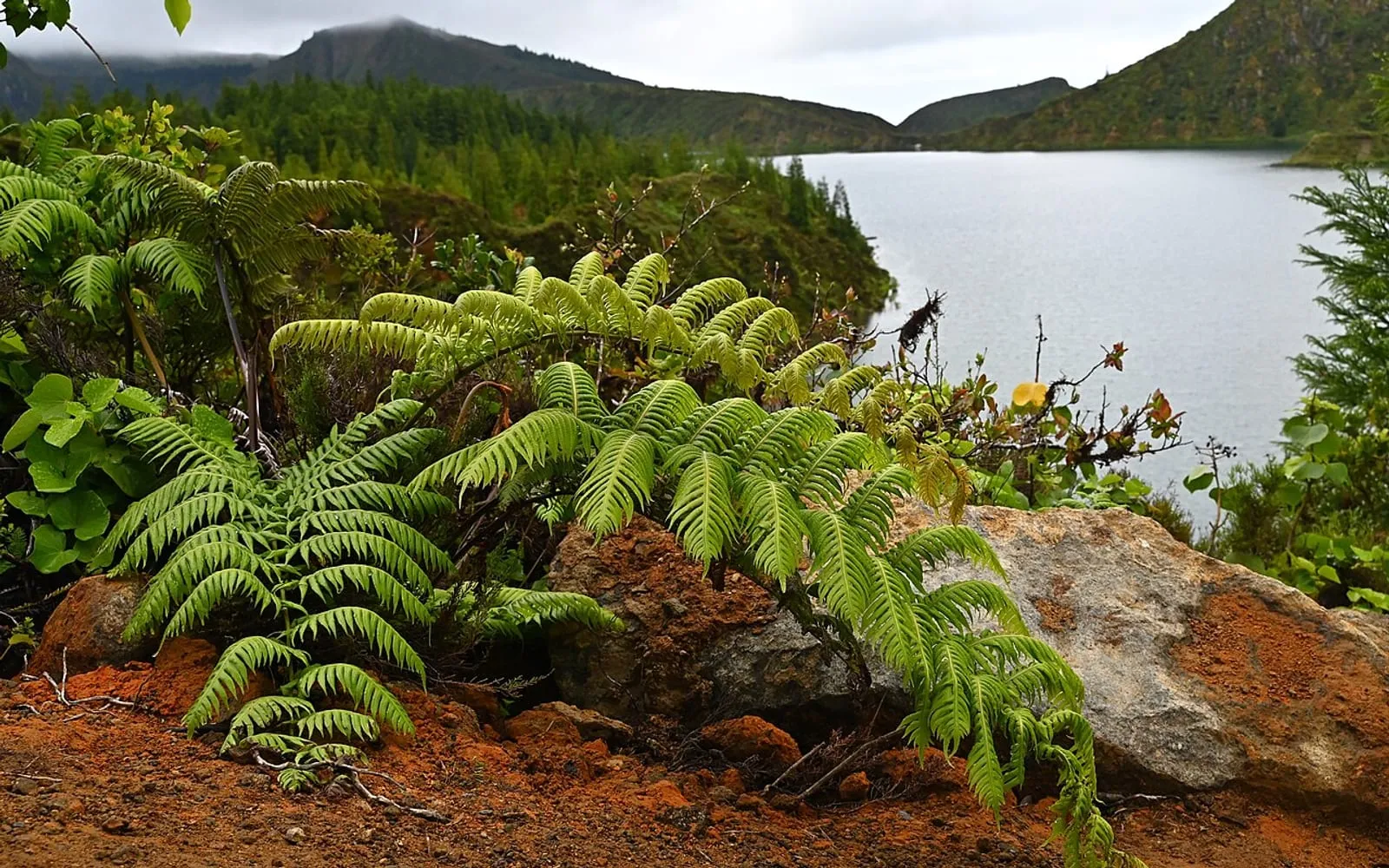
Chain Fern
Woodwardia radicans
Also known as European chain fern, Rooting chain fern
How to grow chain fern, Woodwardia radicans. Large arching fronds that root new plantlets at the tip, borderline hardiness, and a Mediterranean origin.
At a glance
- Difficulty
- Moderate
- Water
- Keep the soil constantly moist, particularly through summer
- Light
- Partial to deep shade, sheltered from wind and midday sun
- Temperature
- Tolerates brief light frost. Damaged below about -6 deg C
- Humidity
- Appreciates humid, sheltered air. Dislikes hot dry wind
- Hardiness
- USDA 9-10, RHS H4, hardy to -6 C
- Type
- Tender evergreen fern, borderline hardy in a sheltered spot
- Height
- 1-1.8 m
- Native to
- Western Mediterranean, Macaronesia, southern Italy and Crete
Borderline hardy rather than reliably so. It survives short dips to around minus 6 deg C in a sheltered spot with dry roots, and loses fronds to anything harder, so a wall base, courtyard or the shelter of a building matters as much as the zone number. Summer heat is less of a problem provided the roots never dry out and the crown stays out of strong midday sun.
Hardiness zones describe winter cold alone. Summer heat, humidity, rainfall and the length of the growing season decide as much, so treat the range as the outer limit rather than as a recommendation.
Not known to be toxic
Non-toxic. Chain fern does not appear on the RHS list of potentially harmful garden plants, and the ASPCA has no record of Woodwardia as harmful to cats, dogs or horses. There is no irritant sap and no reported hazard from handling or brushing past the plant. Like most true ferns it carries no known toxin, and any minor stomach upset from a pet chewing a frond would be a generic response to unfamiliar plant matter rather than a specific poisoning.
Sources: RHS potentially harmful garden plants, ASPCA toxic and non-toxic plants
About
Most ferns spread underground, by rhizome, invisibly. This one spreads in the air. Its long fronds arch out and downward under their own weight until the tip touches the ground, where a small plantlet forms and roots into the soil, still attached to the parent frond. Left alone over a few seasons, a single plant walks outward across a bed this way, a whole ring of young ferns rooted around one ageing centre.
The chain in its common name refers to something else entirely, the double rows of elongated sori running in linked chain-like lines along the veins on the underside of each frond, visible once a plant has matured enough to produce them.
It is a substantial garden plant, with fronds reaching well over a metre in good conditions, and a slightly uneasy one outside its comfort zone. The species is rated Vulnerable by the IUCN in the wild, squeezed by habitat loss across a native range that was never especially large to begin with, and the same narrow tolerance for cold and drought that makes it rare in the wild makes it a plant for a sheltered corner rather than an open border in most gardens.
Appearance and character
A large evergreen or semi-evergreen fern, forming a substantial crown with fronds arching to 1 to 1.8 m in a sheltered, well-grown specimen, less in a container or a harder spot.
Fronds are once or twice divided, glossy dark green, tapering to a long point at the tip. That tapering tip is where the plantlets form, once a frond has grown long enough to bend under its own weight and reach the ground.
The double rows of chain-like sori sit close to the midrib on the underside of fertile fronds, distinguishing the genus at a glance from ferns with scattered round sori.
New fronds unfurl from a stout central crown through spring and summer, covered at first in pale papery scales that darken as the frond matures.
A closely related and much hardier species, Woodwardia fimbriata, grows wild in western North America and is sometimes offered under a similar name, so checking the botanical name before buying matters if reliable hardiness is important.
Where it is from
The western Mediterranean and Macaronesia, including the Azores, Madeira and the Canary Islands, with outlying populations in southern Italy and Crete.
That is a narrow, humid, mild-winter range by the standards of most hardy garden ferns, and it explains both the plant’s borderline hardiness and its dislike of prolonged dry heat. It grows naturally in shaded ravines, damp cliffs and stream banks where humidity stays high and frost is rare or absent altogether.
Habitat loss across that range, combined with the small size of some island populations, has led the IUCN to assess the species as Vulnerable in the wild, a conservation status shared by relatively few of the ferns commonly sold for gardens.
It has been grown in sheltered European gardens since the Victorian era, prized then as now for its size and the unusual rooting habit of its fronds.
How it grows
Choose a sheltered position in partial to deep shade, ideally against a warm wall or in a courtyard where cold air drains away rather than pooling.
Plant into soil generously improved with organic matter, since the natural habitat is damp, humus-rich ground rather than anything free draining and poor.
Water it in well and keep the root zone consistently moist through the first year while it establishes, since a young plant with a small root system dries out and struggles far more easily than an established crown.
Mulch thickly each spring with compost or leaf mould, both to feed the plant and to protect the crown against a hard frost.
Let the fronds arch naturally toward the ground and root their own plantlets if you want more plants, or propagate more reliably by removing a rooted plantlet once it has formed a few of its own small fronds and potting it separately.
In a marginal climate, grow it in a large container that can be moved into a cold frame, unheated greenhouse or sheltered porch over the coldest part of winter, since a plant that can be moved survives conditions an open-ground specimen cannot.
Cut away fronds damaged by frost or wind in spring once new growth is clearly under way, rather than in autumn, since damaged fronds offer some protection to the crown through winter even once unsightly.
Through the seasons
Spring brings strong new growth from the crown. Cut away winter-damaged fronds once fresh growth is visible, and resume feeding.
Summer is the main growing season, needing generous watering and some shelter from strong midday sun, which scorches the fronds faster than a similar amount of shade-grown foliage would suggest.
Autumn slows growth and is the point to stop feeding and to check that mulch around the crown is thick enough for the winter ahead.
Winter is the test. In a sheltered spot within its zone range the crown and much of the foliage stay evergreen; anywhere colder, expect frond damage or complete dieback to the crown, from which the plant usually regrows in spring if the roots survived.
Care difficulty
Moderate, and the difficulty is almost entirely about siting it correctly rather than any ongoing fuss.
Given a sheltered spot with shade, constant moisture and protection from hard frost, the plant grows fast and looks after itself for most of the year.
Get the position wrong, in an exposed spot, in full sun, or somewhere frost regularly settles below about minus 6 deg C, and it struggles or dies back to the ground every winter, which weakens it over successive years even if it technically survives.
The rooting plantlets make propagation easy once a plant is established, which offsets some of the risk of losing a specimen to a hard winter.
Watering
Keep the soil consistently moist through the growing season. This is a ravine and stream-bank fern by origin and has no real tolerance for drying out.
Water generously through summer, checking more often in a warm spell or where the plant is in a container rather than open ground.
Reduce watering somewhat in winter, particularly for a plant kept partly dormant in a cold frame or unheated space, since cold wet roots are more vulnerable to rot than cold dry ones.
A container-grown specimen dries out considerably faster than one in open ground and needs checking most days through summer.
Warning signs, diseases and pests
Blackened or collapsed fronds after a cold snap mean frost damage. Leave them in place over winter for what shelter they still give the crown, and cut them away once new spring growth confirms the crown has survived.
Scorched, bleached patches on fronds in an exposed or sunny spot mean too much direct light or wind. Move a container plant to more shelter, or plan extra shading for an open-ground specimen.
Ragged holes in young fronds or damage to newly rooted plantlets usually means slugs and snails, which are drawn to the soft new growth at ground level where plantlets are forming.
Wilting despite moist-looking soil can mean root rot from waterlogging rather than drought. Improve drainage while keeping the soil reliably damp, which is a narrower balance than it sounds but achievable with a humus-rich, open mix.
No serious disease affects this species in cultivation beyond the routine risks of cold damage and rot in poorly drained ground.
Growing environment
Partial to deep shade, sheltered from both strong sun and drying wind.
Warmth helps more than the zone number suggests. A courtyard, a wall base or any spot where frost is less severe than in the open garden extends where this fern can be grown outdoors.
Rich, humus-heavy soil that holds moisture without waterlogging. Leaf mould, garden compost and well-rotted manure all improve poorer ground before planting.
In a marginal climate, container culture with winter protection under glass is a realistic way to grow this species where open-ground planting would be too great a risk.
It suits a shaded courtyard, a woodland garden in a mild area, or a large container on a sheltered patio, and looks striking beside other large-leaved shade plants such as hostas and rodgersias.
Feeding
A monthly balanced liquid feed from spring to early autumn keeps growth strong, particularly for a plant establishing in its first year or two.
A thick annual mulch of compost or leaf mould does double duty, feeding the plant gradually while also helping protect the crown against frost.
Stop feeding by early autumn, since late soft growth is more vulnerable to the first cold snap than growth that has had time to mature and harden through summer.
Container-grown plants need slightly more regular feeding than those in open ground, since nutrients wash out of a pot faster than they leach from garden soil.
Troubleshooting
Little plantlets have appeared at the tips of the fronds. What are they? New plants forming where a frond has arched over and touched the soil. This is how the species spreads naturally. Leave them to root and grow, or pot one up separately once it has a few small fronds of its own.
The fronds went black after a cold night. Frost damage. Leave the damaged fronds in place over winter for what protection they offer the crown, and cut them off once new growth confirms the plant has survived.
Can I grow this outdoors in a cold climate? Only with real shelter, a warm wall, courtyard or similarly protected spot, and even then expect frond damage most winters. In anything colder, grow it in a container and bring it under cover for winter.
The fronds look bleached and scorched. Too much sun or wind. Move a container plant to deeper shade, or improve shelter around an open-ground specimen.
Something is eating the young fronds or the new plantlets. Slugs and snails, typically. Check after dark near the crown and around any rooting plantlets, which sit at ground level where damage is easiest.
How big does it get? Fronds to 1 to 1.8 m in a well-sheltered, mature specimen, considerably less in a container or a harder climate.
Is it the same as the chain ferns native to North America? No. The North American chain ferns, including Woodwardia fimbriata, are separate species and generally hardier. Check the botanical name before buying if reliable cold tolerance matters.