
Houseplant
Asiatic Holly Fern
Cyrtomium caryotideum
Also known as Cyrtomium caryotideum
How to grow Cyrtomium caryotideum, the asiatic holly fern, with large glossy toothed pinnae drawn to long points like fishtail-palm leaflets.
At a glance
- Difficulty
- Moderate
- Water
- Keep evenly moist; never dry out or waterlog
- Light
- Bright indirect light
- Temperature
- Cool to mild; tolerates light frost in free-draining soil
- Humidity
- Average to high
- Hardiness
- USDA 7-10, RHS H4, hardy to -10 C
- Type
- Perennial
- Height
- 30-60 cm
- Native to
- eastern and southern Asia
A fern from eastern and southern Asia, grown for its foliage in shaded, humid, moist conditions. It survives winters down to around -10 deg C when the crown stays in free-draining soil, though it is less hardy than Cyrtomium fortunei. It needs shade or bright indirect light and steady moisture, and it dislikes a dry root ball and direct sun. Cold combined with waterlogging rots the crown, which the zone numbers do not show.
Hardiness zones describe winter cold alone. Summer heat, humidity, rainfall and the length of the growing season decide as much, so treat the range as the outer limit rather than as a recommendation.
Not known to be toxic
Cyrtomium caryotideum is not listed as toxic by the ASPCA or the RHS, and holly ferns are not recorded as harmful to people or pets. A pet or child that chewed a frond would be unlikely to come to serious harm beyond a possible mild stomach upset.
Sources: ASPCA toxic and non-toxic plants, RHS potentially harmful garden plants
About
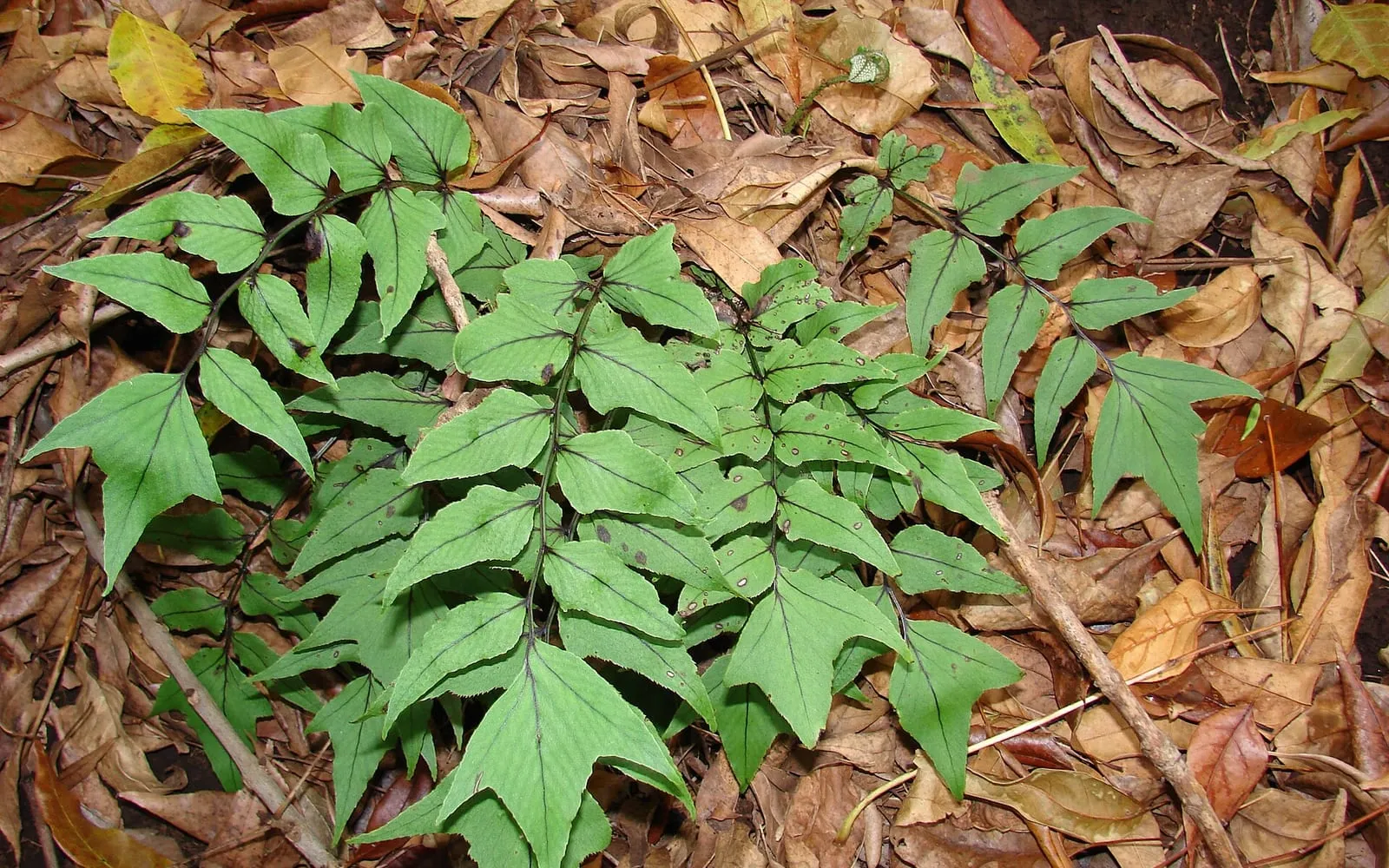
Cyrtomium caryotideum is a bolder, glossier holly fern. Where its relatives crowd many small sickle-leaflets along a frond, this one carries only a few large pinnae, each broad, shining and edged with coarse, irregular teeth, drawn out at the tip into a long point. That long-tailed, toothed shape recalls the leaflets of a fishtail palm, Caryota, which is what the epithet caryotideum refers to.
It grows through eastern and southern Asia, in the shade of warm, humid forest and on damp, rocky banks, and it keeps that leafy, tropical look in a pot. A grown plant makes an upright to arching clump of these big, glossy, toothed pinnae, giving a much heavier look than a fine-cut fern or a maidenhair.
Its care sits between the tough temperate holly ferns and the tender tropicals. It needs warmth, shade or filtered light, a humid atmosphere and a root run kept evenly moist, and it is less forgiving of cold than the hardiest of its kin. Dry air, a dried pot and harsh sun mark the glossy pinnae, and a cold, sodden root run rots the crown.
Appearance and character
Each frond carries only a few large pinnae, broad and glossy, their margins cut into coarse, irregular teeth and their tips drawn out into long points.
That toothed, long-tailed outline recalls a fishtail palm’s leaflets, which is the likeness the name caryotideum records.
Fresh fronds uncurl and firm to a lacquered green, and the plant makes an upright to arching clump instead of a low or trailing one.
No flower comes, this being a fern, and rounded spore clusters are scattered across the undersides of the big pinnae.
Where it is from
The asiatic holly fern is native to eastern and southern Asia, growing in the shade of warm, humid forest and on damp, rocky banks where the air stays moist.
That warm, shaded, humid habitat guides its care. It needs warmth, shade or filtered light, a moist atmosphere, and a root run held evenly moist yet free-draining. It has less cold tolerance than the hardiest holly-ferns, and dry air, a dried pot or a cold, sodden root run each work against it.
How it grows
The big, toothed fronds grow through the warm months and slow in winter, and in warm, humid quarters the plant holds its foliage year round. Warmth, even moisture and a humid atmosphere keep the pinnae glossy; dry air dulls and browns them, and cold wet at the root rots the crown.
Pot it into a light, peat-free potting mix that drains yet holds moisture, and keep that mix evenly moist without letting it stand in water. Divide an established crown in spring to make more of it, or sow spores under cover.
Give it shade or filtered light out of harsh sun, warmth suited to a subtropical forest fern, and a humid atmosphere from a wet-gravel tray or grouped plants where the room air is dry.
Through the seasons
Spring brings the large, toothed fronds back into growth. Divide a crowded crown for more plants, resume feeding, and keep the potting mix evenly moist.
Summer brings the strongest growth. Water so the root run stays moist, hold the air humid, keep it out of scorching sun, and feed through the month.
Autumn slows the plant as the light fades. Reduce the feeding and let the mix dry a little more between waterings.
Winter is a rest period. Keep it warm, evenly but lightly moist, and clear of a cold, sodden root run.
Care difficulty
Moderate. Warmth, shade or filtered light, a humid atmosphere and a mix kept evenly moist keep the big pinnae glossy and the plant in good condition. It struggles with dry air and a dried pot, which dull and brown the pinnae, harsh sun, which scorches them, and cold, waterlogged compost, which rots the crown.
Watering
Keep the potting mix evenly moist, watering as the surface begins to dry, and let the surplus drain instead of leaving the pot in standing water. The big glossy pinnae hold up better than a maidenhair’s fine foliage, but they still dull and brown if the root run dries right out.
The danger at the other end is cold combined with a sodden mix, which rots the crown, so ease the watering back in winter. Rainwater keeps the gloss cleanest, though hard water is tolerated better than by the delicate ferns.
Warning signs, diseases and pests
Dull, browning pinnae point to dry air, a dried root run or hard water; raise the humidity, restore even moisture, and switch to rainwater. Scorched patches mean harsh sun, so shift the plant into steadier shade.
A crown gone soft and dark has been kept cold and waterlogged; lift it, cut away the rot, and replant into fresher, better-draining mix. In a hot, dry, stagnant spot spider mites may speckle the pinnae. Cooler, moister, better-ventilated air helps prevent them.
Growing environment
Shade to filtered light suits it, out of the harsh sun that scorches the glossy pinnae but never in deep gloom, which thins the clump. Warmth suited to a subtropical forest fern is ideal.
Match that with a humid atmosphere and a light, peat-free, free-draining mix kept evenly moist, and keep it away from cold draughts and radiators. It is leafier and more tropical-looking than the hardy holly ferns and needs a little more warmth and humidity.
Feeding
A weak, balanced feed through the growing season keeps the large fronds coming, since it needs only modest feeding. Reduce feeding through autumn and stop over winter.
Avoid a heavy dose, which forces soft growth and can mark the glossy pinnae. A newly potted crown uses the nutrients in its fresh mix for the first weeks before it needs feeding.
Troubleshooting
Why is my asiatic holly fern struggling? Most often dry air and a dried root run, which dull the pinnae, harsh sun, which scorches them, or a cold, sodden mix, which rots the crown. Match the conditions to its warm, shaded habitat and it recovers.
How much light does it want? Shade to filtered light out of harsh sun. Deep gloom thins the clump; direct sun scorches the pinnae.
How often should I water it? Keep the potting mix evenly moist, watering as the surface dries and always letting the surplus drain.
Why are its leaflets so big and toothed? It carries a few large pinnae with coarse teeth and long-drawn tips, recalling a fishtail palm’s leaflets, which is the source of the name caryotideum.
Is it safe around pets? Holly-ferns are not recorded as poisonous, so it is treated as safe around cats, dogs and children.
Asiatic Holly Fern problem guides
Not sure what is wrong? See the common houseplant pests guide.