
Houseplant
Asian Netvein Hollyfern
Cyrtomium fortunei
Also known as Cyrtomium fortunei
How to grow Cyrtomium fortunei, the asian netvein hollyfern, a tough, shade-tolerant fern with leathery, holly-like pinnae and netted veins.
At a glance
- Difficulty
- Easy
- Water
- Keep evenly moist; never dry out or waterlog
- Light
- Bright indirect light
- Temperature
- Hardy; tolerates frost but not a cold, wet crown
- Humidity
- Average to high
- Hardiness
- USDA 6-10, RHS H5, hardy to -15 C
- Type
- Perennial
- Height
- 40-60 cm
- Native to
- eastern Asia
A semi-evergreen fern from shaded gullies and rocky banks in eastern Asia, hardy to around -15 deg C when the crown stays in free-draining soil. It needs shade or bright indirect light and steady moisture, and it dislikes a dry root ball and direct sun. Cold combined with waterlogging rots the crown, which the zone numbers do not show.
Hardiness zones describe winter cold alone. Summer heat, humidity, rainfall and the length of the growing season decide as much, so treat the range as the outer limit rather than as a recommendation.
Not known to be toxic
Cyrtomium fortunei is not listed as toxic by the ASPCA or the RHS, and holly ferns are not recorded as harmful to people or pets. A pet or child that chewed a frond would be unlikely to come to serious harm beyond a possible mild stomach upset.
Sources: ASPCA toxic and non-toxic plants, RHS potentially harmful garden plants
About
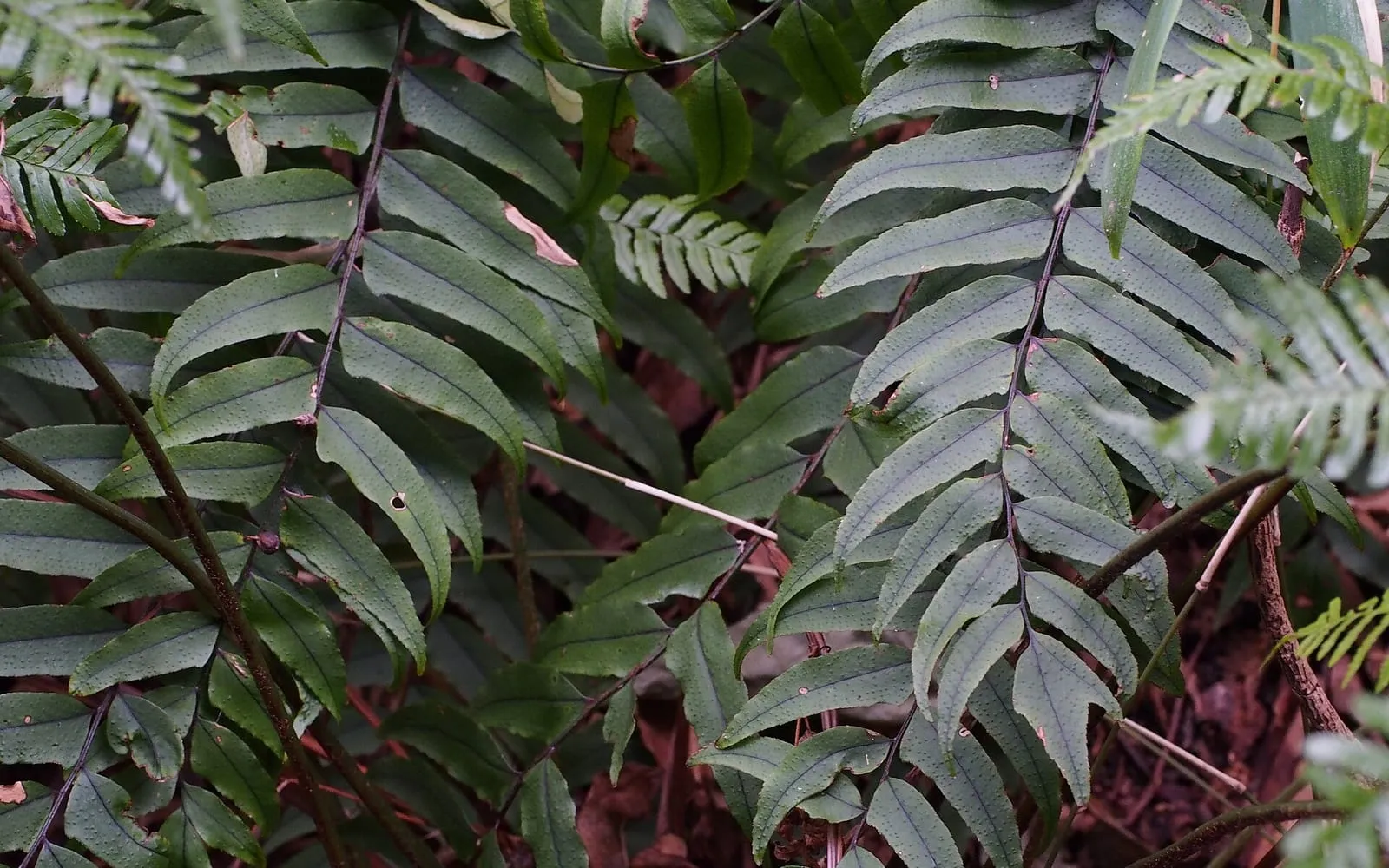
Cyrtomium fortunei is a fern for people who have killed a maidenhair and want something more tolerant. Its fronds are once-divided, ranked with paired, leathery, sickle-shaped pinnae of a matt mid-green, each with a faint holly-like point, and the veins across them join into a fine net instead of running out to the margin, which explains the name netvein. The whole plant is stiff, upright and practical rather than delicate.
It comes from eastern Asia, where it grows in shaded gullies, on banks and among rocks, and where several forms are frost hardy. That tolerance helps indoors. Where tropical ferns often struggle in an ordinary heated room, this one handles lower light, cooler corners and drier air, and keeps its leathery fronds in good condition through conditions that would crisp a maidenhair.
None of that makes it indestructible. It still prefers steady moisture, cool to moderate warmth and light out of the harsh sun, and it rots if left cold and waterlogged. Treat it as a resilient, shade-loving foliage fern rather than a hothouse subject and it grows well with very little attention.
Appearance and character
The fronds divide once, carrying paired, leathery, sickle-shaped pinnae of a matt mid-green, each drawn to a faint holly-like point.
The veins run together into a fine net across each pinna instead of reaching the edge as separate lines, which is the trait the netvein name records.
Fresh fronds uncurl and toughen quickly to their leathery finish, and the plant makes a stiff, upright clump rather than a soft or trailing one.
No flower appears, this being a fern, and rounded spore clusters sit scattered across the undersides of the leathery pinnae.
Where it is from
The asian netvein hollyfern is native to eastern Asia, growing in the shade of gullies, wooded banks and rocky slopes, where cool, damp, sheltered conditions prevail and some forms tolerate frost.
That habitat explains its resilience. It needs shade or filtered light, cool to moderate warmth, and a root run kept damp yet free-draining, and it tolerates lower light and drier air than most ferns. It resists cold well, but a root run left cold and sodden will still rot the crown.
How it grows
Its leathery fronds come steadily through the milder months and slow in winter, and the plant holds its foliage the year round. Even moisture, filtered light and moderate warmth keep it in good order; the main hazard is a cold, waterlogged root run.
Pot it into a light, peat-free compost that drains yet stays damp, and keep the compost damp without ever letting it sit in standing water. To increase it, divide an established crown in spring, or raise fresh plants from spores under cover.
Because it tolerates shade and drier air, it can grow in places that would not suit a fussier fern, from a north window to a cool hallway, provided the root run is not allowed to dry out for long.
Through the seasons
Spring brings new leathery fronds. Divide a congested crown for more plants, resume feeding, and keep the compost damp.
Summer brings the strongest growth. Water so the roots stay damp, keep it out of scorching sun, and feed through the month.
Autumn slows the plant as the light fades. Cut the feeding back and let the compost dry a little more between waterings.
Winter is a rest period. Keep it cool to moderate, barely moist, and clear of a cold, sodden root run.
Care difficulty
Easy, and among the more forgiving ferns to keep. Filtered light, even moisture and moderate warmth keep it growing well, and it tolerates lower light and drier air than most. It fails mainly through a cold, waterlogged compost, which rots the crown, and through harsh direct sun, which can scorch the leathery fronds.
Watering
Keep the compost damp, watering once the surface begins to dry, and let the surplus drain away instead of leaving the pot standing in it. The leathery fronds tolerate a short dry spell far better than a maidenhair would, so err on the side of good drainage over constant wet.
Cold combined with a waterlogged root run is the main danger, since that rots the crown, so ease the watering right back in winter. Rainwater is kind, though this tough fern is less troubled by hard water than the delicate kinds.
Warning signs, diseases and pests
A crown gone soft and dark has been kept cold and sodden; lift it, cut out the rot, and replant into fresher, better-draining compost. Scorched patches on the fronds usually mean too much direct sun, so move it into steadier shade.
It has few pests, but a hot, dry, stagnant spot can bring spider mites that stipple the pinnae. Cooler, better-ventilated air helps more than spraying.
Growing environment
Shade to filtered light suits it, out of the harsh direct sun that scorches the leathery fronds, and it copes with darker corners than most ferns will accept. Cool to moderate warmth is ideal.
Give it a light, peat-free compost that drains freely, keep the root run damp, and it needs little else. Its tolerance of drier air makes it a good choice for an ordinary room that would defeat a maidenhair.
Feeding
A weak, balanced feed through the growing season keeps the leathery fronds coming, since it needs only modest feeding. Reduce feeding through autumn and stop over winter.
Avoid a strong dose, which forces soft growth unlike the plant’s normal tough character. A newly potted crown lives off its fresh compost for the first weeks before it needs feeding.
Troubleshooting
Why is my asian netvein hollyfern struggling? Most often a cold, waterlogged compost that rots the crown, or harsh sun that scorches the fronds. Better drainage and steadier shade set it right.
How much light does it want? Shade to filtered light. It tolerates darker corners than most ferns, but harsh direct sun scorches the pinnae.
How often should I water it? Keep the compost damp, watering as the surface dries and always letting the surplus drain, since a cold, sodden root run rots it.
Why is it easier than a maidenhair? Its leathery, netted-veined fronds tolerate lower light and drier air, so it holds up in ordinary rooms that would crisp a delicate fern.
Is it safe around pets? Holly-ferns are not recorded as poisonous, so it is treated as safe around cats, dogs and children.
Asian Netvein Hollyfern problem guides
Not sure what is wrong? See the common houseplant pests guide.