
Houseplant
Spreading Maidenhair
Adiantum patens
Also known as Adiantum patens
How to grow Adiantum patens, the spreading maidenhair, a pantropical fern whose fronds split into finger-like branches radiating from the stalk.
At a glance
- Difficulty
- Moderate
- Water
- Keep evenly moist; never dry out or waterlog
- Light
- Bright indirect light
- Temperature
- Warm; keep above about 10 deg C
- Humidity
- Average to high
- Hardiness
- USDA 10-12, RHS H1c, hardy to 10 C
- Type
- Perennial
- Height
- 30-60 cm
- Native to
- tropical America, tropical Africa
A fern from tropical America and Africa, grown for its foliage in shaded, humid, moist conditions. It has no frost tolerance and does best above about 10 deg C. It needs bright indirect light, steady moisture and reasonable humidity, and it dislikes a dry root ball, dry air and direct sun.
Hardiness zones describe winter cold alone. Summer heat, humidity, rainfall and the length of the growing season decide as much, so treat the range as the outer limit rather than as a recommendation.
Not known to be toxic
Adiantum patens is not recorded as toxic to people or pets. The ASPCA lists maidenhair ferns as non-toxic to cats and dogs, and the RHS does not list Adiantum among harmful plants. A chewed frond should cause no more than a mild stomach upset.
Sources: ASPCA toxic and non-toxic plants, RHS potentially harmful garden plants
About
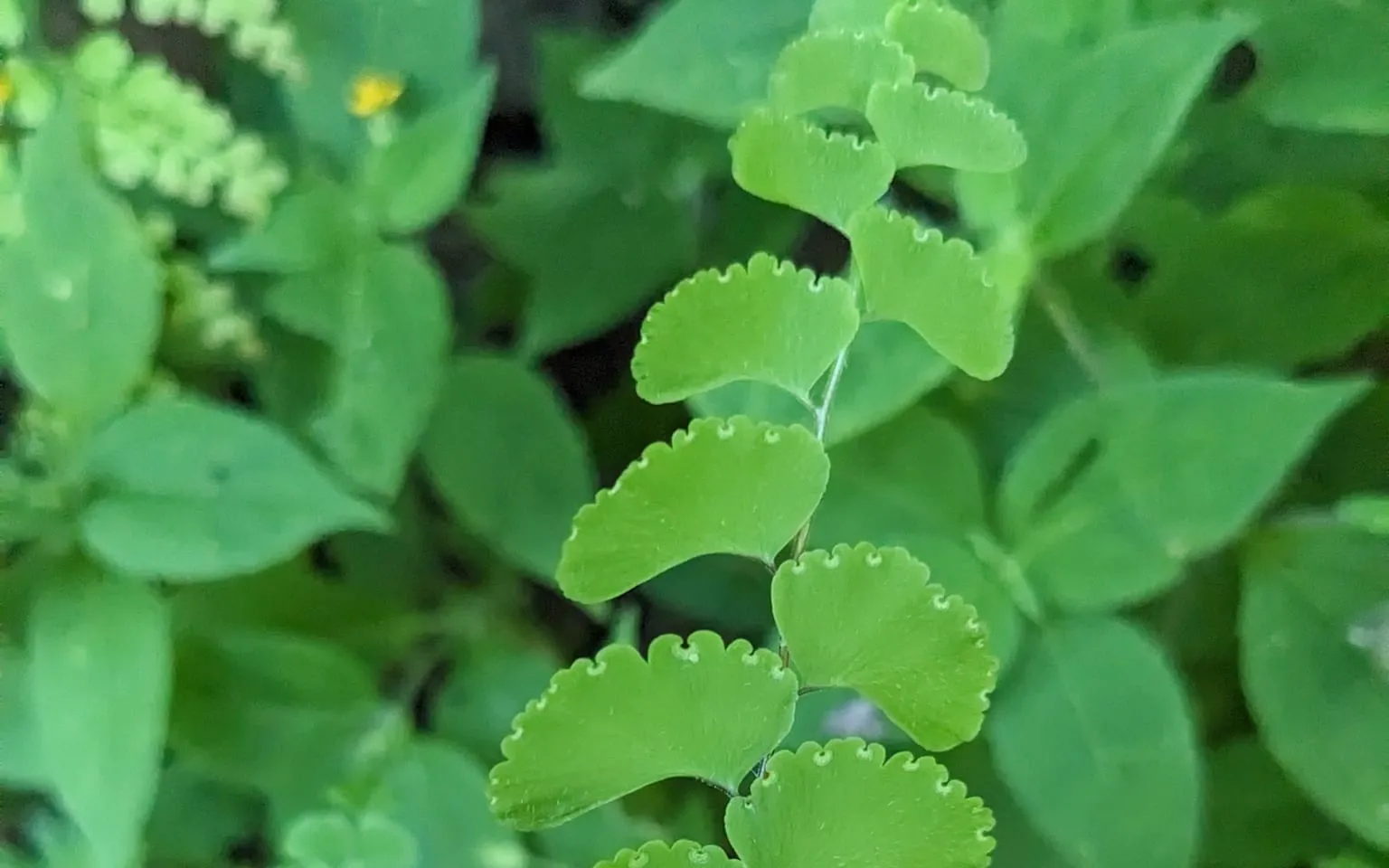
Adiantum patens is easiest to recognise by the shape of its fronds. Instead of running out as a single feather, the stalk splits near its head into a handful of branches that radiate outward like the fingers of an open hand, and each finger is strung with small fan-edged pinnae. Botanists call this a pedate frond, and it is the clearest way to identify the species where several look-alikes grow together.
The fern is pantropical, common across the warm Americas and reaching into tropical Africa, and everywhere it grows on the shaded floor of humid forest. In a pot it opens one hand-shaped frond after another on dark, thread-fine stems, forming an airy, loosely built clump of fresh green.
Apart from the striking shape, it needs the same conditions as other tender maidenhair ferns. Give it heat, shade, humid air and a rootstock that stays damp. Provide those and the radiating fronds keep multiplying. Let the pot dry, keep it in dry room air or give it direct sun, and the little pinnae scorch along their edges.
Appearance and character
Near its head the stalk parts into several branches that spread outward like open fingers, and this radiating, hand-shaped build is the trait that names the plant.
Every finger carries small, fan-edged pinnae on dark, thread-fine stems, so the wide, splayed outline is put together from a fine and airy texture.
The youngest fronds appear soft and pale, firming and greening as they open, and across the seasons the clump grows loose and open instead of dense.
No bloom ever appears, ferns increasing instead by spores, which here mature under the edges of the little pinnae.
Where it is from
The spreading maidenhair is widespread through tropical America and extends into tropical Africa, at home in the shade of warm, wet forest on damp banks and among rocks.
That wide, shaded, humid range explains its care. It needs warmth, moist air, gentle light and a rootstock that stays damp but drains quickly. Direct sun on the fronds, dry heated air and a dried rootstock all scorch the little pinnae.
How it grows
The radiating fronds open through the warm part of the year and pause when the light thins. In warm, moist conditions the foliage stays on the plant through winter. Heat, humid air and a damp rootstock keep it growing; a dry interval stops growth and marks the pinnae.
Root it in a light, peat-free mix that drains fast yet stays damp, and top the water up before it dries through, rainwater by preference. To multiply it, lift and separate a full clump in spring, or sow spores under glass for larger numbers.
Position matters too: give it dappled light out of direct sun, warmth to match a tropical forest fern, and extra humidity from a saucer of wet gravel or a cluster of nearby plants.
Through the seasons
Spring brings the hand-shaped fronds into growth. Bring the feeding back, separate a full clump for more plants, and see the mix stays damp.
Summer is the fastest growth period. Keep the roots from drying, the air moist and the feed running, and shade the spreading fronds so no direct sun reaches the fingers of pinnae.
Autumn slows growth as the days shorten. Feed less and let the mix run a touch drier between waterings.
Winter needs little. Hold it warm, damp not wet, and away from chilling draughts and radiator heat.
Care difficulty
Moderate. Dappled light, warmth, humid air and a mix kept steadily damp keep the radiating fronds coming. It struggles with direct sun, dry room air or a dried rootstock, which scorch the pinnae, and with cold, stagnant wet at the root, which rots the crown.
Watering
Aim for a mix that neither dries through nor sits in standing wet. Top it up as the surface begins to dry, choosing rainwater, since lime and drought each brown the little pinnae. The newest fronds wilt first when the plant is short of water, so take your cue from them.
Since a dense, airless mix rots the crown, that steady damp must come with free drainage. Through the cooler months water less often and judge by the mix instead of a fixed day.
Warning signs, diseases and pests
Browned, crisping edges on the pinnae usually mean dry air, a dried rootstock or hard tap water. Raise the humidity, restore steady moisture, water with rainwater, and trim off any damaged fronds.
Spider mites settle in warm, dry conditions, freckling the splayed fronds with pale stipple; dampen the air around the plant and check them before they run through the open clump. Cold, stagnant, airless wet turns the crown to rot, so an open mix and warmth keep it sound.
Growing environment
Give it dappled, indirect light, never the direct sun that sears the pinnae, and never a corner so dark that the clump grows sparse. Bright shade is best.
It needs the warmth of a tropical forest floor and air kept moist, clear of cold draughts and radiators. A light, peat-free, moisture-holding mix in a freely draining pot rounds it off, and a broad, shallow pot gives the wide, hand-shaped fronds room to splay.
Feeding
A weak, balanced liquid at long intervals through the growing months suits this light-feeding fern. Reduce feeding as autumn arrives and withhold it over winter.
Overdoing the feed forces soft growth and marks the delicate fronds, so keep it lean. A plant just potted lives off its fresh mix and needs no feed until it has taken hold.
Troubleshooting
Why is my spreading maidenhair struggling? Nearly always dry air, a dried rootstock or hard water, which brown the edges of the fan-shaped pinnae. Put those right and the radiating fronds come back.
How much light does it want? Dappled light off the sun. Direct rays sear the pinnae; a dark corner thins the clump.
How often should I water it? As the surface begins to dry, using rainwater, and taking your cue from the mix instead of the calendar.
Why do the fronds look hand-shaped? The stalk parts near its head into radiating, finger-like branches, which is the species’ natural build and the source of its name.
Is it safe around pets? Yes. The ASPCA lists maidenhair ferns as non-toxic to cats and dogs, so a chewed frond should do no worse than cause a mild stomach upset.
Spreading Maidenhair problem guides
Not sure what is wrong? See the common houseplant pests guide.