
Houseplant
Pyramid Maidenhair
Adiantum pyramidale
Also known as Adiantum pyramidale
How to grow Adiantum pyramidale, the pyramid maidenhair, a Caribbean and northern South American fern named for the broad triangular outline of its fronds.
At a glance
- Difficulty
- Moderate
- Water
- Keep evenly moist; never dry out or waterlog
- Light
- Bright indirect light
- Temperature
- Warm; suited to its origin
- Humidity
- Average to high
- Hardiness
- USDA 9-11, RHS H2, hardy to 5 C
- Type
- Perennial
- Height
- 60-100 cm
- Native to
- Caribbean, northern South America
A fern from the Caribbean and northern South America, grown for its foliage in shaded, humid, moist conditions. It needs bright indirect light, steady moisture and reasonable humidity, and it dislikes a dry root ball, dry air and direct sun. Its cold tolerance depends on its origin, and it is kept frost-free unless known to be hardy.
Hardiness zones describe winter cold alone. Summer heat, humidity, rainfall and the length of the growing season decide as much, so treat the range as the outer limit rather than as a recommendation.
Not known to be toxic
Adiantum pyramidale, the pyramid maidenhair, is not recorded among the seriously toxic plants, and related plants in its group are not listed as toxic by the ASPCA or the RHS. A pet or child that chewed a leaf would be unlikely to come to serious harm beyond a possible mild stomach upset.
Sources: ASPCA toxic and non-toxic plants, RHS potentially harmful garden plants
About
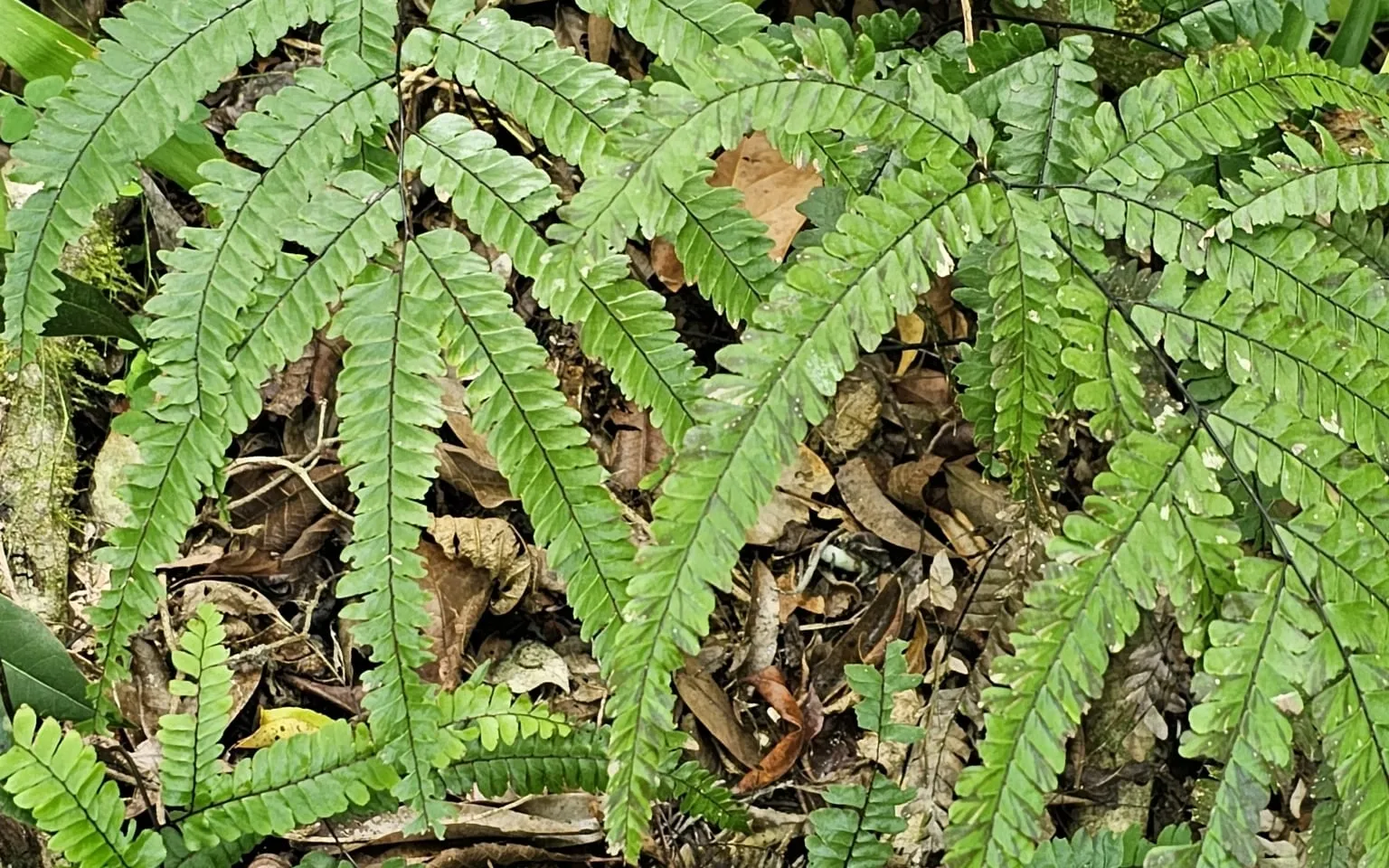
Adiantum pyramidale takes its name from the shape of the whole leaf. Viewed head-on, a mature frond broadens sharply from a slim apex towards a wide foot, making a triangular or pyramidal outline that helps distinguish it from other maidenhair ferns. Within that outline the leaf stays delicate, cut twice into small fan-edged divisions borne on the blackish, hair-fine stalks that define the genus.
The fern belongs to the warm forests of the Caribbean and northern South America, rooted on the shaded, humid floor beneath the canopy. Indoors it keeps that character, producing one wide-based frond after another until the crown forms a soft, tiered stack of green triangles with paler new tips.
Setting the outline aside, it needs warmth, shade, a moist atmosphere and a rootstock that never dries. Supply that and the triangular fronds keep coming. Let the pot go dry, let the room turn parched, or expose it to a shaft of sun, and the thin divisions brown along their outer edges first.
Appearance and character
Each frond broadens from a narrow apex to a wide base, drawing the triangular or pyramidal outline that gives the species its name and makes it easy to pick out.
Inside that outline the leaf is cut twice into small, fan-edged divisions ranged along blackish, hair-fine stalks, so a bold outline is made from fine, lacy parts.
The unfurling fronds show pale and tender at first, deepening to green as they open out, and season by season the crown thickens into a soft, tiered stack.
Flowers never come, since ferns reproduce by spores, and here they ripen along the underside margins of the small divisions.
Where it is from
The pyramid maidenhair is native to the Caribbean and northern South America, established in the shade of warm, wet forest on damp banks and slopes where moisture lingers in the air the year round.
Every requirement comes from that shaded, humid floor. Warmth suits it, as does moist air, light filtered through leaves overhead, and a rootstock kept damp without flooding. Direct sun on the fronds, the dry air of a heated room, and a rootstock left to dry all work against the plant and brown the fine divisions.
How it grows
Warm weather is when the triangular fronds appear, one after another from the crown, and growth eases off as the light weakens; in warm, moist quarters the foliage carries right through the year. It grows best with warmth, damp air and a rootstock that never dries, and a spell of dryness stalls growth and marks the leaf.
For a rooting medium, use a light, peat-free compost that lets water through yet stays damp, and refresh the water often enough that it never dries to the core, rainwater for choice. A congested crown can be teased apart in spring for more plants, and spores sown under cover will raise a batch given patience.
Position matters as much as watering: soft light out of the sun, warmth in keeping with a tropical forest fern, and moisture raised around the plant by a tray of wet gravel or a group of plants standing together.
Through the seasons
Spring starts the triangular fronds unfurling. Turn the feeding back on, tease apart a crowded crown if you want extra plants, and see that the compost stays damp.
Summer is the season of heaviest growth. Water often enough that the roots never dry, hold the air moist, keep the feed going, and shield the fronds from the sun.
Autumn eases the plant down as daylight shortens. Feed less, and let the compost dry a shade more between drinks.
Winter needs little. Hold it warm, damp instead of soaked, and clear of chilling draughts and dry heat off a radiator.
Care difficulty
Rate it moderate. With soft light, warmth, a damp atmosphere and compost kept steadily moist, the triangular fronds keep unfurling and it looks after itself. Trouble comes from sun straight on the leaf, parched room air or a dried rootstock, which singe the divisions, and from cold, motionless wet at the root, which rots the crown.
Watering
The rule is a compost that never dries to the core and never stands in wet. Refresh the water as the surface starts to go dry, choosing rainwater, since dissolved lime and drought each brown the thin divisions. The wide young fronds wilt at the first shortfall, so use them as a warning sign.
Because a dense, breathless compost rots the crown, the medium has to carry that steady damp on free drainage. In the cool months drop the frequency and lean on the feel of the compost instead of a set day.
Warning signs, diseases and pests
Singed, brittle edges along the divisions are the commonest complaint, and they trace to parched air, a dried rootstock or hard tap water. Lift the surrounding humidity, put the steady damp back, change to rainwater, and take off the fronds that have suffered.
Spider mites arrive in warm, dry conditions and pepper the foliage with fine speckling; dampen the air about the plant and act before they multiply. Rot at the crown follows cold, stagnant, airless wet, so an open medium and warmth are the best prevention.
Growing environment
The light should be soft and screened, never the direct sun that scorches the divisions, and never so dim that the crown grows thin and sparse. Bright shade is the target.
Alongside the light, give it warmth of the kind a tropical forest fern expects and an atmosphere kept moist, out of reach of cold draughts and radiator heat. A light, peat-free, moisture-holding compost in a pot that drains freely completes the setup.
Feeding
Across the growing months, a dilute, balanced liquid at long intervals is plenty for a fern that feeds lightly. Taper it as autumn comes on and stop over winter.
A heavy feed does more harm than good, forcing soft growth and marking the fine fronds, so keep it weak. Straight after potting, the fresh compost feeds it for a while and no extra is needed.
Troubleshooting
Why is my pyramid maidenhair struggling? Usually parched air, a dried rootstock or hard water, which singe the divisions. Put the conditions right and it settles.
How much light does it want? Soft, screened light off the sun. Direct rays scorch the leaf; a dim corner thins the crown.
How often should I water it? Whenever the surface starts to dry, using rainwater, and going by the feel of the compost instead of a fixed day.
Why are the fronds triangular? The blade broadens from apex to base into a pyramidal outline, which is the species’ natural shape and the reason for its name.
Is it safe around pets? No maidenhair is recorded as poisonous, so it is treated as safe around cats, dogs and children. The ASPCA lists maidenhair ferns as non-toxic to cats and dogs.
Pyramid Maidenhair problem guides
Not sure what is wrong? See the common houseplant pests guide.