
Houseplant
Fourleaf Maidenhair
Adiantum tetraphyllum
Also known as Adiantum tetraphyllum
How to grow Adiantum tetraphyllum, the fourleaf maidenhair, a clumping tropical American fern with bronze-pink new fronds and half-moon pinnules.
At a glance
- Difficulty
- Moderate
- Water
- Keep evenly moist; never dry out or waterlog
- Light
- Bright indirect light
- Temperature
- Warm; suited to its origin
- Humidity
- Average to high
- Hardiness
- USDA 9-11, RHS H2, hardy to 5 C
- Type
- Perennial
- Height
- 30-60 cm
- Native to
- tropical America
A fern from tropical America, grown for its foliage in shaded, humid, moist conditions. It needs bright indirect light, steady moisture and reasonable humidity, and it dislikes a dry root ball, dry air and direct sun. Its cold tolerance depends on its origin, and it is kept frost-free unless known to be hardy.
Hardiness zones describe winter cold alone. Summer heat, humidity, rainfall and the length of the growing season decide as much, so treat the range as the outer limit rather than as a recommendation.
Not known to be toxic
Adiantum tetraphyllum, the fourleaf maidenhair, is not recorded among seriously toxic plants, and related plants in its group are not listed as toxic by the ASPCA or the RHS. A pet or child that chewed a leaf would be unlikely to have more than a mild stomach upset.
Sources: ASPCA toxic and non-toxic plants, RHS potentially harmful garden plants
About
Adiantum tetraphyllum is one of the more substantial clumping maidenhairs of the American tropics, ranging in the wild from Mexico down through Central America into Brazil. It grows on the shaded floor of humid forest, and a mature plant produces a rounded, broadly triangular frond twice divided into a mass of small pinnules. Each pinnule is shaped like a half-fan or a lopped crescent, giving the whole leaf the soft, layered texture typical of the genus.
The young growth is its most distinctive feature. Fresh fronds emerge warm bronze-pink and hold that tint for a while before they ripen to green, so an active plant has coppery new growth at its centre. The fronds are held on the dark, glossy, wire-thin stalks typical of maidenhairs.
Despite its size, it stays a tender forest-floor plant from a humid, shaded, evenly damp habitat. Keep it warm, screened from the sun, and never let it dry at the root, and it needs little else. A parched pot and the dry air of a heated room are the two main problems, browning the pinnules at their fine edges before anything else shows.
Appearance and character
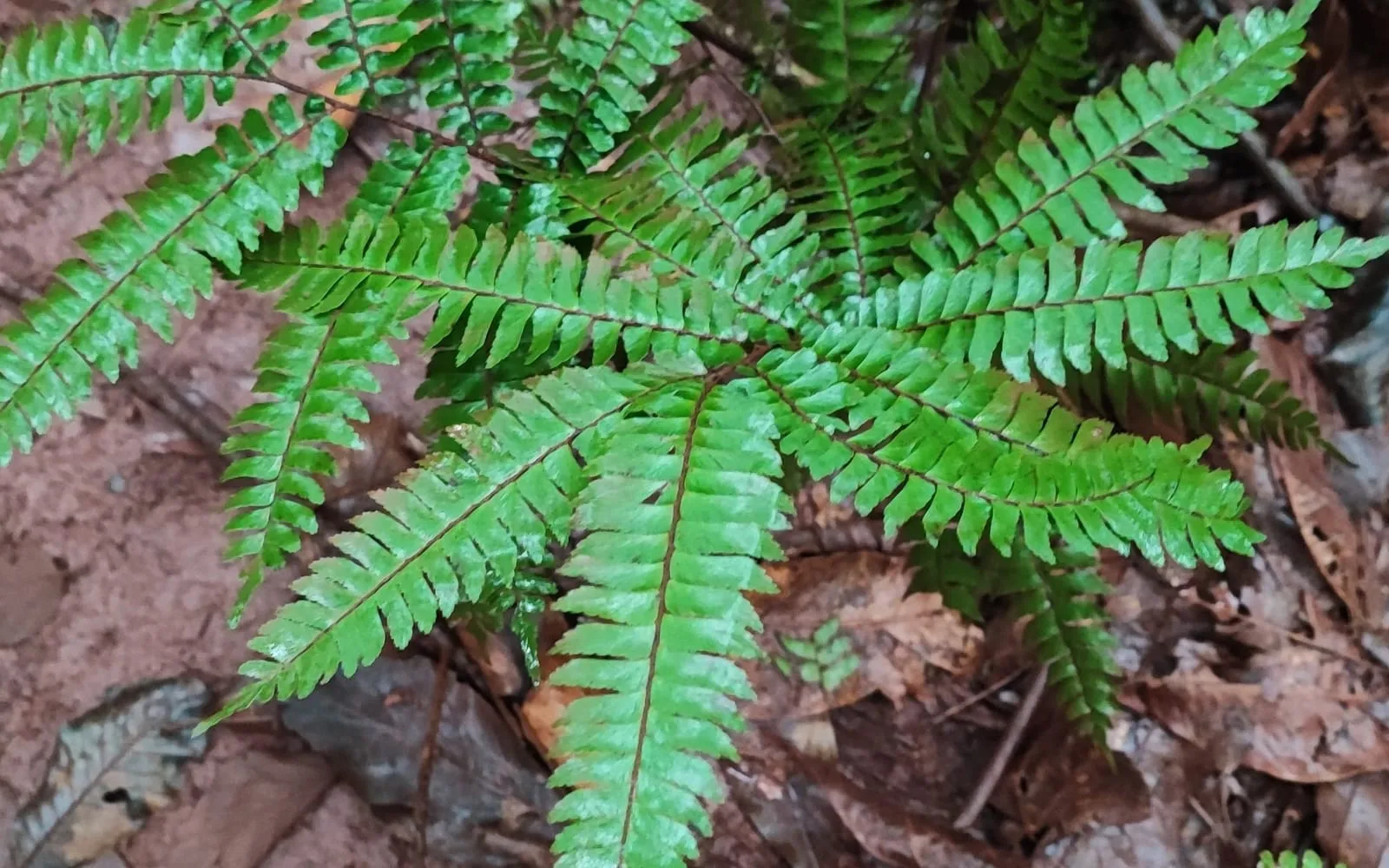
The frond is broadly triangular in outline and divided twice, with many small pinnules along dark, glossy, wire-fine stalks.
Each pinnule takes the shape of a half-fan, its base cut away on one side, so the leaf has an irregular, layered lightness instead of a neat feather symmetry.
New fronds unfurl a warm bronze-pink and only slowly turn green, which is the plant’s main feature through the growing months.
It builds a rounded, clumping crown over the seasons instead of creeping or trailing, and it is grown for foliage alone, since no maidenhair flowers.
Where it is from
The species is native across tropical America, from Mexico and the Caribbean rim through Central America and into Brazil, growing on the shaded floor of warm, wet lowland and foothill forest.
Give it warmth, a humid atmosphere, dappled light filtered through a canopy, and ground that stays damp without ever waterlogging. Direct sun, dry room air and a dried root ball all work against that habitat, and each can scorch the fine pinnule edges.
How it grows
Through the warm part of the year it produces bronze-flushed fronds from the crown, then slows as light and warmth fall away. Warmth, steady root moisture and a damp atmosphere support that growth; dryness at the root or in the air checks it and marks the foliage.
Pot it into a light, peat-free compost that drains yet clings to moisture, and hold the compost damp with rainwater, never letting it dry right through. A crowded clump can be lifted and split to increase it, or you can raise fresh plants from spores sown under cover.
Stand it in dappled or filtered brightness out of the sun, in warmth suited to a lowland tropical fern, and raise the humidity around it with a tray of wet gravel or a group of neighbouring plants where the room runs dry.
Through the seasons
Spring starts bronze-tipped new growth from the crown. Begin feeding again, split congested clumps if you want more plants, and hold the compost damp.
Summer is the main growth period. Water often enough that the roots never dry, keep the surrounding air humid, feed monthly, and shade it from the sun.
Autumn slows growth as the days shorten. Taper the feeding and let the compost sit slightly drier between waterings.
Winter is a slower period. Keep it warm, damp instead of wet, and clear of cold draughts and dry heating air.
Care difficulty
Moderate. Given dappled light, warmth, a humid atmosphere and compost held reliably damp, it grows steadily and produces copper-tinted new fronds. It declines in direct sun, dry room air or a dried root ball, which crisp the pinnule edges, and through cold, stagnant wet at the root, which rots the crown.
Watering
Hold the compost evenly damp, watering before the surface dries, and use rainwater where possible, since dissolved salts and drought both brown the fine pinnules. Fresh, delicate fronds show a lapse in watering sooner than the older ones.
At the same time, keep it clear of a sodden, airless compost that would rot the crown, so the mix must drain freely under its steady dampness. Ease the amount back over the cooler months, judging by the feel of the compost rather than a fixed routine.
Warning signs, diseases and pests
Brown, crisp frond edges are the usual complaint and point to dry air, a dried root ball or hard tap water. Raise the humidity, restore even dampness, switch to rainwater, and trim away the worst-marked fronds.
Warm, dry air encourages spider mites, which stipple the foliage; raise humidity around the plant and treat at the first sign. A cold, waterlogged, airless compost rots the crown, so keep the mix open and the plant warm.
Growing environment
Dappled or filtered brightness suits it best, kept off direct sun that would scorch the pinnules. Too dim a corner leaves the clump sparse, so aim for bright shade instead of gloom.
Pair that light with warmth suited to a tropical fern and a humid atmosphere, well away from cold draughts and the dry heat of radiators. Grow it in a light, peat-free, moisture-holding compost in a well-drained pot.
Feeding
Offer a weak, balanced liquid feed across the growing season, since maidenhairs need only light feeding. Reduce the feeding through autumn and hold off over winter.
Use a weak dose, because strong feed forces soft, weak growth and can scorch the delicate fronds. A freshly potted plant draws on its new compost for the first weeks and needs no feed until it is established.
Troubleshooting
Why is my fourleaf maidenhair struggling? Most often dry air, a dried root ball or hard water, which crisp the pinnule edges. Put the conditions right and it recovers.
How much light does it need? Dappled or filtered brightness out of the sun. Direct rays scorch the foliage; deep shade thins it.
How often should I water it? Keep the compost evenly damp, watering before the surface dries and going by the feel of the mix instead of the calendar.
Why are the new fronds pink? Fresh fronds emerge a warm bronze-pink and turn green as they mature, which is the species’ natural habit and its main ornament.
Is it safe around pets? No maidenhair is recorded as poisonous, so it is regarded as safe with cats, dogs and children.
Fourleaf Maidenhair problem guides
Not sure what is wrong? See the common houseplant pests guide.