
Houseplant
Glossy Maidenhair
Adiantum pulverulentum
Also known as Adiantum pulverulentum
How to grow Adiantum pulverulentum, the glossy maidenhair, a stout neotropical fern with long tapering fronds of dark, lustrous leaflets.
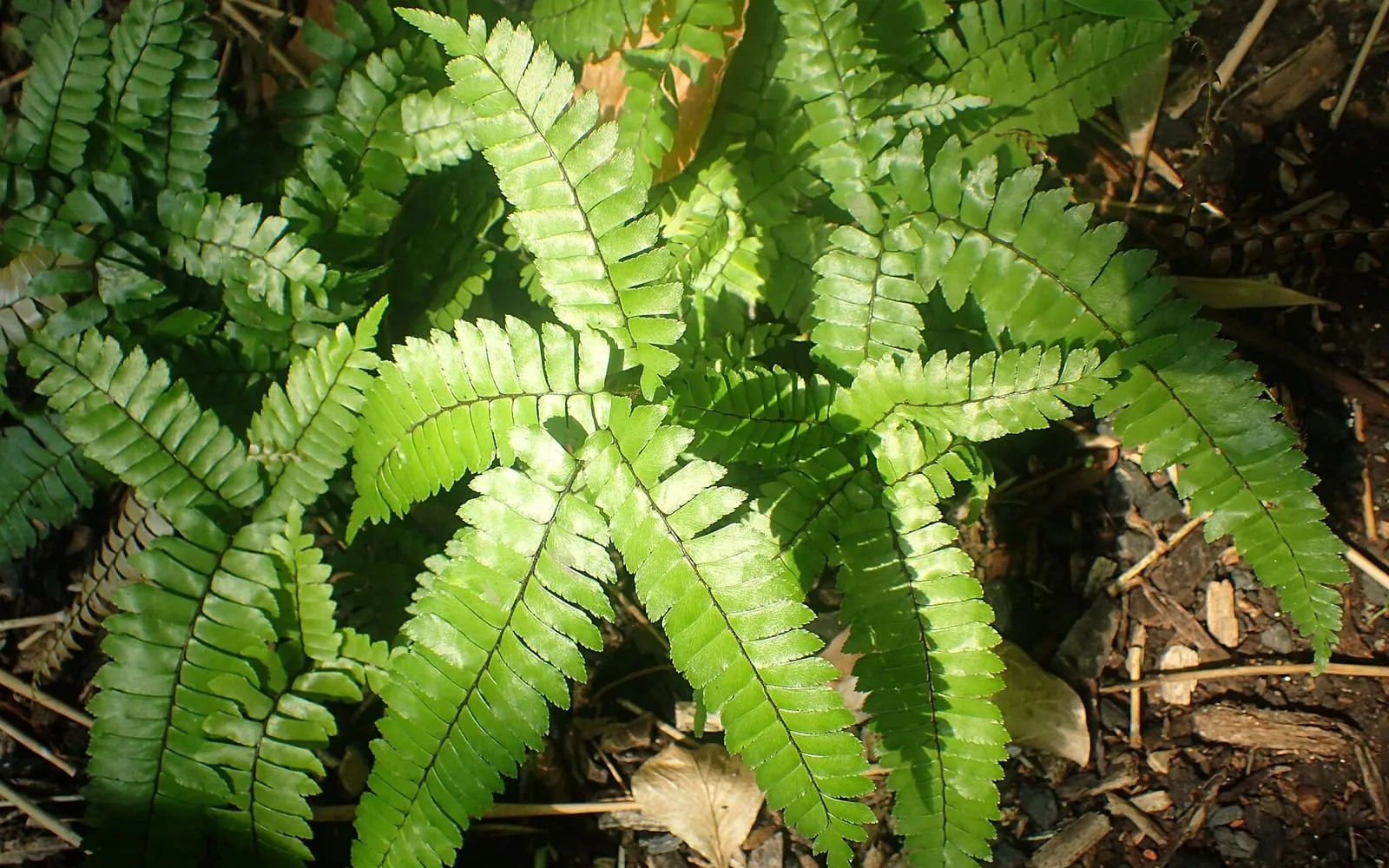
At a glance
- Difficulty
- Moderate
- Water
- Keep evenly moist; never dry out or waterlog
- Light
- Bright indirect light
- Temperature
- Warm; suited to its origin
- Humidity
- Average to high
- Hardiness
- USDA 9-11, RHS H2, hardy to 5 C
- Type
- Perennial
- Height
- 30-60 cm
- Native to
- tropical America
A fern from tropical America, grown for its foliage in shaded, humid, moist conditions. It needs bright indirect light, steady moisture and reasonable humidity, and it dislikes a dry root ball, dry air and direct sun. Its cold tolerance depends on its origin, and it is kept frost-free unless known to be hardy.
Hardiness zones describe winter cold alone. Summer heat, humidity, rainfall and the length of the growing season decide as much, so treat the range as the outer limit rather than as a recommendation.
Not known to be toxic
Adiantum pulverulentum, the glossy maidenhair, is not recorded among the seriously toxic plants, and related plants in its group are not listed as toxic by the ASPCA or the RHS. A pet or child that chewed a leaf would be unlikely to suffer more than a possible mild stomach upset.
Sources: ASPCA toxic and non-toxic plants, RHS potentially harmful garden plants
About
Adiantum pulverulentum is a strong, widespread maidenhair of the American tropics, found from southern Mexico across Central America, through the Caribbean and into much of South America. Where the daintier maidenhairs make a low tuft, this one produces long, tapering fronds, once to twice divided along a dark central stalk, with oblong leaflets of a deep, lustrous green that give the plant its garden name.
Those elongate fronds arch and lean instead of standing stiffly, so a mature plant carries a loose, cascading outline that suits a raised pot or a shelf where the tips can fall. A settled, well-grown specimen has glossy leaflets along the length of every frond.
It is a forest-understorey plant, adapted to warmth, shade and steady moisture. Give it screened light, keep the root zone moist, and stop the surrounding air from drying out. In those conditions it grows steadily and keeps its lustre. Direct sun and the dry air of a heated room dull the leaflets and brown them at the edges.
Appearance and character
The fronds are long and gradually tapering, divided once or twice along a dark, wiry central stalk, and they arch and lean instead of standing upright.
Each leaflet is oblong and deep, lustrous green, and that glossy finish gives the plant its common name.
New fronds unroll pale and soft before they firm up and deepen to their settled green, and the plant thickens into a loose, cascading clump over the seasons.
It is grown for the foliage and that sheen. Like other ferns, it has no flowers and spreads by spores ripening beneath the leaflet margins.
Where it is from
The species ranges widely through tropical America, from southern Mexico and the Caribbean across Central America and into much of South America, growing in the shade of warm, wet forest on banks and slopes.
That broad forest habitat explains its needs. It needs warmth, a humid atmosphere, light screened through a canopy, and ground that stays damp yet drains. Full sun, dry room air and a dried root zone all fall outside those conditions, and each can dull the leaflets and brown their edges.
How it grows
Across the warm season it lengthens fresh fronds from the crown and slows as the light drops, holding its foliage year round where the surroundings stay warm and humid. Heat, steady root moisture and a damp atmosphere keep it glossy; a dry spell dulls and marks it.
Root it in a light, peat-free growing medium that drains freely yet holds its moisture, and keep that medium moist with rainwater, never letting it parch. Lift and split a crowded clump to make more of it, or sow spores under cover for a larger batch.
Give it screened light out of the sun, warmth in keeping with a lowland tropical fern, and moisture in the air raised by a wet-gravel tray or a group of plants where the room runs dry. A raised pot suits the long, falling fronds.
Through the seasons
Spring starts a fresh run of long fronds. Restart the feeding, divide congested crowns if you want more plants, and hold the growing medium moist.
Summer is the strongest growth period. Water so the roots never dry, keep the air humid, feed through the month, and keep the fronds off any direct sun.
Autumn slows growth as light fades. Reduce the feed and let the medium sit a little drier between drinks.
Winter is a slower period. Keep it warm, moist instead of wet, and clear of cold draughts and dry heat.
Care difficulty
Moderate. Warmth, screened light, a humid atmosphere and a growing medium held reliably moist keep it growing steadily and glossy. It declines in full sun, dry room air or a dried root zone, which dull and brown the leaflets, and under cold, stagnant wet, which rots the crown.
Watering
Keep the growing medium moist, watering before the surface dries, and use rainwater, since salts and drought alike dull the leaflets and brown their edges. The long fronds lose water freely in warmth, so a mature plant drinks steadily through summer.
Avoid a sodden, airless medium, which rots the crown, so the mix must drain while staying evenly damp. Reduce watering in the cooler months, letting the medium sit only just moist.
Warning signs, diseases and pests
Brown, crisp frond edges usually mean dry air, a dried root run or hard tap water. Lift the humidity, restore even moisture, switch to rainwater, and cut off the worst-marked fronds.
Warm, dry air brings on spider mites, which dull the foliage; raise the surrounding humidity and treat at the first stippling. A cold, waterlogged, stale medium rots the crown, so keep the mix open and the plant warm.
Growing environment
Screened, indirect light suits it, kept off the direct sun that dulls and scorches the leaflets. Too dark a spot thins the clump, so aim for bright shade instead of gloom.
Pair that light with warmth suited to a tropical fern and a humid atmosphere, well clear of radiators and cold draughts. Use a light, peat-free, moisture-holding medium in a free-draining raised pot.
Feeding
Give a weak, balanced liquid feed through the growing season, since ferns need only light feeding. Ease the feeding off through autumn and stop over winter.
Keep the dose light, since a strong feed forces soft growth and can mark the foliage. A newly potted plant can use its fresh medium for the first few weeks before it needs feeding.
Troubleshooting
Why is my glossy maidenhair struggling? Commonly dry air, a dried root run or hard water, which dull and brown the leaflets. Correct the conditions and it recovers.
How much light does it want? Screened, indirect light out of the sun. Direct rays scorch and dull the leaflets; deep shade thins the plant.
How often should I water it? Keep the growing medium moist, watering before the surface dries and going by the feel of the mix instead of a schedule.
Why has it lost its shine? Usually dry air or a dried root run, sometimes hard water. Restore steady moisture and humidity, water with rainwater, and the fresh fronds come back lustrous.
Is it safe around pets? No maidenhair is recorded as poisonous, so it is regarded as safe with cats, dogs and children.
Glossy Maidenhair problem guides
Not sure what is wrong? See the common houseplant pests guide.