
Disease
Peach leaf curl
Taphrina deformans
Also called Leaf curl, Curly leaf
Peach leaf curl makes new peach and nectarine leaves emerge thickened, puckered and crimson. Infection happens before the leaves open, so rain protection from winter to bud burst is the main control.
At a glance
- Type
- Disease
- Cause
- Fungus
- Severity
- Weakens the plant
- Affects
- Herbs and edibles, Garden plants
- Active
- January to May
- Established in
- Worldwide
What you are seeing
- Leaves emerging in spring thickened, puckered and blistered rather than flat
- Blisters coloured crimson, purple or bright red on the new growth
- A white powdery bloom developing over the distorted tissue in late spring
- Affected leaves turning brown and dropping within weeks of opening
- A second flush of normal leaves following in early summer
- Shoots and young fruit occasionally distorted or dropping
- The same tree affected worse after a cold wet spring than a dry one
Before you treat anything
Fruit from an affected tree is safe to eat. Secure any polythene shelter properly, since a sheet that comes loose in a February gale is a hazard to the tree and to anyone nearby.
What you are looking at
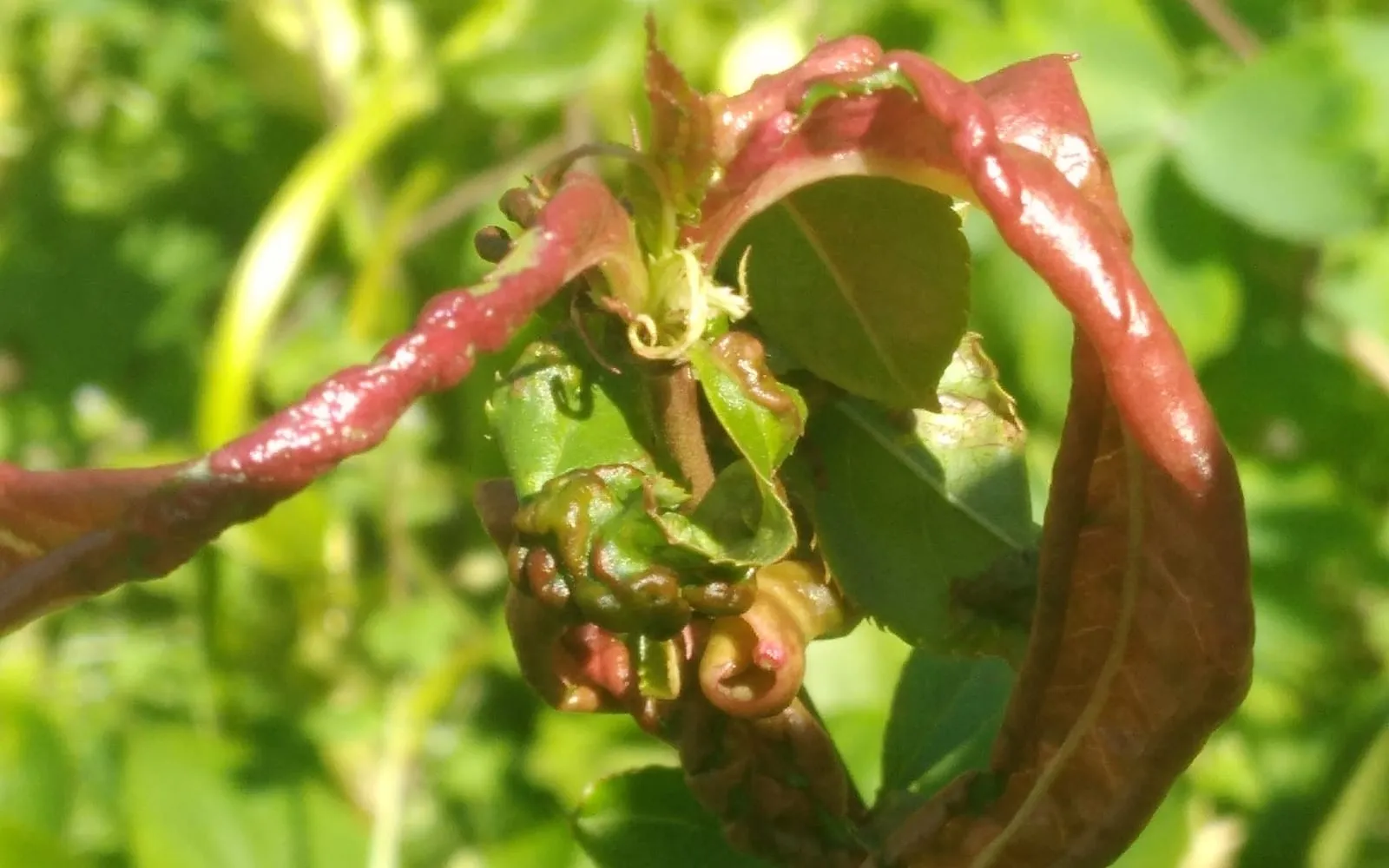
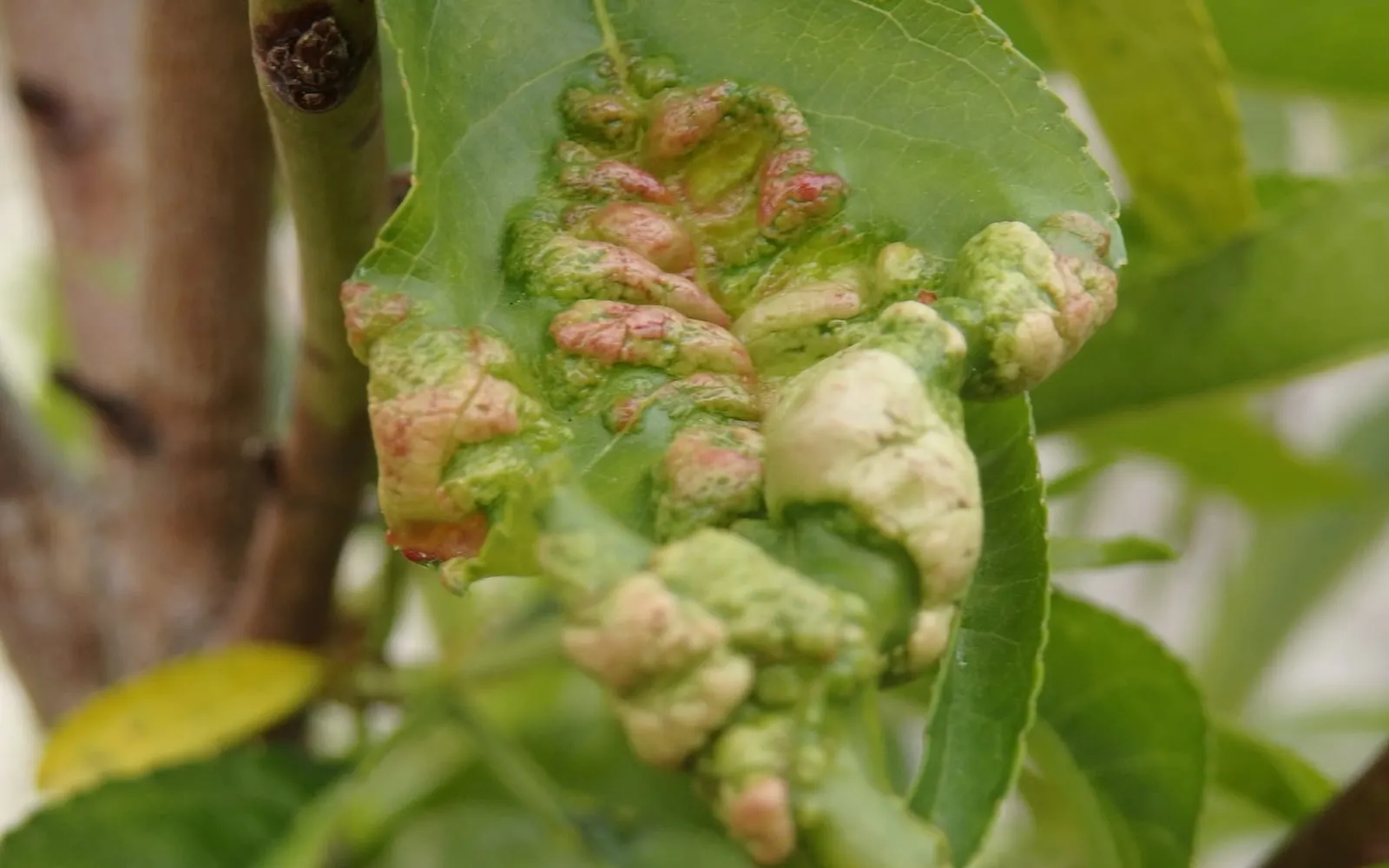
The first leaves of spring come out wrong. They are thickened to two or three times their normal substance, puckered into blisters, curled back on themselves, and coloured crimson, purple or a hot red that no healthy peach leaf ever shows. They feel rubbery between finger and thumb.
Within a few weeks the blistered tissue takes on a white powdery bloom, then browns and falls. The tree stands half bare in May and puts out a second, usually normal, set of leaves in June.
Nectarines get it worst, peaches almost as badly, and apricots far less. Almonds are affected where anyone grows them.
The infection happened before you saw anything
Spores spend the winter in the crevices of the bark and around the buds. When the buds begin to swell in late winter, rain washes those spores into the opening bud and the fungus infects the leaf while it is still folded up inside.
By the time the red blisters appear in April, the infection is weeks old and there is nothing left to treat. Whether the bud was wet in February and March decided the outcome.
It also explains why the damage stops partway along a branch. Only the leaves present in the bud during the infection window are affected, so the second flush in June comes out flat and green, and gardeners who sprayed something in May give the credit to the spray.
Cold wet springs give the worst years. A dry February and March can produce a clean tree with nothing done at all, which is the other reason this disease attracts unearned cures.
Cover it, or grow it under glass
A sheet of clear polythene over a fan-trained tree, on a simple timber frame, from January to the middle of May, keeps the buds dry and prevents the disease. Leave the sides open so air moves through and pollinating insects can reach the blossom. This is the answer, and it is the only reliable one for a tree in the open ground.
A tree in a large pot can be moved into a porch or an unheated greenhouse for the winter instead, which does the same job and keeps the early blossom out of the frost.
Free-standing peaches in the middle of a lawn are the hard case. Sheltering one is impractical, so the choices there are ‘Avalon Pride’, which resists the disease, or accepting a bad year whenever spring is wet and feeding the tree through it.
Copper-based sprays were the traditional autumn and late-winter treatment, and Bordeaux mixture is no longer approved for amateur use in Great Britain, so neither it nor anything like it is an option any more. The rain shelter has outlived it, and it worked better in any case.
What to do about it
Build the shelter in January, before the buds move.
Pick off the blistered leaves while they are red and before they go powdery, and bin them.
Sweep up what falls under the tree.
Water, mulch and feed so the tree can afford its second set of leaves.
Where the tree is in a pot, move it under cover from January to May.
Where you are planting a new one, buy ‘Avalon Pride’ unless you are certain you will put a shelter up every winter.
What it gets mistaken for
Peach aphid rolls and puckers young leaves without thickening them, and the tissue stays green or yellowish rather than turning crimson. Look under the curl for the aphids.
Frost damage on early growth browns and shrivels the leaf margins and shoot tips, and it does not blister or discolour red.
Powdery mildew coats flat, normally shaped leaves in white from the outset. The white bloom of leaf curl appears only on tissue that is already thickened and distorted.
Shot hole and bacterial canker on peach leave small brown spots that fall out of the leaf, on foliage that opened normally.
What to do, in order
Start here
Prevention, and the changes that stop the problem returning. Most of these pages should end at this tier.
- Keep the rain off from January to mid-May
- Infection needs liquid water on the bud, and everything else is secondary to that. A fan-trained tree against a wall can be covered with clear polythene on a light timber frame, open at the sides for air and for the pollinating insects, from January until the middle of May. Trees kept dry through that window come through clean year after year.
- Grow the tree in a pot you can move
- A peach in a large container wheeled into an unheated greenhouse, porch or car port for the winter and brought out in May avoids the whole problem. It also gets the blossom out of the frost, which is the other thing that costs a British peach its crop.
- Choose a resistant cultivar
- The peach 'Avalon Pride' carries real resistance to this disease and crops outdoors in Britain without a shelter, which no other widely sold cultivar manages. Apricots are affected far less than peaches and nectarines.
- Feed and water a defoliated tree
- A tree that has lost its first set of leaves has to build a second on its reserves. Mulch it, water it through any dry spell, and give a balanced feed in spring. That second flush usually carries the tree through, and the trees that die from this are the young ones defoliated several years running with no help.
- Grow it under glass
- Peaches and nectarines trained inside a greenhouse or conservatory never get wet and never get this. Ventilate hard from spring or you trade leaf curl for red spider mite.
Then reach for a barrier
Netting, hand removal and water. Nothing here harms anything except the target.
- Pick off the blistered leaves before the white bloom appears
- The white powder is the fungus producing the spores that will sit in the bark crevices until next spring. Taking the affected leaves off while they are still red, and binning rather than composting them, removes some of that. It will not save this year's foliage, which is already lost.
- Sweep up and bin the fallen leaves
- Anything shed under the tree carries spores. Clear it rather than letting it sit against the trunk over winter.
In pictures
Plants affected
Guides that name it among the problems to watch for. The list is the plants it is characteristic of rather than everything it will feed on.