
Disease
Laurel wilt
Raffaelea lauricola
Leaves that wilt, turn reddish-brown and dry out but do not drop, on a tree in the laurel family attacked by a fungus carried in by a tiny ambrosia beetle. Spreading through the southeastern United States since the early 2000s, a serious threat to commercial avocado there, and not yet established anywhere else avocado or bay laurel is grown.
At a glance
- Type
- Disease
- Cause
- Fungus
- Severity
- Can kill the plant
- Affects
- Herbs and edibles, Garden plants
- Active
- All year
- Established in
- North America and Asia
What you are seeing
- Leaves wilting and turning reddish-brown to purplish-brown on one branch or an entire tree, drying out but remaining attached rather than dropping
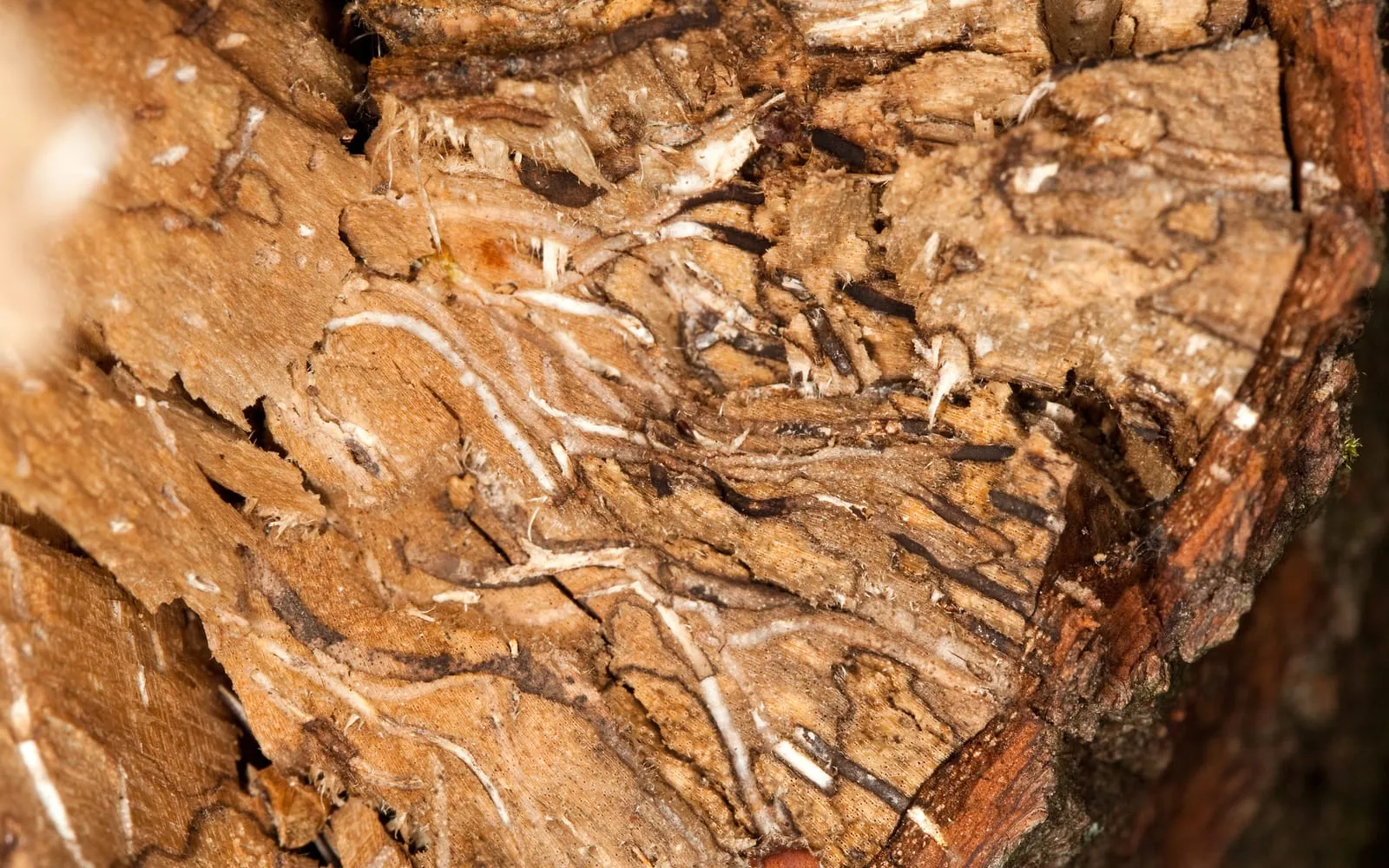
- Dark streaking in the sapwood, visible when bark is peeled back or a branch is cut, following the beetle's boring galleries
- Small, evenly spaced entry holes in the bark or branches, sometimes with fine sawdust-like boring dust nearby
- Wilt symptoms progressing rapidly, often killing a tree within weeks to a few months of the first visible leaf discolouration
- Symptoms appearing on wild redbay, sassafras and spicebush near an affected avocado grove, since the beetle moves freely between wild and cultivated hosts
- No recovery once vascular symptoms are visible, regardless of the tree's overall health beforehand
Before you treat anything
None beyond the physical hazard of dead wood and branches, which should be removed by a professional on a mature tree.
What you are looking at
Leaves that wilt and turn reddish-brown to purplish-brown, drying out but staying attached to the branch rather than dropping the way most dying foliage does. Peel back the bark or cut into an affected branch and dark streaking runs through the sapwood, tracing where the ambrosia beetle has bored its galleries and introduced the fungus it carries. Small, evenly spaced entry holes, sometimes with fine boring dust nearby, mark where the beetle went in. Once symptoms appear, decline is fast: a tree can die within weeks to a few months, and there is no recovery.
A disease that arrived with its own beetle
Both the fungus and its main vector, the redbay ambrosia beetle, are native to Asia, where local members of the laurel family appear to cope with the disease far better than the trees it has gone on to encounter elsewhere. First detected near Savannah, Georgia, around 2002, almost certainly arriving in wood packaging material, it has since killed wild redbay, sassafras and spicebush across huge areas of the coastal southeastern United States and reached commercial avocado groves in Florida by 2011, where it remains an active and serious threat to the industry.
It has not established outside North America and Asia. Given how much avocado production depends on Mexico, Central America, Peru and Chile, and how widely bay laurel is grown as a culinary and ornamental plant across Europe, a confirmed finding in any of those places would be a serious event, and all are treated as reportable rather than routine.
What to do about it
Never move firewood or untreated wood from laurel-family trees, whether avocado, bay laurel or a wild relative; buy and burn firewood locally.
Remove and destroy a confirmed infected tree promptly rather than leaving it standing, since it continues to host the beetle as it dies.
Avoid unnecessary pruning of host trees during the beetle’s active warmer months, since fresh wounds attract it.
Sanitation and prompt removal of infected material are the real defence; preventive fungicide injection is a last resort worth discussing with a professional only for an exceptionally high-value avocado tree in an area where the disease is already established, and only as protection for a tree not yet showing symptoms.
Report suspected symptoms on an avocado or bay laurel outside the established range immediately.
What it gets mistaken for
Verticillium wilt affects a far broader range of unrelated plants, progresses more slowly, and dying leaves usually drop rather than staying attached.
Frost damage follows a specific cold event and affects exposed growth broadly, with no internal sapwood staining, unlike this disease’s characteristic dark streaking traced along the beetle’s galleries.
Not established in Europe, Central and South America, Australia and New Zealand
Do not prune, spray or otherwise treat a suspected case. Doing so risks spreading an organism the country has kept out, and it disturbs the evidence needed to identify it. Photograph what you can see, leave the plant alone, and contact your national or state plant health authority. The control advice further down this page is written for regions where this problem is already established.
The fungus and its main beetle vector, the redbay ambrosia beetle, are native to Asia, where co-evolved local Lauraceae appear to tolerate the disease far better than the species it has since encountered elsewhere. First detected in the southeastern United States near Savannah, Georgia, around 2002, it has since caused widespread mortality of wild redbay, sassafras and spicebush across the coastal southeast and reached commercial avocado groves in Florida by 2011, where it remains a significant ongoing threat. It has not established outside North America and Asia. Given the scale of avocado production in Mexico, Central America, Peru and Chile, and the popularity of bay laurel as a culinary and ornamental plant in Europe, a confirmed finding anywhere else is treated as a serious biosecurity concern.
What to do, in order
The steps below apply where this problem is already established.
Nothing available to a gardener will cure this once a plant has it. The steps below are about limiting the spread and deciding what to plant in its place.
Start here
Prevention, and the changes that stop the problem returning. Most of these pages should end at this tier.
- Never move firewood or untreated wood from laurel-family trees
- Ambrosia beetles and the fungus they carry travel readily in cut wood, and moving firewood or pruned material from an affected area is one of the main ways the disease has spread to new counties within the United States. Buying or burning firewood locally, and never transporting wood from a known affected area, remains one of the most effective things an individual can do.
- Remove and destroy a confirmed infected tree promptly
- There is no cure once a tree shows vascular symptoms, and a dead or dying tree continues to host the beetle, which can then move to neighbouring susceptible trees. Removing and chipping or burning affected material, rather than leaving it standing or as firewood, limits the source of further spread.
- Report suspected symptoms outside the established range
- A wilting avocado or bay laurel with the described symptoms, found outside the southeastern United States, is unusual enough to be worth reporting to the local plant health or agricultural extension authority rather than treated as a routine disease.
Then reach for a barrier
Netting, hand removal and water. Nothing here harms anything except the target.
- Avoid pruning or wounding host trees during the beetle's active season
- Fresh wounds and pruning cuts release volatile compounds that attract ambrosia beetles searching for a new host. Limiting unnecessary pruning during the warmer months when beetles are most active reduces the chance of attracting one to a healthy tree.
Plants affected
Guides that name it among the problems to watch for. The list is the plants it is characteristic of rather than everything it will feed on.