
Disease
Horse chestnut bleeding canker
Pseudomonas syringae pv. aesculi
Also called Bleeding canker, Horse chestnut canker, Bleeding canker of Aesculus
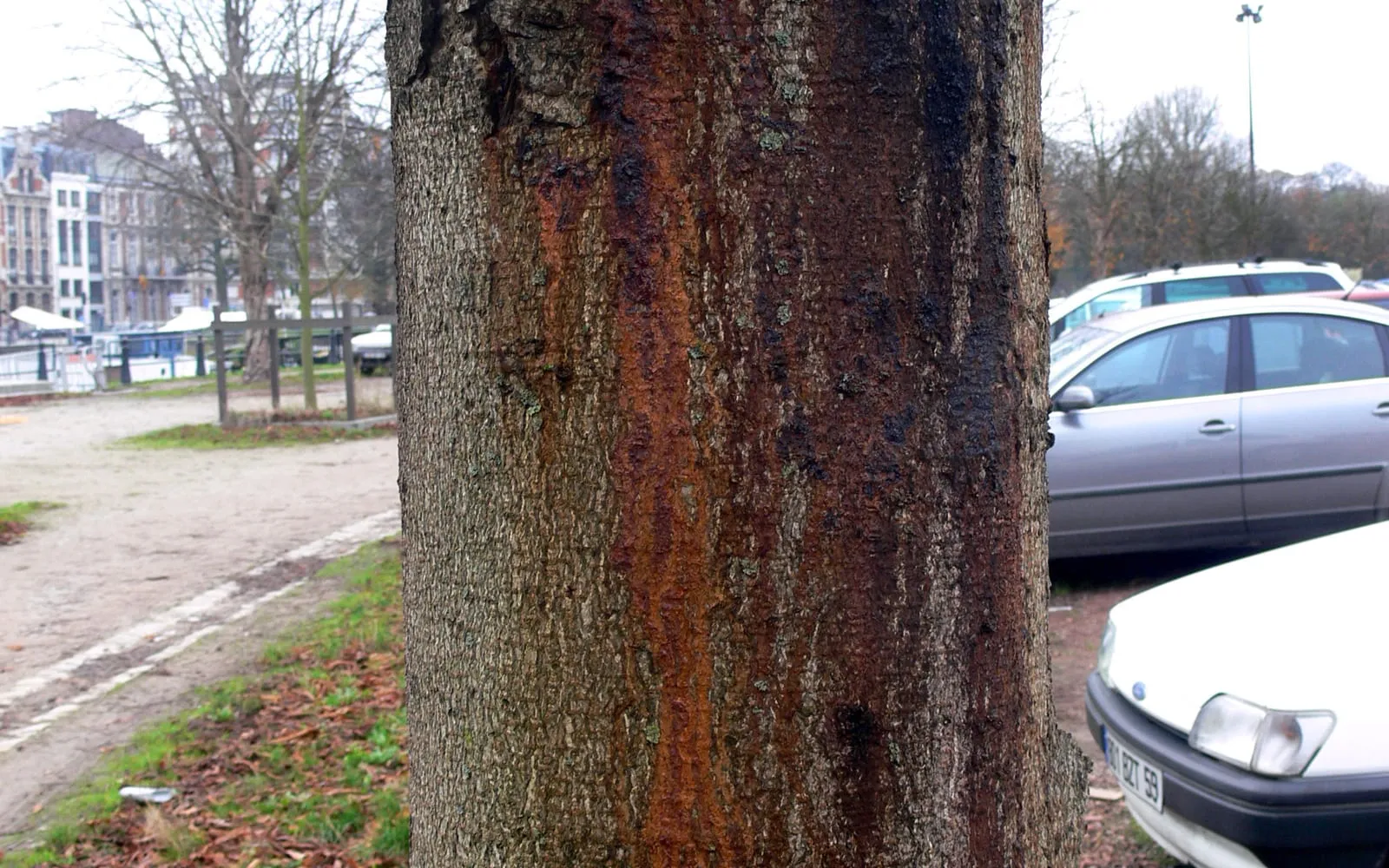
Dark sticky liquid weeping from the bark of a horse chestnut and drying into rust-coloured streaks. It looks terminal and often is not, so the first advice is to wait a year rather than to fell.
At a glance
- Type
- Disease
- Cause
- Bacterium
- Severity
- Weakens the plant
- Affects
- Garden plants
- Active
- March to October
- Established in
- Europe and North America
What you are seeing
- Dark reddish-brown or black liquid weeping from cracks in the bark
- Rusty or tarry streaks running down the trunk where the ooze has dried
- Bark pared back at a bleed showing dead orange-brown or purple tissue underneath
- Sunken or cracked areas of bark, sometimes with the plates lifting away
- Crown thinning, small leaves and dieback in the upper branches
- Bleeding points appearing on the main trunk and on major limbs rather than on twigs
- Callus tissue forming a raised roll around the edge of an old lesion
- Trees looking worse one year and visibly better the next
Before you treat anything
The bacterium is harmless to people and animals. The hazard is structural, since a large lesion on a main stem can weaken it, so a tree near a road, a path or a building needs a qualified inspection. Horse chestnut conkers are poisonous if eaten, which has nothing to do with this disease.
What you are looking at
Dark liquid coming out of the bark of a horse chestnut. It seeps from cracks, runs down the trunk and dries into rust-coloured or tarry streaks, sometimes a metre or more long. Fresh bleeding is reddish-brown to almost black and sticky.
Pare a sliver of bark away at the edge of a bleeding point and the tissue underneath is dead, orange-brown or purplish, rather than the moist cream of healthy inner bark.
The bleeds sit on the main trunk and on major limbs. Over time the bark in those areas may sink, crack or lift away in plates, and a raised roll of callus often forms around the edge of an older lesion.
Where the disease is doing real damage the crown thins, the leaves come smaller and branches die back from the tips.
Wait a year before you decide anything
The strongest advice on this page is to do nothing quickly.
When the bacterial form swept across northern Europe in the 2000s, a great many horse chestnuts were felled on the strength of the bleeding alone. A substantial proportion of affected trees stabilise. The tree walls the lesion off, callus grows over the edges, the bleeding stops, and the crown recovers. Trees have been observed looking dreadful one year and markedly better the next.
So a bleeding trunk on a tree with a full crown is not an emergency and is not by itself a reason to fell. Photograph it, note where the lesions are, and look again the following summer.
Judge the tree by its crown rather than by how much liquid is on the bark. A thinning crown and dieback progressing year on year is the sign that matters. A tree that leafs out fully every spring is coping.
The exception is structural. A large lesion on a main stem can weaken it, and where a tree overhangs a road, a path or a building that is a question for a qualified arboriculturist.
Do not cut it out
Cutting a canker back to clean tissue is standard practice for several diseases and it is the wrong response here.
The bacteria are already present in tissue beyond the visible lesion, so the surgery does not remove the infection. It makes a much larger wound, which is itself an entry point, and it cuts away the callus the tree is putting up.
Feeding the tree hard in response is also counterproductive, because soft new growth is what the bacteria colonise. Mulch, keep traffic and compaction off the root plate, water a young tree in drought, and let it get on with it.
Two diseases with the same name
Horse chestnuts bleed from two quite different causes, and the older of the two is still around.
A Phytophthora bleeding canker has affected the species for decades. It tends to work from the base of the trunk upwards and is associated with wet ground, and it is much less common than the bacterial form.
The bacterial disease, Pseudomonas syringae pv. aesculi, appeared in northern Europe in the early 2000s, spread quickly, and now accounts for the great majority of what people see. It bleeds anywhere on the trunk and on high limbs, and the ground conditions have little to do with it.
The practical difference is small, since neither has a cure and the advice for both is to reduce stress and wait. It matters for expectations, because the bacterial form has a much better recovery record.
What to do about it
Wait a year, and photograph the tree so you can compare.
Judge it by the crown rather than by the amount of bleeding.
Pare one small shallow cut at a lesion edge to see the extent, and then stop.
Leave the canker alone rather than cutting it out.
Mulch the root area and keep vehicles, compaction and trenching off it.
Water a young tree through a drought.
Skip the fertiliser.
Disinfect saws and secateurs between trees.
Prune only in dry settled weather and only where you must.
Get a qualified inspection where the tree could hit something.
What it gets mistaken for
Phytophthora bleeding on the same species works up from the base and follows wet ground.
Honey fungus leaves white mushroom-smelling sheets under the bark at the base and black bootlaces in the soil.
Horse chestnut leaf miner browns the same tree’s leaves from midsummer and never touches the bark.
Bacterial canker of plums and cherries oozes clear amber gum and shot-holes the leaves.
A frost crack splits sound bark cleanly with no ooze.
Coral spot raises pink-orange pinhead pustules on dead wood.
What to do, in order
Nothing available to a gardener will cure this once a plant has it. The steps below are about limiting the spread and deciding what to plant in its place.
Start here
Prevention, and the changes that stop the problem returning. Most of these pages should end at this tier.
- Wait a year before deciding anything
- This is the main advice on the page. Many affected trees stabilise, wall the lesion off and recover, and a proportion of trees felled in the first years of the European outbreak would have lived. A tree that is bleeding but holding a full crown is not an emergency. Record what you see, photograph it, and look again next summer.
- Judge by the crown rather than by the bleeding
- The amount of ooze says little about the outcome. What matters is whether the crown is thinning, whether dieback is progressing year on year, and whether lesions are girdling a stem. A tree that leafs out fully each spring is coping regardless of how alarming the trunk looks.
- Reduce other stresses on the tree
- Compaction over the root plate, severed roots from trenching, drought and root damage from parked vehicles all make the difference between a tree that walls the infection off and one that does not. Mulch the root area, keep traffic off it and water a young tree through a drought.
- Do not fertilise heavily in response
- Pushing soft growth with nitrogen gives the bacteria more of the tissue they colonise. A mulch and decent soil conditions are what help; a feed aimed at the disease is not.
- Get a professional assessment where the tree could hit something
- Extensive lesions on a main stem can compromise the structure, and that is a question for a qualified arboriculturist rather than for a gardener with binoculars. Where a tree overhangs a road, a path or a building, have it inspected rather than either felling it or ignoring it.
Then reach for a barrier
Netting, hand removal and water. Nothing here harms anything except the target.
- Pare a sliver of bark at the edge of a bleed to see the extent
- A shallow cut at the margin shows whether the tissue underneath is dead and discoloured or sound. Keep the cut small and shallow, since every wound is another entry point, and do it once rather than repeatedly.
- Do not cut out the canker
- Cutting back to clean tissue is standard for some cankers and it is wrong here. The bacteria are ahead of the visible lesion, the surgery makes a much larger wound, and it removes the callus the tree is building. Leave it alone.
- Clean tools between trees
- The bacteria move in rain splash, on tools and probably on insects and birds. Where several horse chestnuts stand together, disinfect saws and secateurs between them rather than working down the row.
- Prune only in dry weather, and only when you must
- Wet bark and open wounds are how it gets in. Where a limb has to come off for safety, take it in dry settled weather and make the smallest cut that does the job.
Plants affected
Guides that name it among the problems to watch for. The list is the plants it is characteristic of rather than everything it will feed on.