
Pest
Sweet potato weevil
Cylas formicarius
Also called Sweetpotato weevil
Sweet potato weevil tunnels through roots and makes them bitter as the plant produces defensive compounds. Deep planting, regular hilling and clean planting material help stop adults reaching the roots.
At a glance
- Type
- Pest
- Cause
- Insect
- Severity
- Destroys the crop or display
- Affects
- Herbs and edibles
- Active
- June to October
- Established in
- Asia, Africa, Pacific Islands, North America and Central and South America
What you are seeing
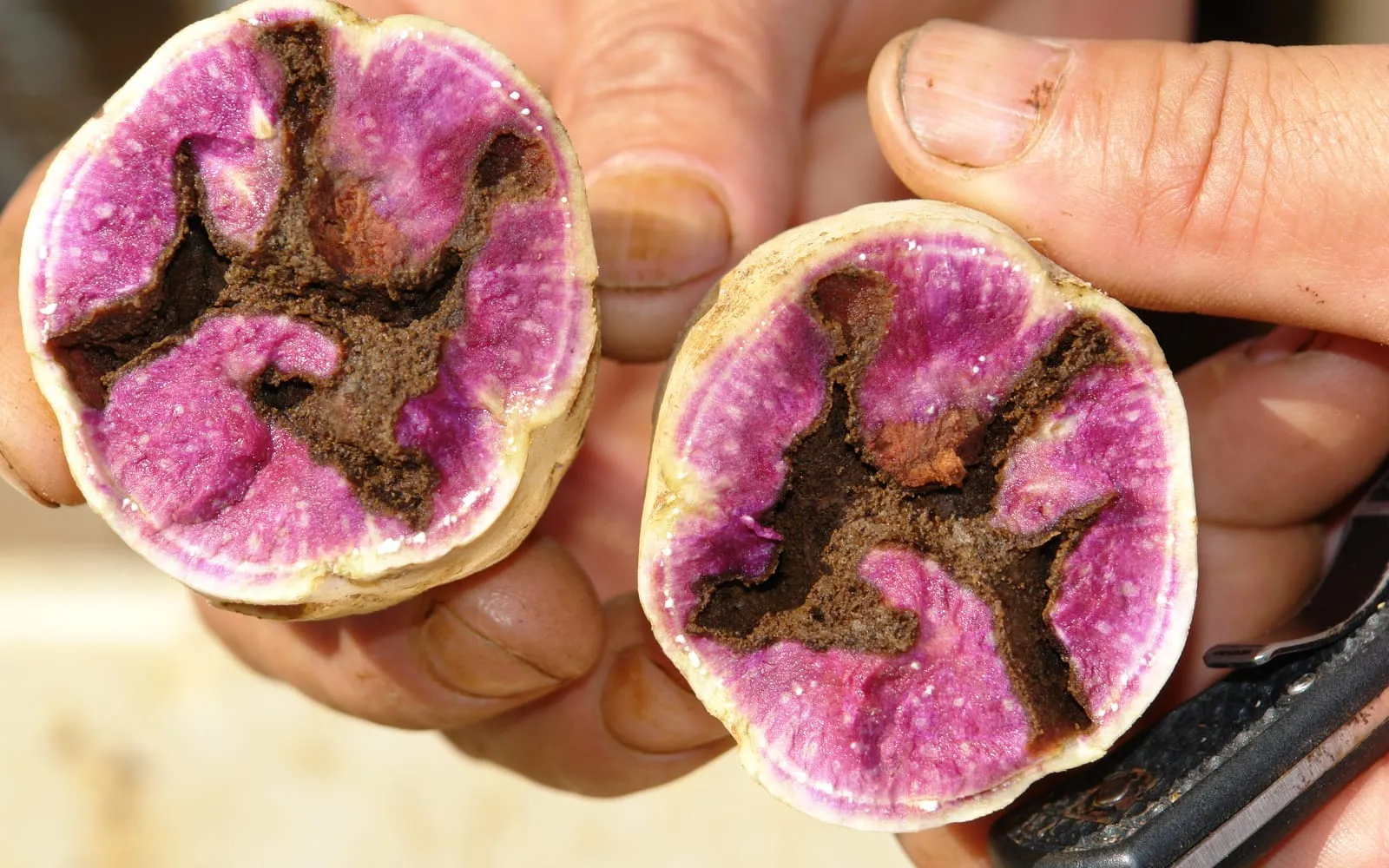
- Tunnels running through harvested roots, often with little sign of damage visible from outside
- A bitter, unpleasant taste and smell developing in and around tunnelled tissue, caused by terpenoid compounds the root produces in response to feeding damage
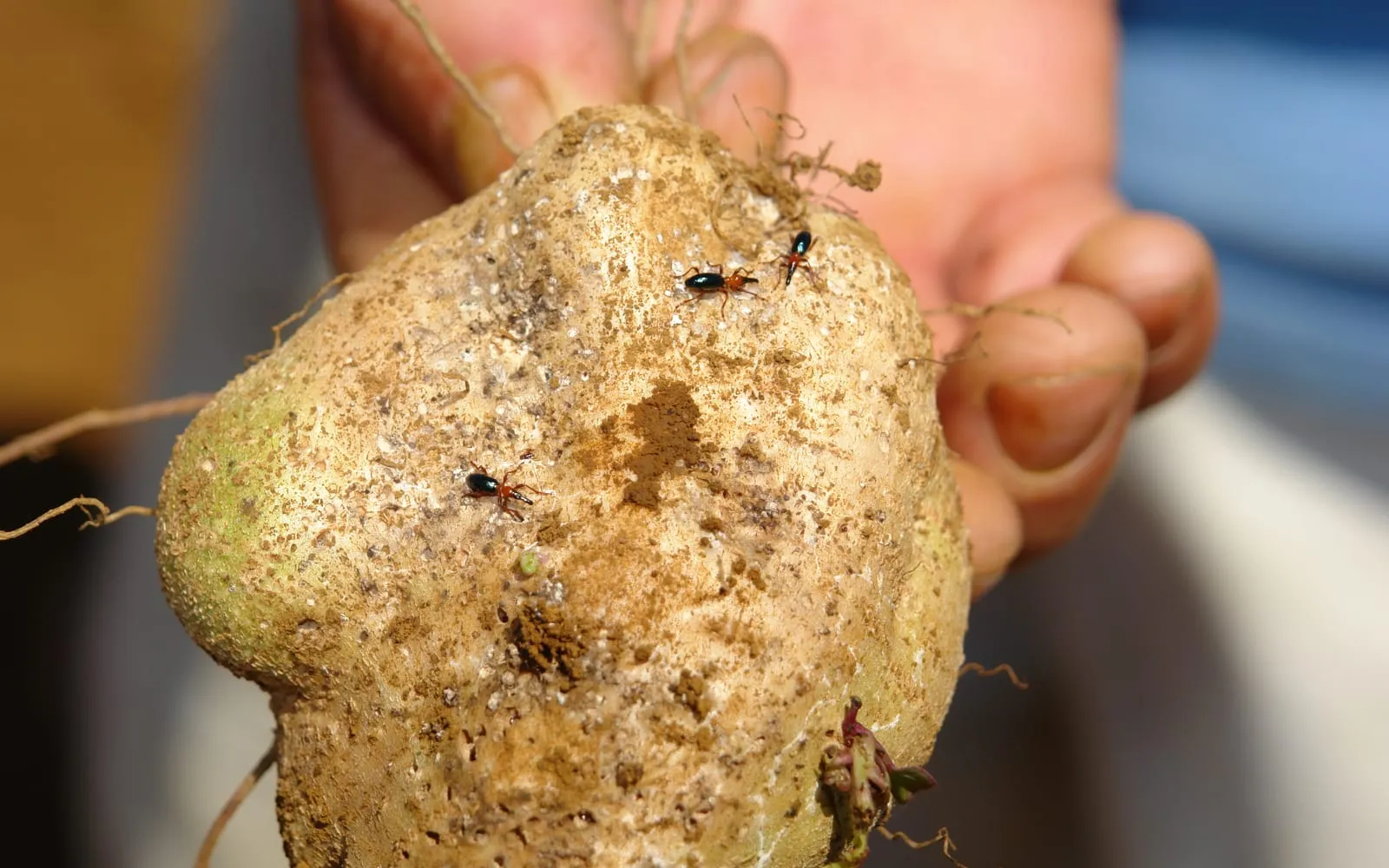
- Small, dark, ant-like adult weevils, 5 to 6 mm long with a distinctly narrow "waist" and long snout, found on foliage or in soil cracks near the base of plants
- Cream-coloured, legless grubs found inside tunnelled roots and occasionally in vine bases
- Vines wilting or thickening abnormally at the base where larvae have tunnelled into the stem itself
- Damage worsening in dry conditions, when cracks open in the soil and give adult weevils direct access to the roots below
Before you treat anything
A heavily tunnelled or bitter-tasting root should be discarded rather than eaten; the bitterness is the root's own chemical defence and can cause digestive upset in quantity.
What you are looking at
A harvested sweet potato root that tunnels through when cut open, often with little to suggest anything was wrong from outside. The tunnelled tissue and the area around it develop a distinctly bitter, unpleasant taste and smell. This is the root’s own chemical defence: it produces terpenoid compounds in response to feeding damage, and those compounds are what ruins the eating quality of an affected root.
The adult weevil responsible is small, dark and distinctly ant-like, 5 to 6 mm long with a narrow waist and a long curved snout, often found on foliage or working through cracks in dry soil near the base of a plant. Its cream-coloured, legless grubs are the ones doing the tunnelling, found inside affected roots and sometimes in the base of the vine itself, which can wilt or thicken abnormally where larvae have bored into it.
The defining pest of a global crop
Wherever sweet potato is grown across the tropical and subtropical world, this weevil is very often the pest growers name as their biggest problem. It is established across Asia, Africa, the Pacific, the Caribbean, the southern United States, and Central and South America, doing damage that research consistently ranks above every other insect pest the crop faces. Europe’s smaller-scale, more marginal sweet potato growing limits the weevil’s foothold there, and Australia and New Zealand, both without an established population, maintain strict quarantine on planting material specifically because of it.
What to do about it
Hill up soil regularly to cover cracks as they form, and water enough to stop the ground drying and splitting in the first place; this alone addresses the main way adults reach the roots.
Plant only certified, weevil-free slips rather than saved cuttings of unknown history.
Rotate sweet potato on a three to four year cycle, clear old vines and unharvested roots after the season, and control wild Ipomoea relatives nearby that can host the weevil between crops.
Plant slips a little deeper and harvest promptly once roots mature rather than leaving them in the ground.
Use pheromone traps across the planting to monitor activity and reduce mating success, and mulch thickly to keep the soil surface covered and moist.
What it gets mistaken for
Wireworm leaves narrow, relatively clean holes with little surrounding discolouration and no bitterness. Root-knot nematodes cause swollen, distorted galls rather than internal tunnels. A tunnelled, bitter-tasting root with an ant-like weevil nearby points specifically to this species.
Not established in Australia and New Zealand
Do not prune, spray or otherwise treat a suspected case. Doing so risks spreading an organism the country has kept out, and it disturbs the evidence needed to identify it. Photograph what you can see, leave the plant alone, and contact your national or state plant health authority. The control advice further down this page is written for regions where this problem is already established.
Established across most of the tropical and subtropical world wherever sweet potato is grown, including Asia, Africa, the Pacific, the Caribbean, the southern United States, and Central and South America, and considered the single most damaging insect pest of the crop across that entire range. It has not established in Europe, where the crop is grown on a far smaller scale and the climate limits the weevil's survival, or in Australia and New Zealand, both of which maintain strict quarantine on sweet potato planting material for this reason among others.
What to do, in order
The steps below apply where this problem is already established.
Start here
Prevention, and the changes that stop the problem returning. Most of these pages should end at this tier.
- Plant only certified, weevil-free planting material
- Infested cuttings and slips are one of the main ways this weevil spreads into new fields and new areas entirely. Starting from certified, inspected planting material rather than saved cuttings of unknown history is the single most effective preventive step.
- Rotate sweet potato on a three to four year cycle
- Adults overwinter and persist in crop debris and nearby soil, and a long rotation away from the previous bed, combined with destroying old vines and any unharvested roots after the season, denies the weevil a way to carry over locally.
- Control wild and volunteer morning glory relatives nearby
- Cylas formicarius can survive on wild Ipomoea species related to sweet potato, and these act as a reservoir that lets the weevil persist even where the crop itself is properly rotated. Clearing these from field margins reduces that background population.
Then reach for a barrier
Netting, hand removal and water. Nothing here harms anything except the target.
- Hill up soil regularly and keep it from cracking
- Adult weevils reach developing roots primarily by walking down through cracks that open in dry soil, rather than by digging. Hilling soil up around the base of the plants to cover cracks as they form, and watering enough to stop the ground drying and splitting in the first place, is one of the most effective and lowest-cost controls available.
- Plant slips deeper and harvest promptly at maturity
- Deeper planting puts more soil between the surface and the developing roots, and harvesting as soon as roots mature rather than leaving them in the ground reduces the window of exposure to weevils working through soil cracks.
Then bring in the predators
Encourage what already lives in the garden, and buy predators in where the problem is under glass and nothing will arrive on its own.
- Use pheromone traps to monitor and mass-trap adults
- Traps baited with the species' sex pheromone draw in and remove male weevils, giving both an early warning of local activity and a genuine reduction in mating success when deployed at scale across a field rather than as a single trap.Sex pheromone lures are widely available and used across affected growing regions; check local suppliers for registered products.
- Mulch with organic matter to reduce weevil access
- A thick organic mulch layer has been shown to reduce weevil damage by keeping the soil surface more consistently moist and covered, making it harder for adults to reach roots through the surface.
Biological controls are live organisms and their sale and release are regulated country by country. An agent sold freely in one place may be unapproved in another, so buy from a licensed supplier where you live and never import or move one yourself.
In pictures
Plants affected
Guides that name it among the problems to watch for. The list is the plants it is characteristic of rather than everything it will feed on.