
Pest
Olive fruit fly
Bactrocera oleae
Also called Olive fly
A pinprick "sting" in the skin of a ripening olive that turns into a brown, collapsing tunnel through the flesh. The single most damaging pest of olives across the Mediterranean and the Middle East, established in California since the late 1990s, and still a biosecurity target in Australia.
At a glance
- Type
- Pest
- Cause
- Insect
- Severity
- Destroys the crop or display
- Affects
- Herbs and edibles
- Active
- July to November
- Established in
- Europe, Africa, Asia and North America
What you are seeing
- A small, dark, pinprick "sting" mark on the surface of a ripening olive, where a female has laid an egg beneath the skin
- A soft, brown, collapsing tunnel through the flesh as the larva feeds, often invisible from outside until the fruit is cut open
- Premature fruit drop, with a high proportion of dropped fruit carrying internal larval damage
- Secondary rot setting in around larval feeding tunnels as bacteria and fungi enter through the damage
- Reduced oil yield and quality from affected fruit, and unmarketable table olives from anything with a visible sting or tunnel
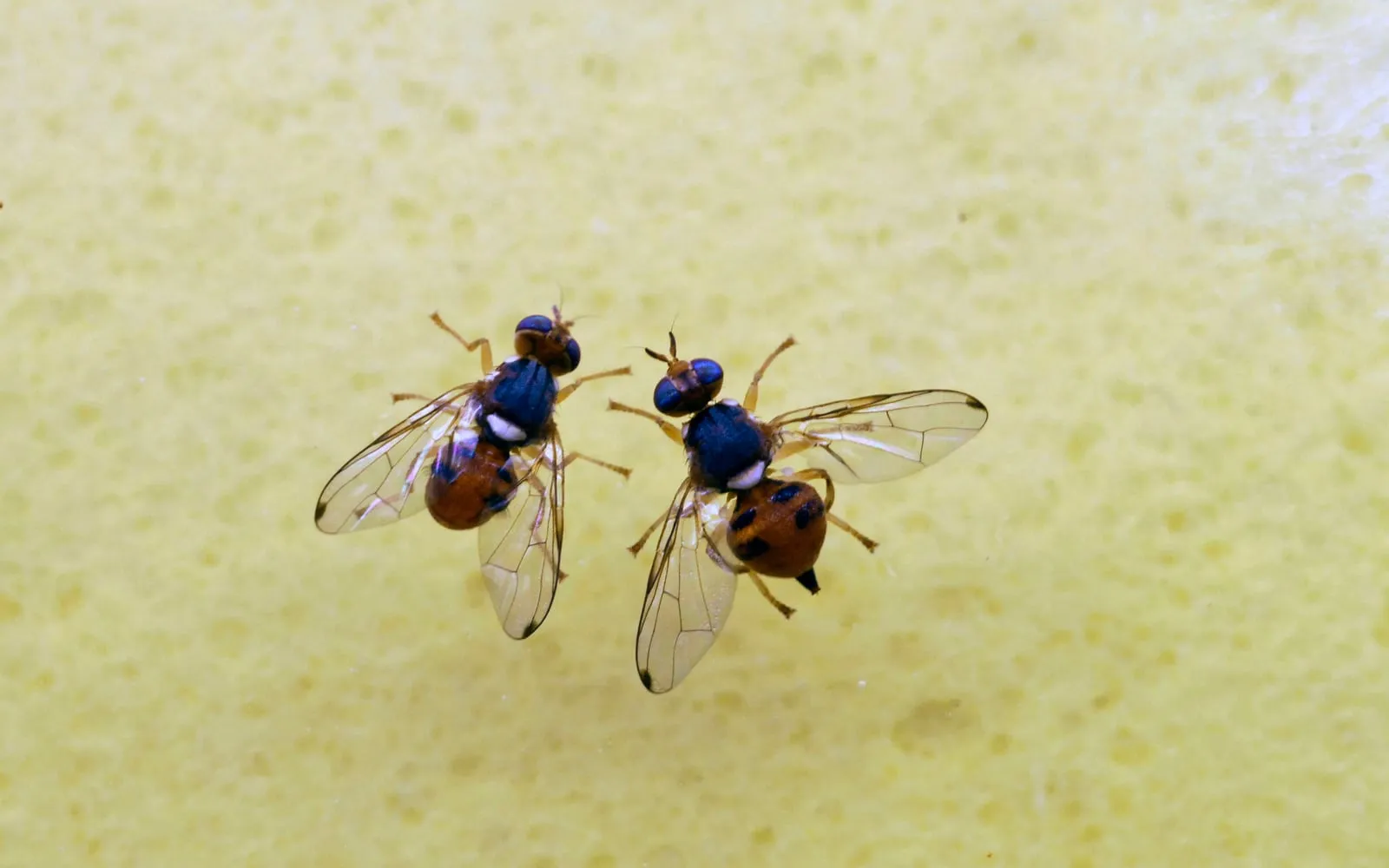
- Small flies about 4 to 5 mm long, brown with clear wings marked by a dark spot near each wingtip, resting on foliage in warm weather
Before you treat anything
None beyond ordinary care. Fruit with a healed sting and no internal tunnel is fine to process; anything with an active tunnel is best discarded rather than pressed or cured.
What you are looking at
A small, dark “sting” mark on the surface of a ripening olive, easy to overlook, that marks where a female fly has laid an egg just beneath the skin. Inside, a soft brown tunnel spreads through the flesh as the larva feeds, often invisible from outside until the fruit is cut open or the damage has progressed far enough to cause the fruit to collapse and drop. Secondary rot frequently follows, entering through the larval damage, and oil pressed from heavily affected fruit suffers in both yield and quality.
The adult is a small fly, 4 to 5 mm long, brown-bodied with clear wings marked by a distinctive dark spot near each tip, most often seen resting on foliage during warm weather rather than caught actively laying eggs.
The pest that defines olive growing across an entire region
Few crop-pest relationships are as tightly bound as this one. Believed to have originated in East Africa alongside wild olive, this fly is now established across virtually the entire range olives are grown from the Mediterranean basin to India, and pest management for olives across that whole region is built substantially around controlling it. It reached California in 1998 and spread through the state’s olive-growing areas within a few years, becoming the dominant pest there too.
Australia’s smaller, newer olive industry, concentrated in South Australia and Victoria, remains free of it, and a sighting is treated as a biosecurity priority given how completely this fly has come to define olive pest management everywhere else the crop is grown at scale.
What to do about it
Harvest fruit promptly once it reaches target ripeness rather than leaving it to hang.
Collect and destroy fallen and unharvested fruit after picking.
Set yellow sticky or food-baited traps to monitor local activity and time other controls accordingly.
Apply kaolin clay as a protective barrier on fruit and foliage where pressure is high.
Treat with insecticide only as a last resort, once trapping, kaolin clay and prompt harvest have not held a genuine outbreak back; a targeted protein bait spray applied as small spots, rather than a full cover spray, uses far less product and spares most beneficial insects.
What it gets mistaken for
Fungal spotting on the fruit surface stays external, with no internal tunnel and no maggot present when the fruit is cut open. A collapsing brown channel through the flesh is this fly rather than a fungal problem.
Not established in Australia and New Zealand
Do not prune, spray or otherwise treat a suspected case. Doing so risks spreading an organism the country has kept out, and it disturbs the evidence needed to identify it. Photograph what you can see, leave the plant alone, and contact your national or state plant health authority. The control advice further down this page is written for regions where this problem is already established.
Believed to have originated in East Africa alongside wild olive, and long established across virtually the entire range olives are grown from the Mediterranean basin to India, making it the defining pest of the crop across that whole region. It reached California in 1998, almost certainly via infested fruit or plant material, and spread across the state's olive-growing areas within a few years. It has not established in Australia, where a smaller but growing olive industry, concentrated in South Australia and Victoria, remains free of it, and a sighting there is treated as a biosecurity priority given how completely this fly dominates pest management everywhere else olives are commercially grown.
What to do, in order
The steps below apply where this problem is already established.
Start here
Prevention, and the changes that stop the problem returning. Most of these pages should end at this tier.
- Harvest promptly once fruit is at the target ripeness
- Fruit left on the tree longer than necessary gives the fly more time to lay eggs and the larvae more time to develop, and both damage and drop increase the longer ripe fruit hangs. Picking on schedule rather than delaying is one of the most effective non-chemical controls available.
- Collect and destroy fallen and unharvested fruit
- Fruit left on the ground or on the tree after harvest continues to support developing larvae and adds to next year's population. Clearing it promptly, rather than leaving it to rot in place, removes a generation before it completes its cycle.
Then reach for a barrier
Netting, hand removal and water. Nothing here harms anything except the target.
- Monitor with yellow sticky or McPhail traps baited with a food lure
- Traps baited with ammonium salts or a protein lure attract adults and give an early warning of when the fly is active and building up locally, letting growers time other controls to the point they will do the most good rather than working from a calendar date.
- Apply kaolin clay as a protective barrier
- A fine kaolin clay spray applied to the fruit and foliage makes the surface unattractive for egg-laying without killing anything outright, and is a standard organic-approved practice across affected olive-growing regions.
Then bring in the predators
Encourage what already lives in the garden, and buy predators in where the problem is under glass and nothing will arrive on its own.
- Support parasitic wasps and other natural enemies
- Various generalist predators and some parasitoid wasps attack eggs and larvae, and avoiding unnecessary spraying is what lets their numbers build up enough to matter alongside trapping, kaolin clay and prompt harvest.
Biological controls are live organisms and their sale and release are regulated country by country. An agent sold freely in one place may be unapproved in another, so buy from a licensed supplier where you live and never import or move one yourself.
Plants affected
Guides that name it among the problems to watch for. The list is the plants it is characteristic of rather than everything it will feed on.