
Pest
Brown planthopper
Nilaparvata lugens
Also called BPH, Rice planthopper
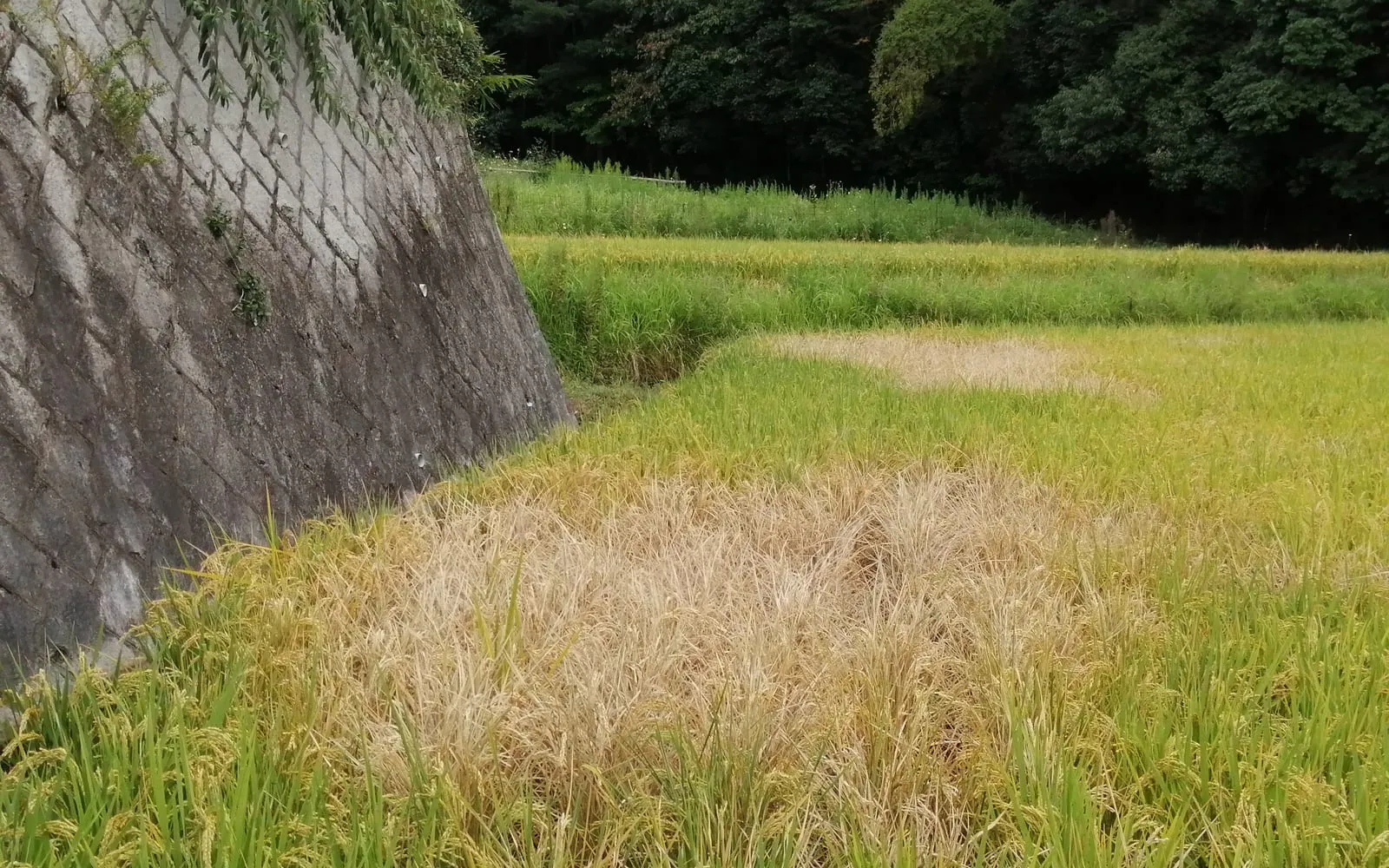
A round patch of rice collapsing into brown, dead stems almost overnight, drained dry by thousands of small brown insects clustered at the base of the plants. The most destructive insect pest of rice across Asia and the Pacific, capable of destroying a crop in days once a population builds, and a vector for two serious rice viruses besides.
At a glance
- Type
- Pest
- Cause
- Insect
- Severity
- Destroys the crop or display
- Affects
- Herbs and edibles
- Active
- June to October
- Established in
- Asia, Pacific Islands and Australia
What you are seeing
- Circular or irregular patches of rice collapsing and drying to a scorched brown within days, a pattern known as hopperburn
- Hopperburn spreading outward from an initial patch as the population within it grows and disperses
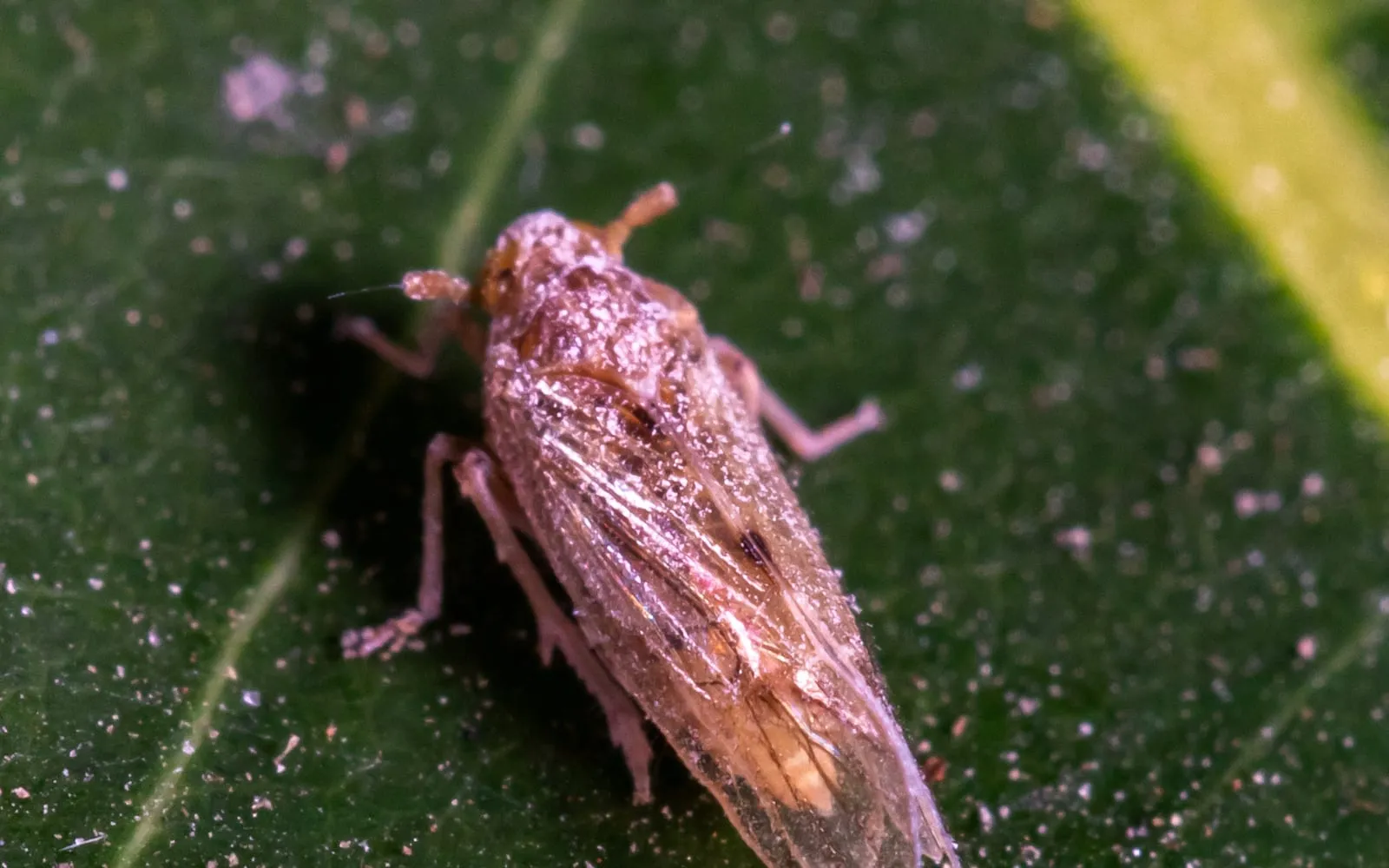
- Large numbers of small, brown to grey-brown, wedge-shaped insects clustered at the base of stems, close to the waterline, rather than on the upper leaves
- Both short-winged and long-winged adults present in a population, the long-winged form appearing when crowding or declining plant quality triggers dispersal to a new field
- Sticky honeydew and associated sooty mould on lower leaves and stems where a heavy population has been feeding
- Yellowing and stunting appearing before an area collapses fully, in the early stages of an infestation
What you are looking at
A circular or irregular patch of rice that collapses and dries to a scorched brown within a matter of days, a pattern growers across Asia call hopperburn. Part the canopy at the base of the stems in or near an affected patch and the cause is usually obvious: dense clusters of small, brown to grey-brown, wedge-shaped insects packed close to the waterline rather than on the upper leaves, where damage from most other rice pests shows up instead.
A population includes both short-winged adults, which stay and breed within a field, and long-winged adults, which appear once crowding or declining plant quality builds and disperse to colonise new fields, which is part of why an outbreak can spread so quickly across a growing area. Before a patch collapses outright, affected plants often show yellowing and stunting, and sticky honeydew with sooty mould frequently coats the lower stems and leaves of a heavily infested area.
Asia’s most destructive rice insect, spread on seasonal winds
Established across South and Southeast Asia, East Asia and parts of Oceania wherever rice is grown intensively, this planthopper is considered the single most destructive insect pest the crop faces across that range. In the coldest parts of its range, including areas of China, Japan and Korea, it does not survive the winter at all; instead, each growing season is recolonised afresh by adults carried in on seasonal winds from overwintering populations further south, a long-tracked migration pattern that means a local outbreak can begin from insects that travelled hundreds of kilometres to get there.
Historically, this pest has flared into some of its worst outbreaks after periods of heavy insecticide use against other rice pests, because broad-spectrum products remove the spiders and mirid bugs that would otherwise keep it in check while doing comparatively little to the hopper itself. It has not established outside Asia and the Pacific, and New Zealand treats a suspected find as reportable given its freedom from the pest to date.
Feeding damage is not the whole story either. This insect also transmits rice ragged stunt virus and rice grassy stunt virus, both of which stunt and distort the plant separately from hopperburn, so a crop showing stunting or virus-like symptoms alongside a hopper population should be assessed for both rather than assumed to have only the one problem.
What to do about it
Grow a variety with resistance suited to the local hopper biotype, following current regional guidance rather than an older recommendation, since new biotypes able to overcome specific resistance genes have repeatedly emerged.
Avoid excess nitrogen and overly dense planting, both of which favour the warm, humid microclimate low in the canopy that this insect needs.
Avoid routine, broad-spectrum insecticide use and protect the spiders and mirid bugs that provide the most effective natural control available, since outbreaks have repeatedly followed periods of heavy spraying against other pests.
Check for a building population by tapping plants over a white tray and counting what falls, and drain the field briefly if hopperburn appears, to disrupt the conditions the insect needs.
Treat this insect with an insecticide only as a last resort, once cultural measures and conserved natural enemies have failed to hold a genuine outbreak back; a selective product applied low on the plant, checking current local guidance first given how widespread resistance to older insecticide classes already is, does less damage to the predators an area depends on long-term than a broad-spectrum spray.
What it gets mistaken for
Physiological leaf scorch develops gradually across a field from an environmental cause and has no insects clustered at the base of the stems. Hopperburn expands rapidly from a discrete patch and shows dense clusters of small brown hoppers low on the plant the moment the canopy is parted, which a straightforward scorch never does.
Not established in New Zealand
Do not prune, spray or otherwise treat a suspected case. Doing so risks spreading an organism the country has kept out, and it disturbs the evidence needed to identify it. Photograph what you can see, leave the plant alone, and contact your national or state plant health authority. The control advice further down this page is written for regions where this problem is already established.
Established across South and Southeast Asia, East Asia and parts of Oceania, wherever rice is grown intensively, and considered the most destructive insect pest of the crop across that entire range. It does not overwinter in the coldest of its range, including parts of China, Japan and Korea, and those areas are recolonised each year by adults carried in on seasonal winds from populations further south, a migration pattern that has been tracked for decades. It has not established outside Asia and the Pacific, and New Zealand treats a suspected find as reportable given the country's freedom from it.
What to do, in order
The steps below apply where this problem is already established.
Start here
Prevention, and the changes that stop the problem returning. Most of these pages should end at this tier.
- Grow a resistant variety where the local biotype is known
- Resistant varieties are a central plank of management across affected countries, though the insect has repeatedly evolved new biotypes able to overcome specific resistance genes, so following current regional recommendations on which resistance sources still hold matters more than relying on an older resistant variety indefinitely.
- Avoid excess nitrogen and overly dense planting
- A lush, crowded, nitrogen-rich crop creates the warm, humid microclimate at the base of the canopy that this insect favours, and supports faster population growth once hoppers arrive. Moderate, split nitrogen and standard planting density both reduce that risk.
- Avoid routine, broad-spectrum insecticide use
- Outbreaks of this pest have repeatedly followed periods of heavy insecticide use against other rice pests, because broad-spectrum products kill the spiders, mirid bugs and other natural enemies that normally keep the hopper population in check far more effectively than they kill the hopper itself, which has a history of resisting the same chemicals.
Then reach for a barrier
Netting, hand removal and water. Nothing here harms anything except the target.
- Drain the field briefly if hopperburn appears
- A short drainage period disrupts the humid conditions at the base of the canopy that the insect needs and can slow a developing outbreak, used alongside other measures rather than as a standalone fix.
- Monitor by tapping plants over a tray or pan
- Because the insect clusters low on the stem out of easy sight, tapping plants sharply over a white tray or pan and counting what falls is the standard field method for detecting a rising population before hopperburn appears.
Then bring in the predators
Encourage what already lives in the garden, and buy predators in where the problem is under glass and nothing will arrive on its own.
- Conserve natural enemies, particularly spiders and mirid bugs
- Predatory spiders and mirid bugs are highly effective natural control agents in an undisturbed rice ecosystem, and integrated management programmes across Asia have shown that protecting them by avoiding unnecessary insecticide use prevents far more outbreaks than any product applied after the fact.
Biological controls are live organisms and their sale and release are regulated country by country. An agent sold freely in one place may be unapproved in another, so buy from a licensed supplier where you live and never import or move one yourself.
In pictures
Plants affected
Guides that name it among the problems to watch for. The list is the plants it is characteristic of rather than everything it will feed on.