
Huitlacoche, the disease that became a delicacy
Corn smut is a disease on sweetcorn. Picked young, it is also huitlacoche, the edible fungus used in Mexican cooking.
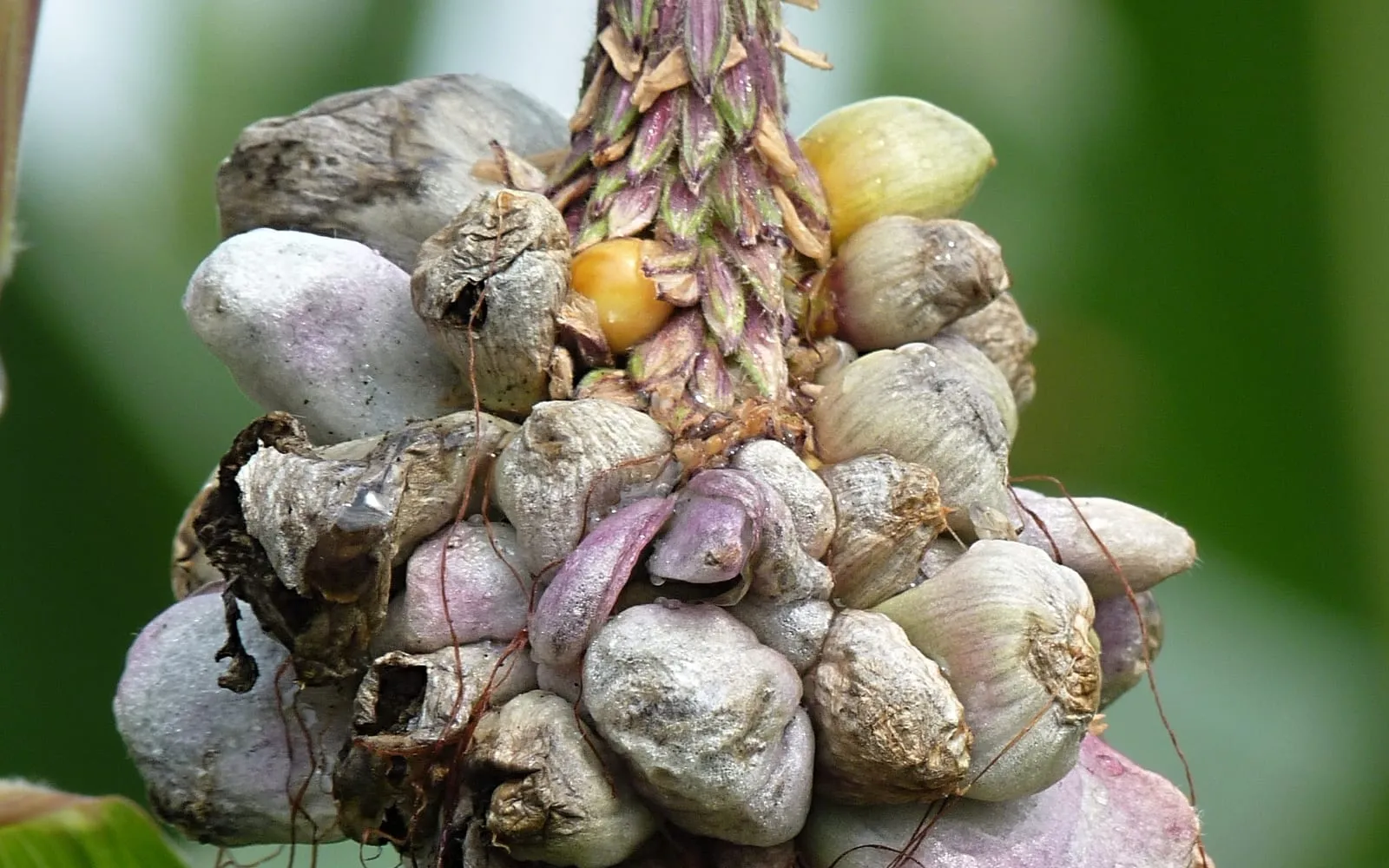
Corn smut is a disease of maize. On sweetcorn it infects the kernels and turns them into swollen grey galls, sometimes large enough to replace most of the cob. Many growers know it as a crop loss and remove affected plants before the galls split and release spores.
The same young galls are also huitlacoche, a Mexican ingredient used in quesadillas, soups and sauces. In Mexico, and among some growers in the United States, maize is sometimes infected deliberately because the galls can be worth more than the corn.
What huitlacoche is
Ustilago maydis is a fungus that infects maize and its wild ancestor teosinte. It enters through the silks or through a wound. The infected kernels swell as the fungus grows inside them.
Young galls are firm, pale and marbled with white, grey and blue-black tissue. At that stage the texture is close to a fresh mushroom. If the galls stay on the plant, they darken, dry to a papery shell and split open. Once that happens, they release spores that can survive in soil for years.
Cooked young, huitlacoche tastes earthy and savoury, with a mushroom-like density and some sweetness from the corn. It turns black in the pan and colours the food around it.
How a disease became food
People in Mexico have eaten huitlacoche since before the Spanish conquest. The name comes from Nahuatl, and many translations of it are unflattering. The name suggests a practical attitude to the fungus. It appeared on maize, it was edible, and it tasted good.
When maize spread to Europe and North America, the fungus spread with it. The food tradition did not spread in the same way. Agricultural writing classified it with other smuts, including the smuts of wheat and barley that ruin grain and are not eaten. Breeders and growers then worked to reduce it with resistant varieties, clean seed and crop rotation.
Advice about the same fungus can sound completely different depending on where it is written. One source treats it as a disease to control. Another treats it as a crop to harvest. Both are describing Ustilago maydis.
If you find it on sweetcorn
Our Ergot and smut page covers corn smut as a plant disease, including how it spreads and how to keep spores out of the soil.
If you intend to eat huitlacoche, pick the galls while they are still firm and pale, usually about two to three weeks after they first appear. Do not eat galls that have turned black, dry and papery. At that stage they are full of mature spores.
Removing affected cobs early also helps the garden. A burst gall drops spores into the soil, where they can remain until the next maize or sweetcorn crop.
Most British gardeners will rarely see useful huitlacoche. The fungus is favoured by heat and drought followed by rain, not by a cool wet summer. Treat it as something you might recognise if it appears, not something to rely on.
Safety
Corn smut is edible. People have eaten huitlacoche for centuries.
The main safety risk is confusing it with a different fungus on a different crop. Ergot forms hard, dark, horn-shaped bodies on rye, wheat, barley, oats and wild grasses. It is poisonous. It is not the same thing as corn smut, and it does not occur on sweetcorn in Britain.
Identify the plant before you think about eating anything. Soft grey galls on sweetcorn are corn smut. Dark growths in an ear of barley, rye or another cereal crop are not huitlacoche. If you are not certain what the plant is, do not eat the growth.
Why it belongs here
Corn smut already has a place in the problem pages because it is a real plant disease. That entry gives the right control advice. This article exists because the same organism also has a long food history.
That does not make the disease advice wrong. It means the word “disease” depends partly on what the grower wants from the crop. If you wanted sweetcorn, corn smut spoiled the cob. If you wanted huitlacoche, the fungus made the crop.
Sources and further reading
- Huitlacoche (Ustilago maydis) as a food source, biology, composition and productionM. E. Valverde and O. Paredes-Lopez. Critical Reviews in Food Science and Nutrition, 1995The standard review of corn smut as food, from the biology of the fungus to how the galls are grown.
- Huitlacoche (Ustilago maydis), an iconic Mexican fungal resourcePubMed Central, 2023An open-access review of the biocultural history and food use, free to read in full.
- Production of huitlacoche (Ustilago maydis), timing inoculation and controlling pollinationOn deliberately infecting a sweetcorn crop to grow the galls, as Mexican and some US growers do.
- ErgotEncyclopaedia BritannicaThe poisonous grain fungus the piece warns against confusing with edible corn smut.